Fifteen low-prep, low-mess winter crafts to keep little hands busy indoors. Simple supplies, clear steps, and gentle tips for real-life crafting.
If you have a toddler, you already know the truth: crafting is never truly “no mess.” But it can be low mess, low stress, and (this is my favorite part) actually doable on a random Tuesday at 3:47 p.m. when everyone is a little snacky and a little wiggly.
After years in kindergarten classrooms and now testing crafts daily with my three kids (3, 6, and 8), I’ve learned that the secret isn’t “perfect supplies.” It’s smart setup, tiny tweaks that prevent chaos, and choosing projects that match toddler attention spans.
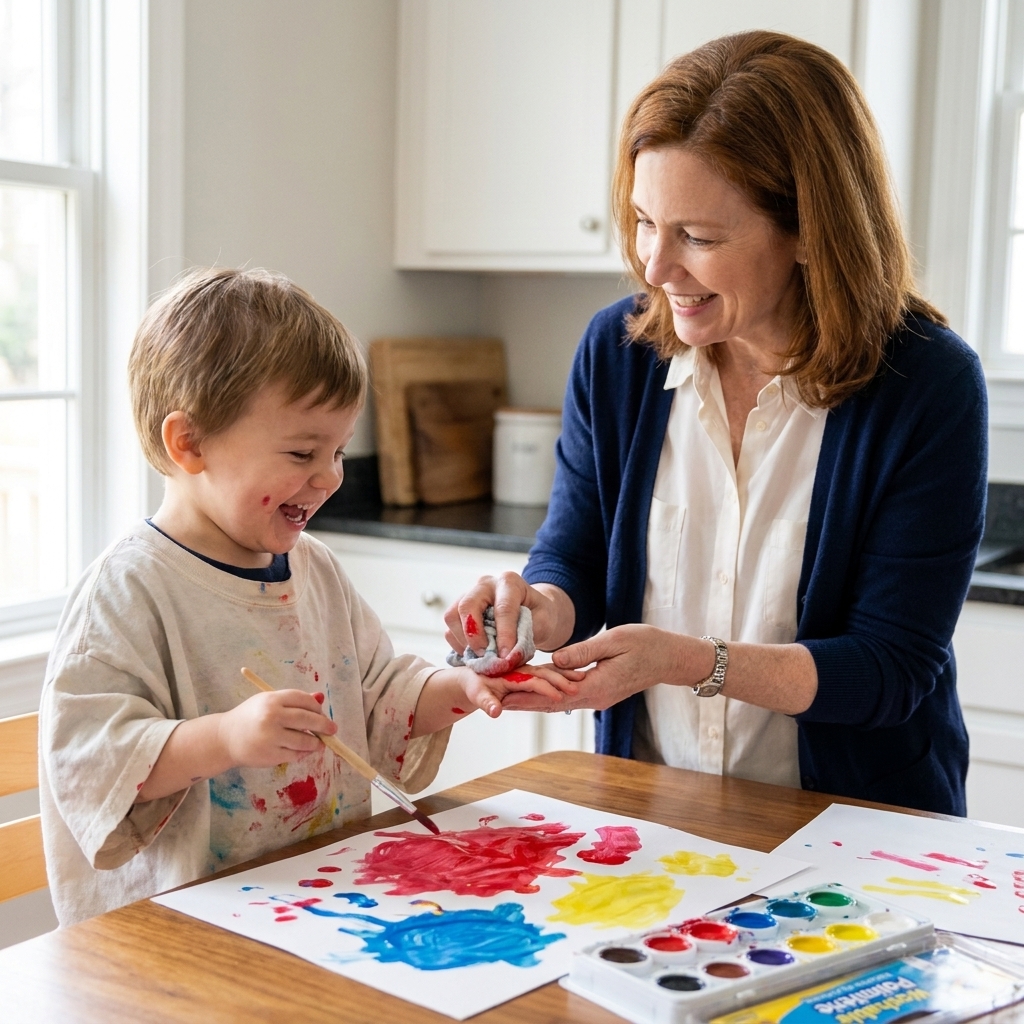
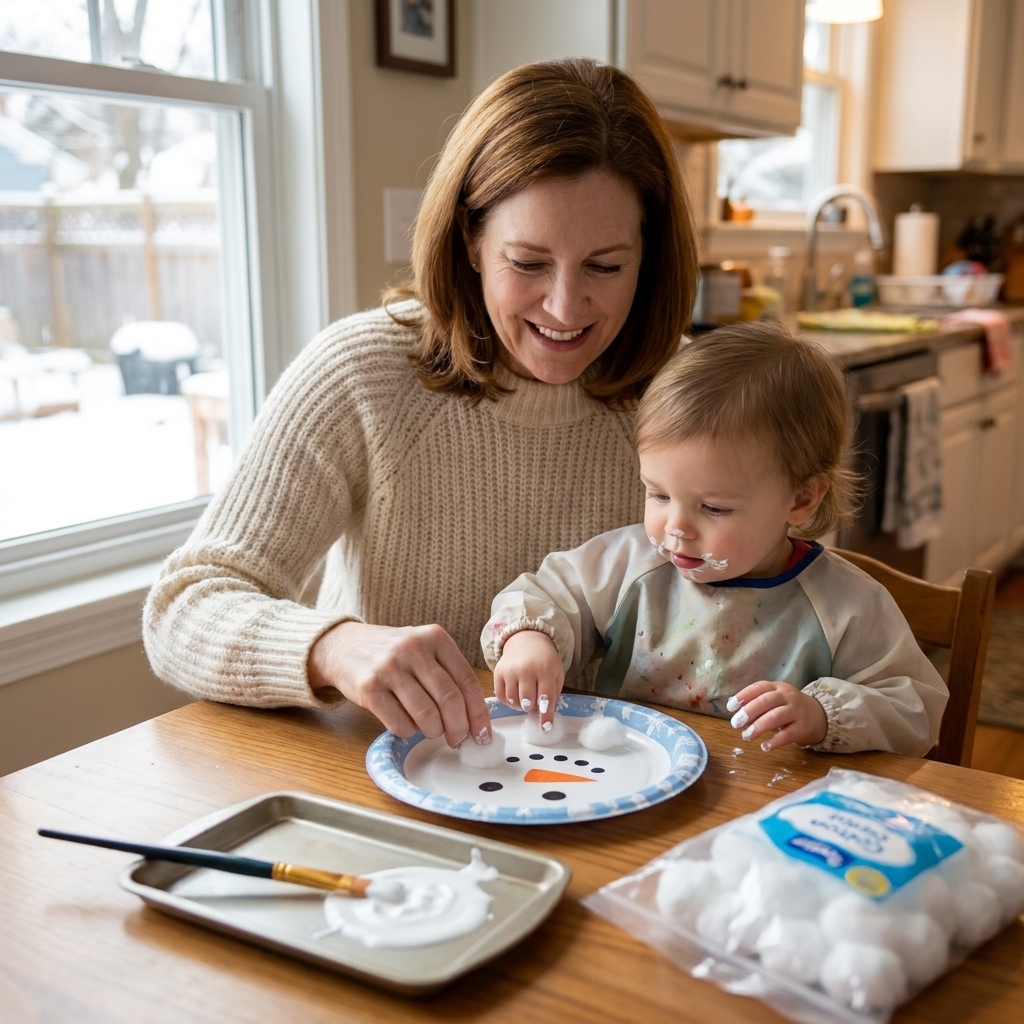
Below you’ll find my favorite strategies and a big list of everyday, low-mess crafts that keep busy hands happy without leaving you scraping dried paint off the dog. (Not that I’ve ever done that. Definitely not.)
What “low-mess” means
Low-mess crafts have three things in common:
- They stay mostly on the table (not the walls, hair, or ceiling fan).
- They use controlled materials like glue sticks, tape, stamp pads, chunky crayons, or water that’s applied in small amounts.
- They have a simple finish line so your toddler can feel successful fast.
“Low mess” does not mean your toddler won’t find a way to put a sticker on their elbow. It just means cleanup takes 2 minutes, not 20.
Setup that saves your sanity
1) Make a tiny craft zone
Pick one spot where crafting happens most days: kitchen table, high chair tray, or a little toddler table. Routine helps toddlers settle in faster because they know what happens there.
2) Put down a washable barrier
My top three table protectors:
- Wipeable placemat (silicone is amazing).
- Dollar-store plastic tablecloth cut into smaller rectangles.
- Cardboard craft board (a flattened box). When it gets too gluey, recycle it and grab a new one.
3) Contain supplies
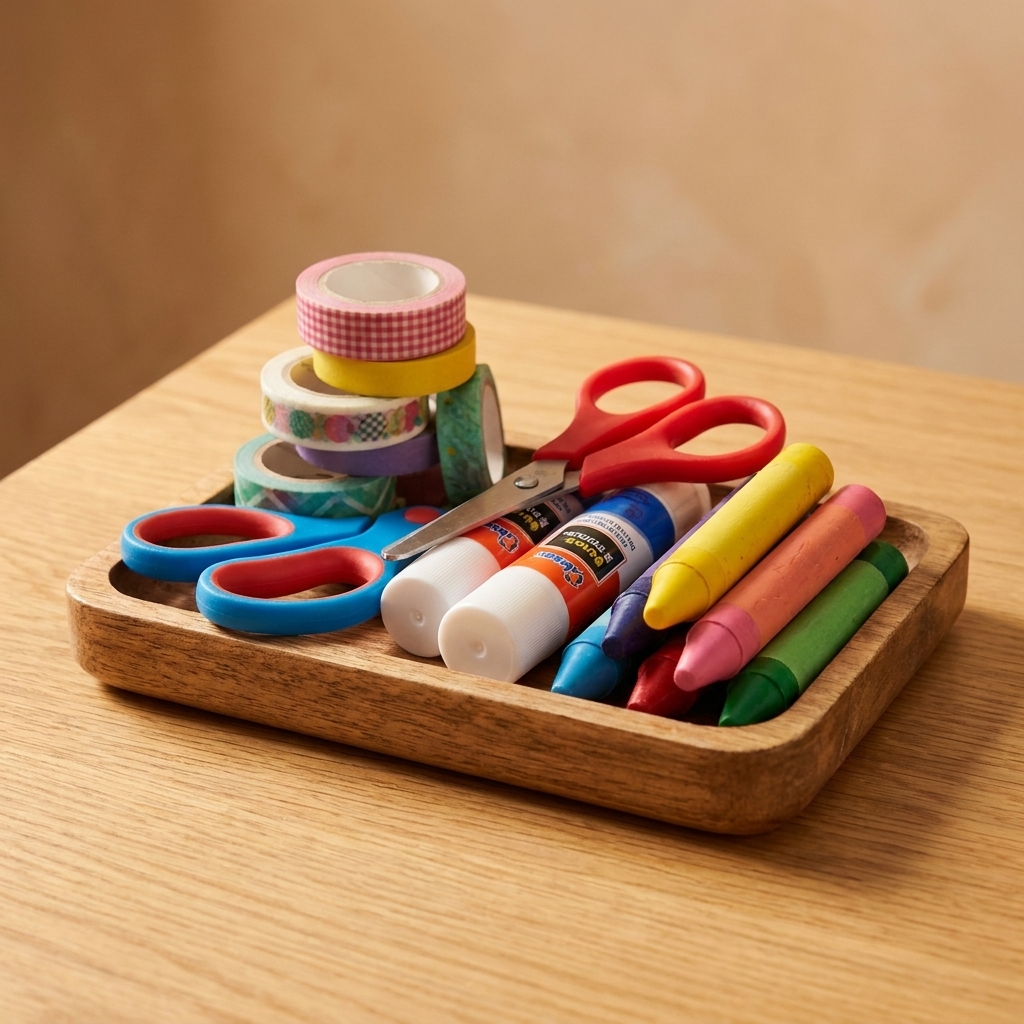
A tray is my #1 low-mess trick. It contains runaway crayons, catches sticker backings, and gives your toddler a clear boundary.
- Sheet pan
- Plastic cafeteria tray
- Shallow cardboard box lid
4) Set out less than you think
For toddlers, choices can backfire. Start with:
- 2 to 4 colors
- 6 to 10 stickers
- A small pile of paper shapes
You can always add more. Taking things away mid-craft is where meltdowns are born.
5) Choose toddler-friendly adhesives
- Glue sticks: best for paper and easiest cleanup.
- Dot stickers: the “toddler glue” that requires zero glue.
- Washi tape: my house is held together by it, and toddler crafts might be too.
- Painter’s tape: great for roads, lines, and quick collages, peels off easily.
6) Protect clothes and floors
Low mess usually falls apart at the shirt and under the chair. Two quick saves:
- Use an old T-shirt as a smock.
- Slide a towel or wipeable mat under the high chair or toddler table.
7) Make cleanup part of the activity
When the craft ends, I say: “Two-minute tidy.” Toddlers can:
- Put scraps in a small bin.
- Return crayons to a cup.
- Wipe the mat with a damp cloth.
It won’t be perfect. That’s fine. You’re building the habit.
Low-mess supply swaps
If a craft feels messy, it’s often the tool, not the idea. Here are my favorite swaps:
- Liquid glue → glue stick or double-sided tape
- Loose glitter → chunky glitter glue pen (or skip it, your vacuum will thank you)
- Paint cups → paint daubers or washable stamp pads
- Open water cup → damp sponge in a shallow dish (for “water painting” without spills)
- Tiny confetti → torn paper (same fun, less chaos)
If you don’t have the “special” stuff: skip it. Packing tape loops can stand in for double-sided tape, crayons can replace paint, and a small dish sponge can make water painting work with almost any brush.
Everyday low-mess crafts
These are my go-to ideas when you need something simple, engaging, and forgiving. Most use what you already have at home.
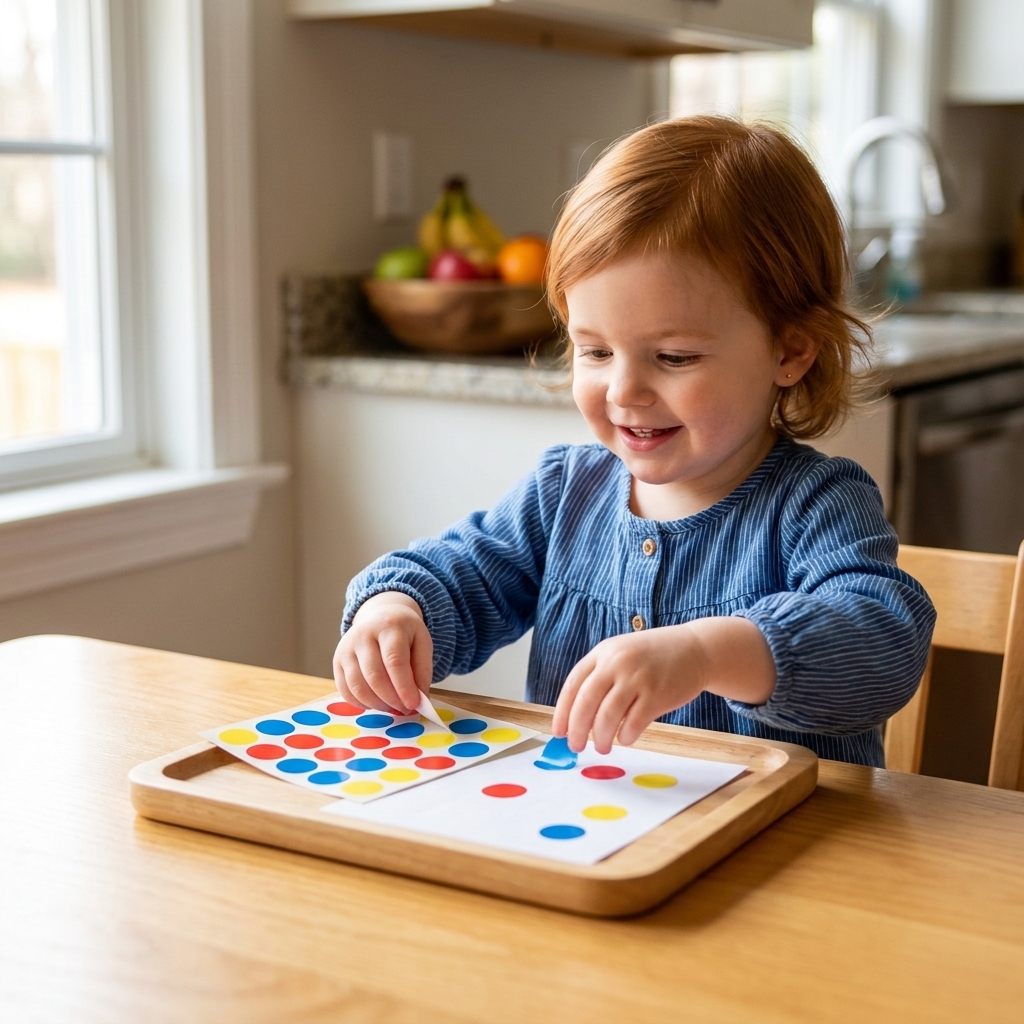
1) Sticker collage
Best for: ages 18 months to 4 years
You need: paper, stickers (dots, animals, seasonal, anything)
- Stick paper to the table with painter’s tape so it doesn’t slide.
- Offer a small sheet of stickers or a handful placed on the tray.
- Let your toddler peel and stick. That’s it. That’s the craft.
Low-mess tip: If backing paper becomes confetti, hand them a small bowl as a “trash bowl” and make it a game to fill it.
2) Tape roads
You need: painter’s tape, paper, crayons
- Place strips of painter’s tape on paper like roads.
- Your toddler colors over everything with crayons.
- Grown-up removes tape for instant roads.
Why it works: Tape does the wow part, toddler does the scribbling part.
3) Water painting
You need: dark construction paper, paintbrush, small dish with a damp sponge or a tiny bit of water
- Dip brush lightly and paint with water only.
- Watch the paper darken, then dry back to normal.
Low-mess tip: Use a dish sponge as the water source so the brush never gets loaded enough to drip.
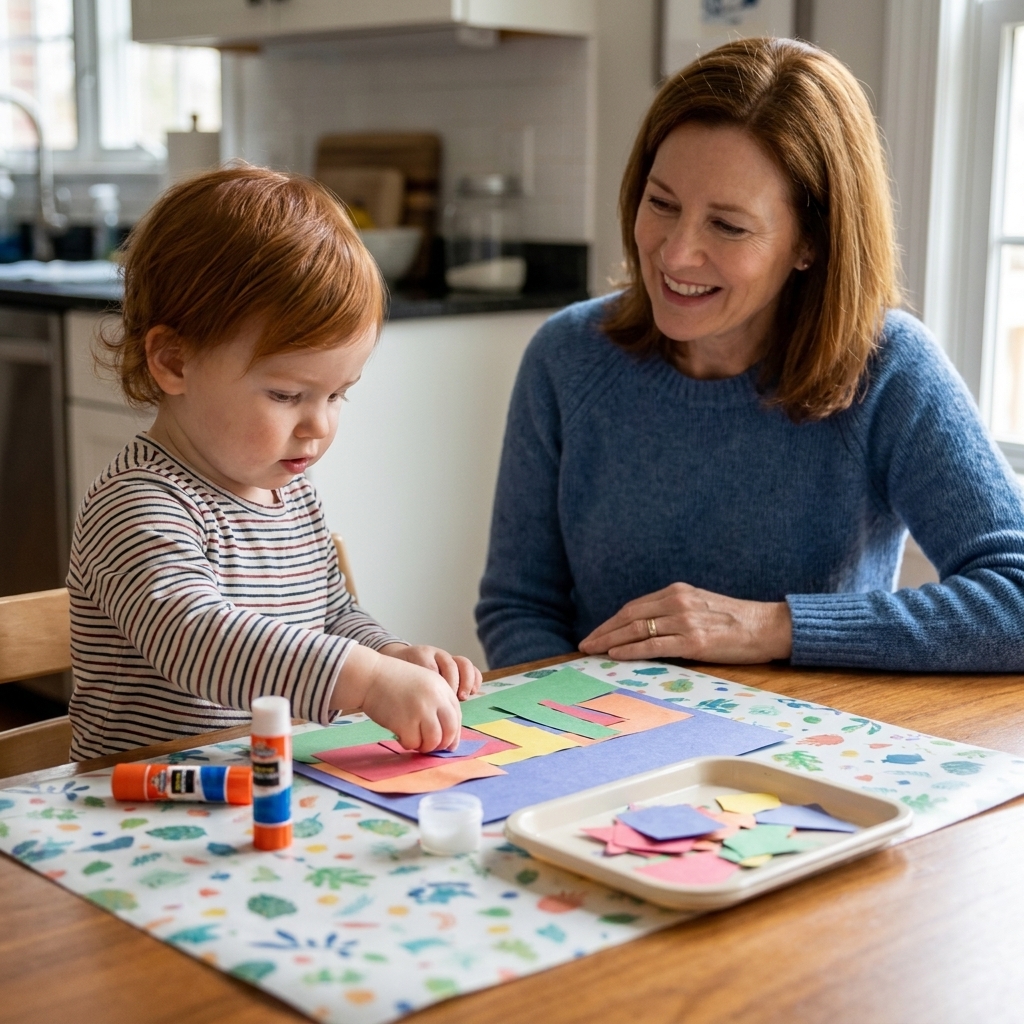
4) Glue stick shape collage
You need: paper shapes (cut scraps, magazines, wrapping paper), glue stick
- Pre-cut a small pile of shapes: circles, squares, triangles, fun blobs.
- Show: “Glue on the back, press, pat-pat.”
- Let them build a picture or just decorate.
Make it faster: Keep a bag of scrap paper shapes in a drawer. It’s a lifesaver on busy days.
5) Contact paper suncatcher
You need: clear contact paper, tissue paper or small paper scraps, scissors
- Cut a contact paper square and tape it sticky-side up to the table.
- Offer tissue squares or paper bits to stick on.
- Seal with a second contact paper square and trim.
No contact paper? Use wide packing tape. Make a tape rectangle sticky-side up (tape the ends to the table), stick tissue pieces down, then seal with another layer of tape.
6) Dot marker art
You need: washable dot markers or bingo daubers, paper
- Tape paper down.
- Demonstrate “dot-dot-dot” (and the cap goes back on).
- Let them fill the page with dots, lines, or simple shapes.
Cleanup: Usually minimal, mostly hands and the occasional dot on the table.
7) Stamp pad fingerprints
You need: washable stamp pad, paper, baby wipes nearby
- Show one finger at a time: dip, press, lift.
- Turn prints into bugs with a quick grown-up marker face, or leave as art.
Low-mess tip: Use a single stamp pad color for toddlers who get overwhelmed by choices.
8) Muffin tin sort and glue
You need: muffin tin, pom-poms or paper bits, glue stick, paper
- Put a few colors of items in different muffin cups.
- Toddler sorts and then glues onto paper.
Why it’s low mess: Muffin tins are magical for containment.
9) Paper bag puppet faces
You need: lunch paper bag, face stickers or dot stickers, yarn pieces (optional), glue stick (optional)
- Give a bag and a small set of stickers.
- Make a silly face together.
- Put it on your hand and let the puppet talk.
Bonus: The craft turns into pretend play, which buys you extra minutes.
10) Reusable sticker stories
You need: masking tape or painter’s tape, a sheet of paper, reusable puffy stickers (optional)
- Make a few tape lines or simple boxes on paper.
- Toddler places stickers inside the boxes and moves them around.
Low-mess win: This is craft plus quiet play, and nothing is wet.
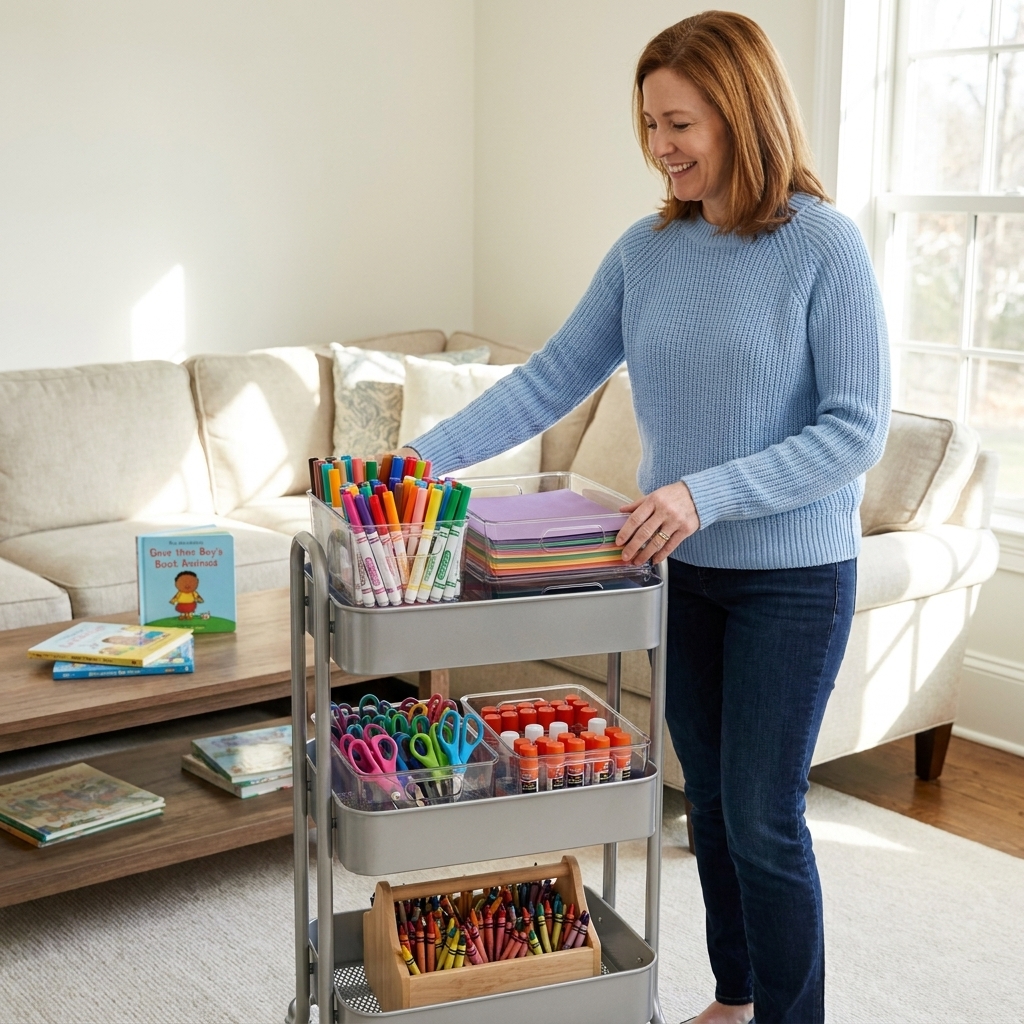
My favorite craft buckets
Instead of hunting supplies every time, I like to keep a few tiny bins ready. You don’t need a craft room. A shoebox works.
Sticker bucket
- Assorted sticker sheets
- Small notebook or paper pad
- Wipeable placemat
Tape bucket
- Washi tape
- Painter’s tape
- Child scissors (blunt tip)
- Scrap paper
Water bucket
- Dark construction paper
- 1 paintbrush
- Small dish and sponge
- Hand towel
When you’re tired, having a grab-and-go option matters more than having perfect materials.
Boundaries that work
Keep rules short
With toddlers, I use simple phrases they can remember:
- “Paper stays on the tray.”
- “Color stays on the paper.”
- “One tool at a time.”
Use yes materials
If you know your toddler will taste-test everything today, skip the tiny beads and go for:
- Big paper pieces
- Chunky crayons
- Dot stickers
Plan for short attention spans
For many kids ages 2 to 3, 5 to 10 minutes is a success. If they walk away, that’s not failure. That’s toddlerhood.
Quick fixes
“My toddler dumps everything out.”
Give one supply at a time. Start with 6 stickers, not the whole sheet.
“Glue is everywhere.”
Swap to a glue stick or use dot stickers instead. If you need liquid glue, put a small puddle on a plastic lid and have them dip a cotton swab.
“They only want to scribble.”
Perfect. Scribbling is pre-writing practice. Offer crayons, stamp pads, or dot markers and call it art.
“My toddler gets mad when it doesn’t look right.”
Try process crafts where there’s no right, like sticker collages, water painting, or tissue paper suncatchers. Also, narrate effort: “You tried three stickers. That was tricky!”
Safety notes
- Supervision matters. Small items like googly eyes, beads, and tiny pom-poms can be choking hazards.
- Choose toddler-safe scissors and sit close enough to help.
- Washable, non-toxic supplies are your best friend, even for “dry” crafts.
- If your child still mouths items, stick to larger materials and skip small parts. When in doubt, follow your pediatrician’s guidance on choking hazards.
Ideas by age
Around age 1 to 2
- Big stickers on paper
- Chunky crayons
- Water painting with a damp sponge
- Contact paper or packing tape with tissue squares
Around age 2 to 3
- Glue stick collages with pre-cut shapes
- Dot marker pages
- Tape roads and crayons
- Stamp pad fingerprints
Around age 3 to 4
- Simple puppets
- Sorting items in a muffin tin then gluing
- Snip-and-stick paper strips (with close supervision)
- Basic shape pictures: “Let’s make a house with a square and triangle.”
If you’re crafting with siblings too, my best advice is to give the toddler their own mini tray with their own materials. Sharing sounds sweet, but it’s usually where the low-mess part goes to die.
FAQ
What is the least messy craft for toddlers?
Stickers on paper wins for least messy almost every time. Add a tray and a wipeable mat and cleanup is basically tossing sticker backings.
How do I keep crafts low mess without special supplies?
Use what you have, just in smaller, more controlled ways: painter’s tape to hold paper still, a tray to contain supplies, a sponge instead of an open water cup, and torn paper instead of confetti. Packing tape loops can replace double-sided tape, too.
How long should a toddler craft last?
Many toddlers are done after 5 to 10 minutes. If you get 15 minutes, you’re living the dream. Stop while it’s still fun and you’ll both be more willing to do it again tomorrow.
What if my toddler won’t do the craft “the right way”?
That’s normal and honestly, it’s often where the learning is. Offer safe materials, set one or two simple boundaries, and let the process lead. You’re building fine motor skills, focus, and confidence, not a museum exhibit.
Your plan for tomorrow
If you want an easy start, try this:
- Put a wipeable mat and tray on the table.
- Add paper, a glue stick, and 10 stickers.
- Set a timer for 8 minutes.
- End with a two-minute tidy.
That’s it. Simple, doable, and it counts as learning.
If you try one of these ideas this week, I hope you’ll remember my favorite reminder: the process matters more than perfection, especially when your artist is wearing mismatched socks and asking for their third snack.