A realistic, mess-friendly guide to setting up an independent craft station for kids, including what to stock, simple safety rules, and how to organize it so...
If you want one Thanksgiving tradition that works for mixed ages, takes very little prep, and quietly turns chaos into sweet conversation, this is it. A gratitude tree is exactly what it sounds like: a “tree” (real branches, paper, or felt) where everyone adds leaves with something they are thankful for.
In my house, it is equal parts heartwarming and funny. One child writes “family,” another writes “pizza,” and the toddler contributes a leaf that is mostly sticker and a little marker scribble. All of it counts.
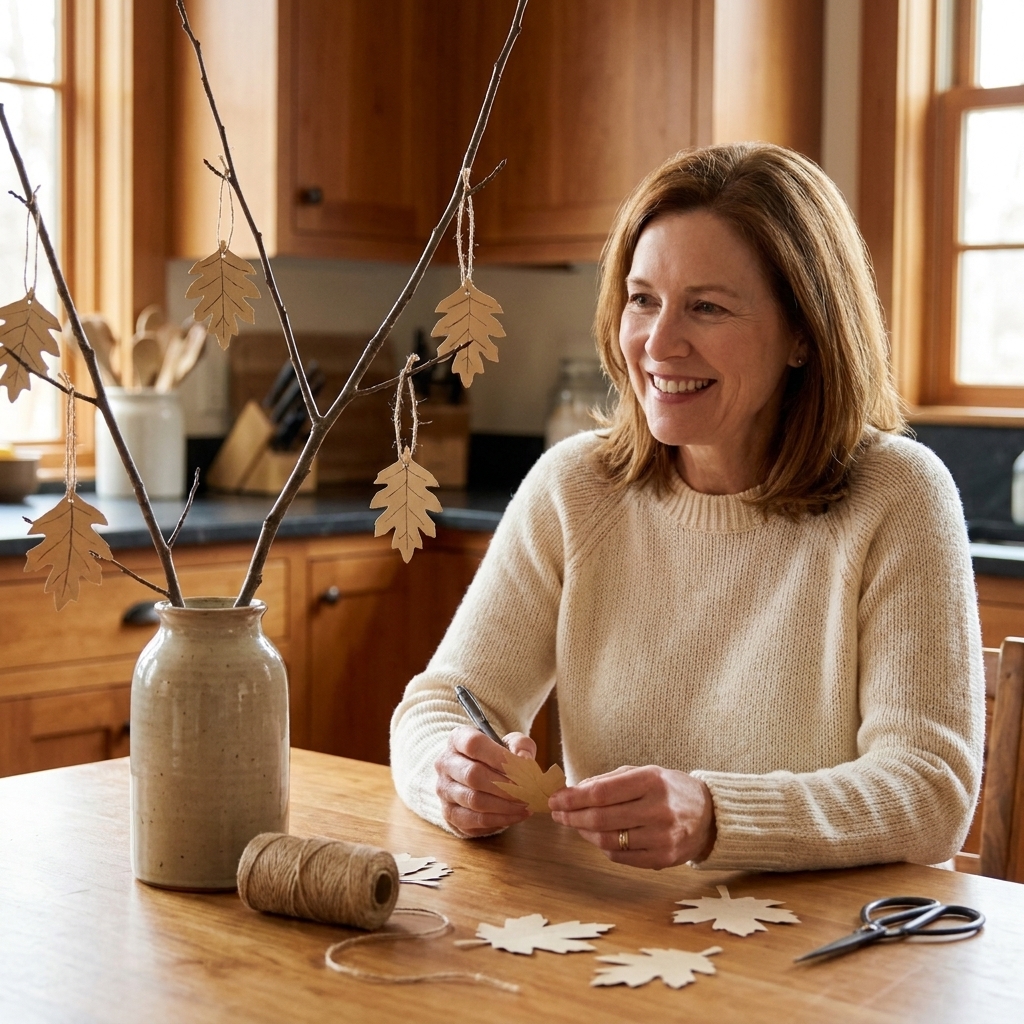
What it is (and why kids love it)
A gratitude tree gives kids a concrete way to practice thankfulness. Instead of asking a big question like “What are you grateful for?” and getting blank stares, you are offering a tiny action: add a leaf.
- It meets kids where they are. Toddlers can point, pick, and stick. Older kids can write full sentences.
- It builds a holiday ritual. You can add leaves all month, or do a flurry of leaves on Thanksgiving morning.
- It keeps hands busy during gatherings. A craft station that doubles as a meaningful activity is my favorite kind of magic.
Time, mess, and safety
Time estimate: Prep takes about 10 to 20 minutes (longer if you are cutting lots of leaves). The activity itself is usually 5 to 15 minutes per kid, or you can stretch it into a one-leaf-a-day routine.
Cleanup tip: Put all the leaf-decorating supplies on a rimmed baking sheet or a tray. When you are done, you can lift the whole “station” and move it in one trip.
Quick safety note: Hot glue is adult-only (burn risk). Scissors, hole punches, and staplers also need supervision. For little kids, pipe cleaners and painter’s tape are often the easiest and safest way to attach leaves.
Supplies (pick your version)
You can make a gratitude tree with almost anything you already have. Here are three dependable base options, from most “natural” to most living-room friendly.
Option A: Real branch tree (fast and pretty)
- One sturdy branch with smaller offshoots (a walk outside does the trick)
- A vase, jar, or pitcher
- Small rocks, pebbles, dried beans, or dry rice to weigh it down
- Leaf cutouts (paper or cardstock)
- Hole punch and string, ribbon, or pipe cleaners
Option B: Paper wall tree (best for small spaces)
- Brown kraft paper, paper grocery bags, or butcher paper
- Tape or painter’s tape
- Scissors
- Leaf cutouts
- Crayons, markers, dot markers, stamps
Option C: Felt tree (best if you want to reuse it)
- Felt sheet for the tree trunk (brown) and leaves (fall colors)
- Self-adhesive Velcro dots (optional)
- Sharpie for grown-up labeling (optional)
My hot glue and washi tape confession: If something feels wobbly, it is probably because a child “helped.” An adult can fix most problems with hot glue. Washi tape covers the evidence.
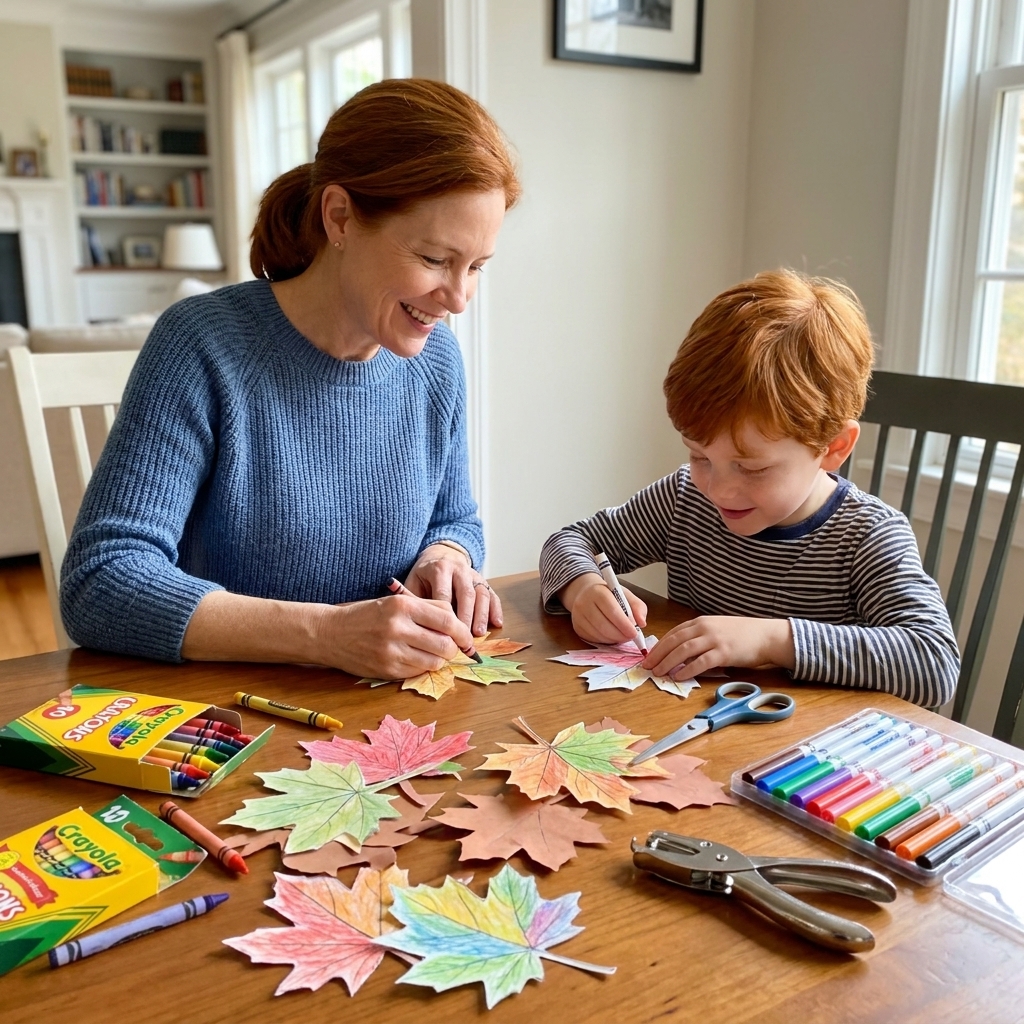
How to set it up
Step 1: Choose your base
Pick branch, wall tree, or felt. If you have multiple ages crafting together, I recommend a real branch tree or felt tree so the leaves feel extra satisfying to add.
Step 2: Prep leaves in a few sizes
Cut a mix of bigger leaves (easier for little hands) and smaller leaves (great for older kids who will write more). If you have time, cut 30 to 60 leaves so you are not cutting mid-activity.
Step 3: Create a leaf station
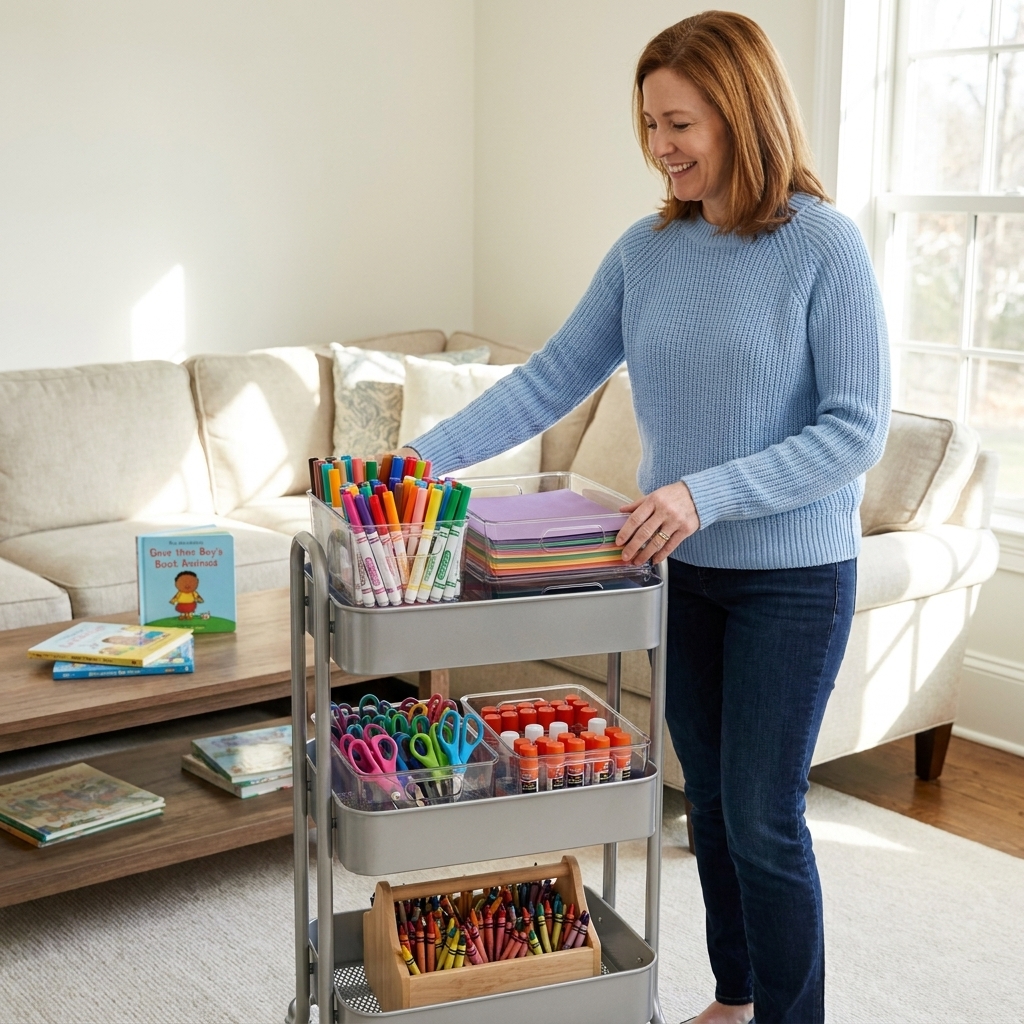
Put supplies in little bowls or cups: crayons, markers, stickers, stamp pad, pencils, and string. This is one of those moments where less on the table means more peace in your soul.
Step 4: Add a simple routine
Try one leaf per person per day in the week leading up to Thanksgiving, or do one leaf at each dinner. If you only do it once, Thanksgiving morning is perfect.
Step 5: Display it where kids can reach
If kids can access it, they will actually use it. Low and reachable wins.
Age-by-age ideas
Here is how I tweak the same activity for toddlers, preschoolers, and elementary kids without turning it into a “project” that needs a second adult and a calm, heroic nervous system.
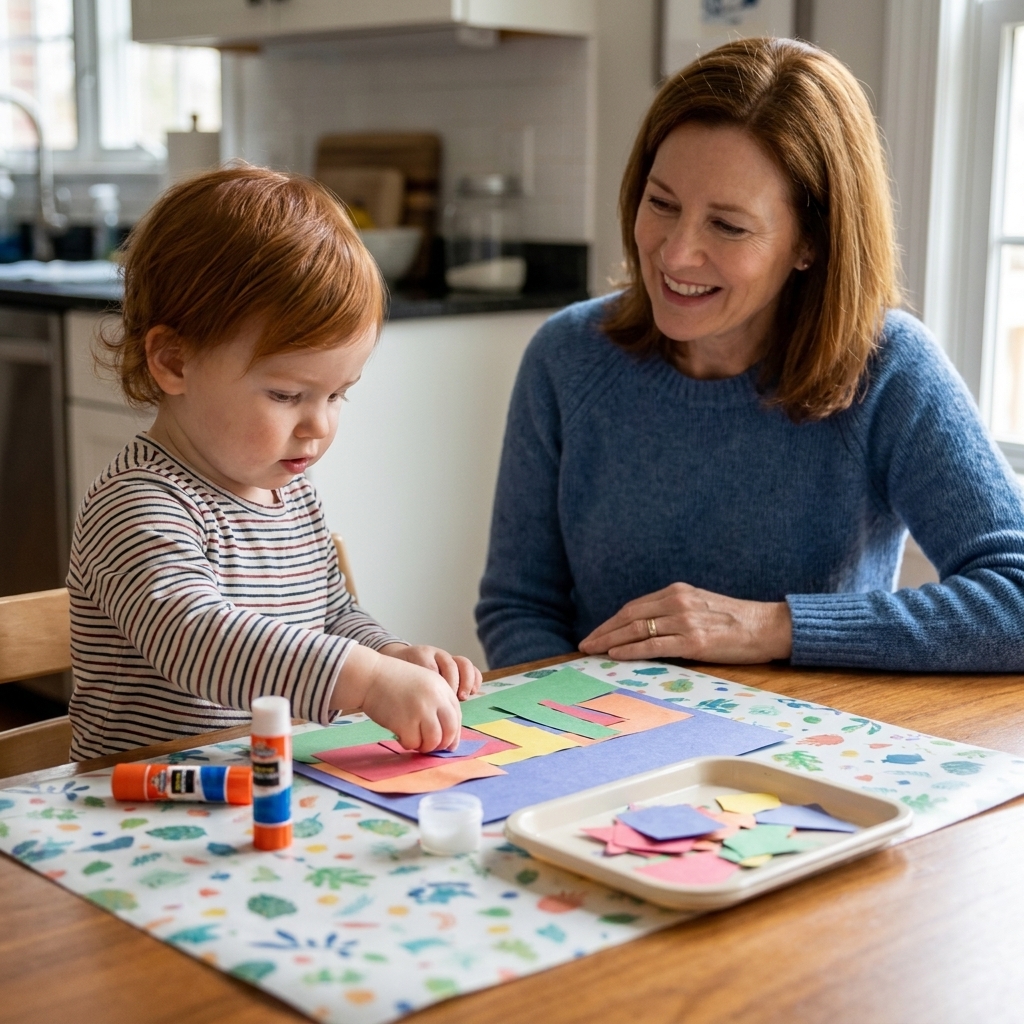
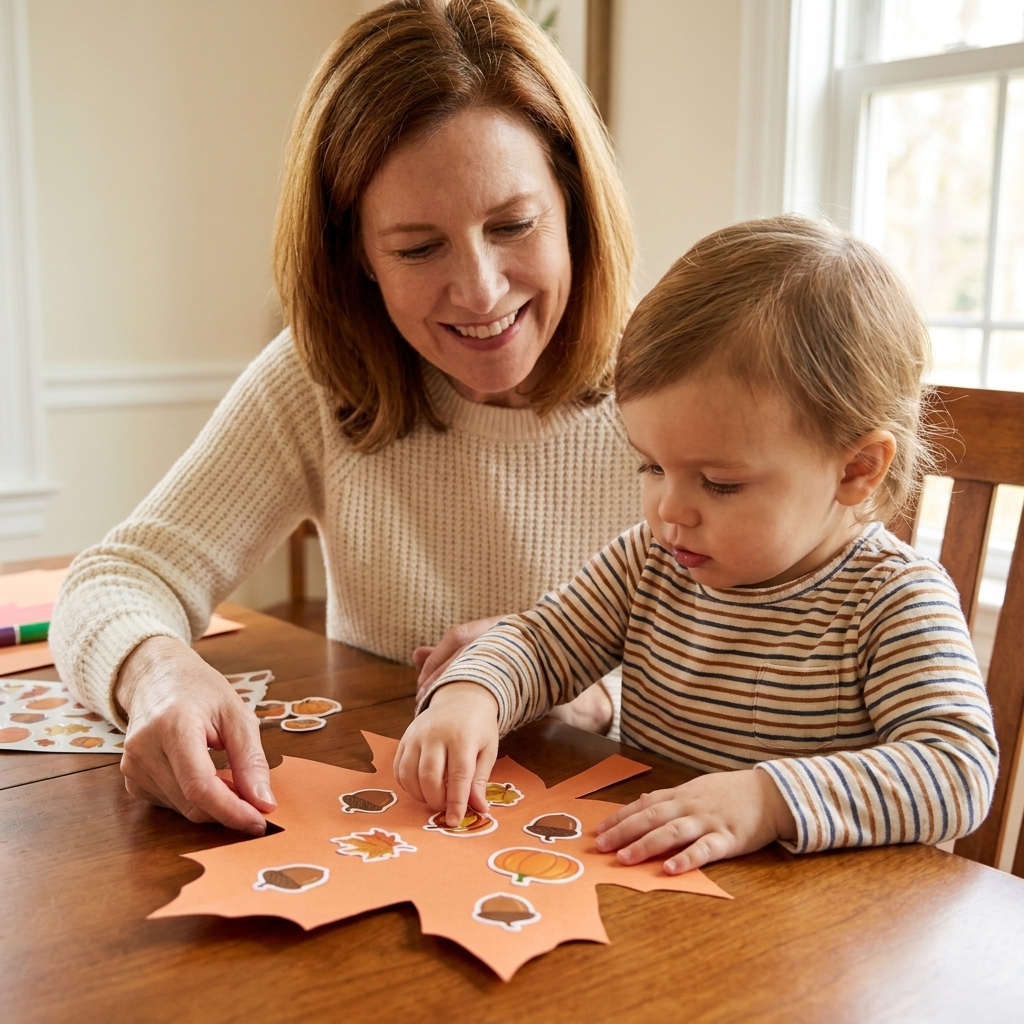
Toddlers (2 to 3): Stick, stamp, and say it out loud
For toddlers, the goal is not writing. The goal is connecting a thankful thought to a leaf, even if you do the recording.
Toddler-friendly setup
- Use large leaves (hand-sized)
- Offer only 2 to 3 tools: crayons, dot markers, or stickers
- Skip string if it becomes frustrating. Use tape for a wall tree, or use pipe cleaners on a branch.
Toddler process (5 minutes is plenty)
Ask a choice question: “Are you thankful for grandma or your blanket?”
Repeat their answer clearly: “Blanket. You love your cozy blanket.”
You write the words on the leaf. They decorate.
They stick it on the tree (this part is the whole thrill).
Easy prompts for toddlers
- “What made you smile today?”
- “Who did you play with?”
- “What snack do you love?”
- “What toy is your favorite right now?”
Toddler pro tips
- Sticker boundaries: Put 10 stickers on a little card and call it their “sticker budget.” It avoids the full-box dump.
- Dot marker sanity: Tape the leaf to the table so it stops sliding.
- Keep it positive: If they say something silly like “I’m thankful for poop,” you can write “bathroom jokes” and keep moving.
Preschoolers (4 to 5): Draw it, dictate it, begin writing
Preschoolers are ready for a little more ownership. Many can write letters or their name, and they love drawing specific things they feel thankful for.
Preschool-friendly setup
- Use medium-to-large leaves
- Offer: crayons or markers, plus one “special” tool like stamps or glitter glue (optional)
- Add a simple sentence starter on each leaf that you write at the top
Preschool sentence starters
- “I am thankful for…”
- “I feel happy when…”
- “I love…”
- “Thank you for…”
Preschool process
They draw the thing or person first.
They dictate the words to you, or they copy a few key words.
They add the leaf to the tree and tell someone about it.
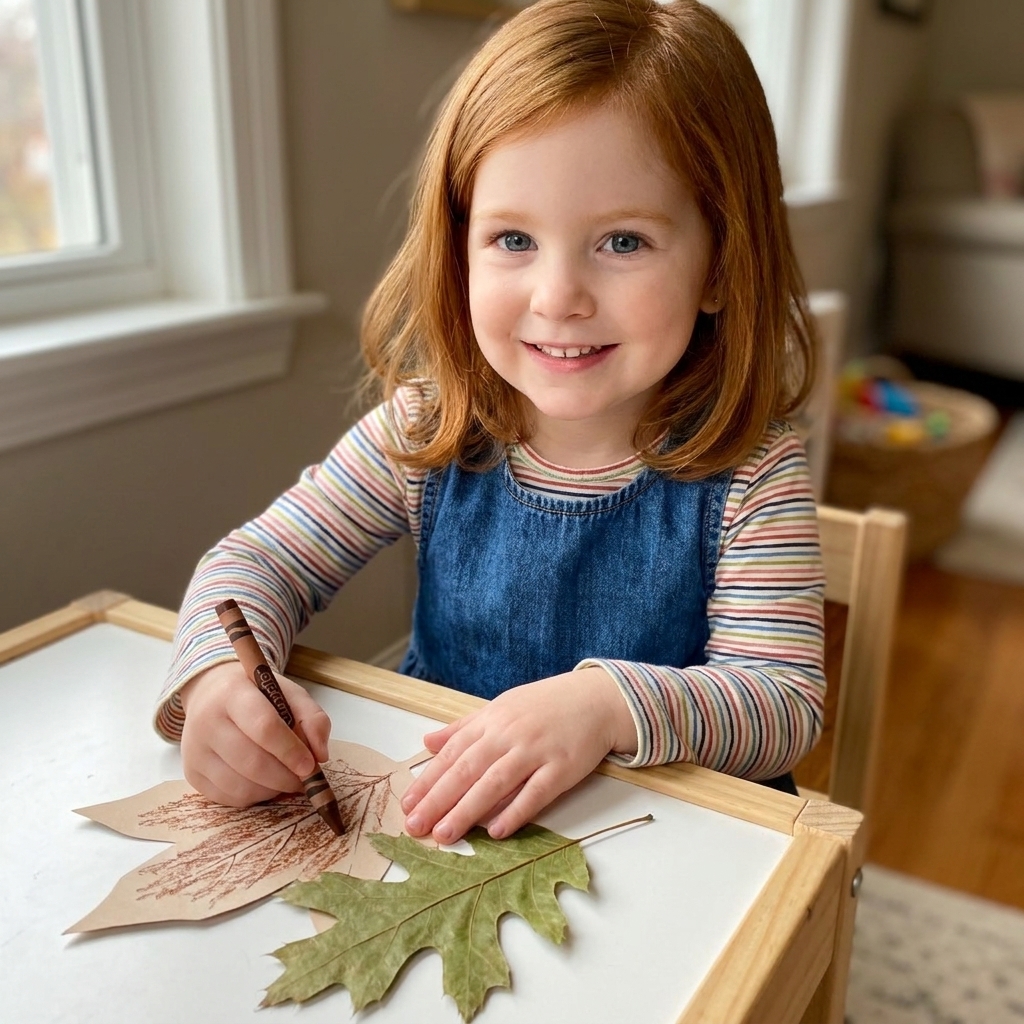
My favorite preschool twist: Gratitude leaf rubbings
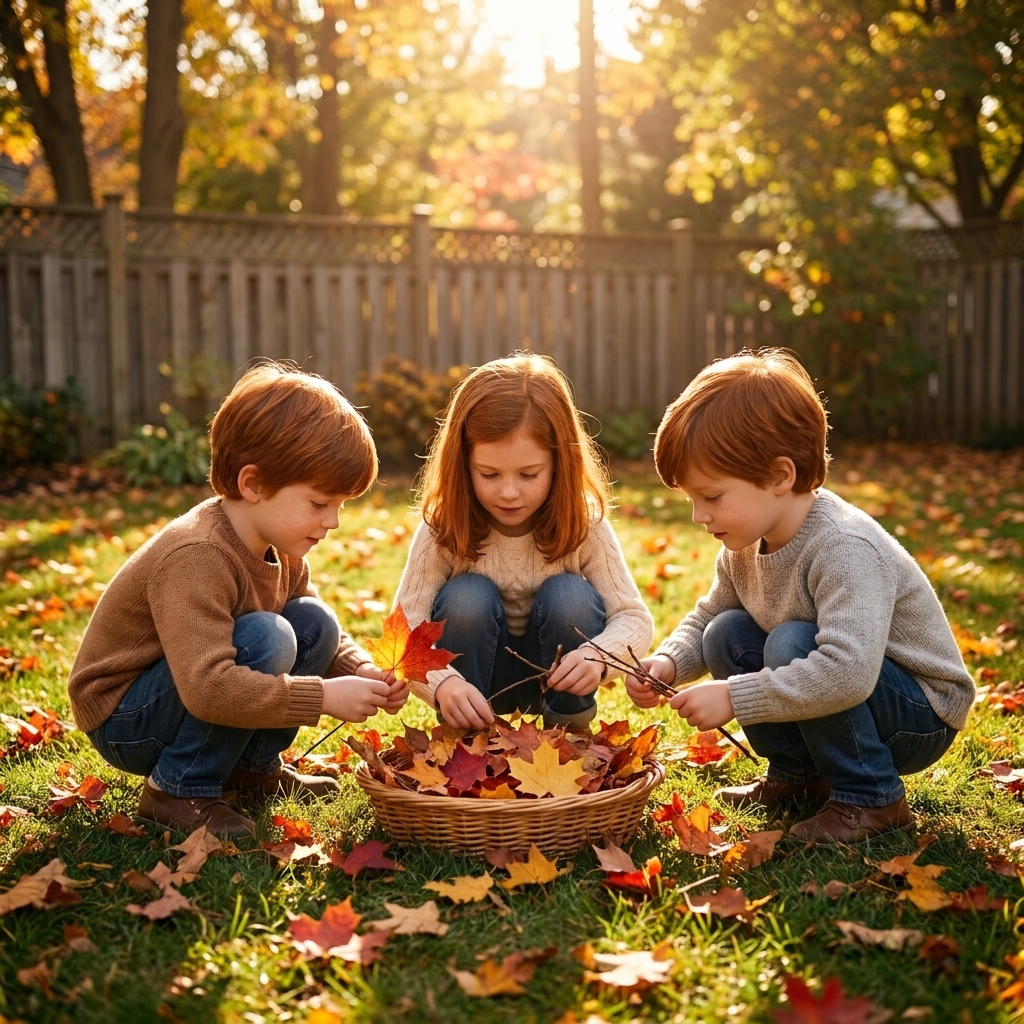
Put a real leaf under the paper leaf cutout. Let them rub with the side of a crayon to create texture, then add their thankful message.
Elementary kids (6 to 10): Write deeper, add details, own the tradition
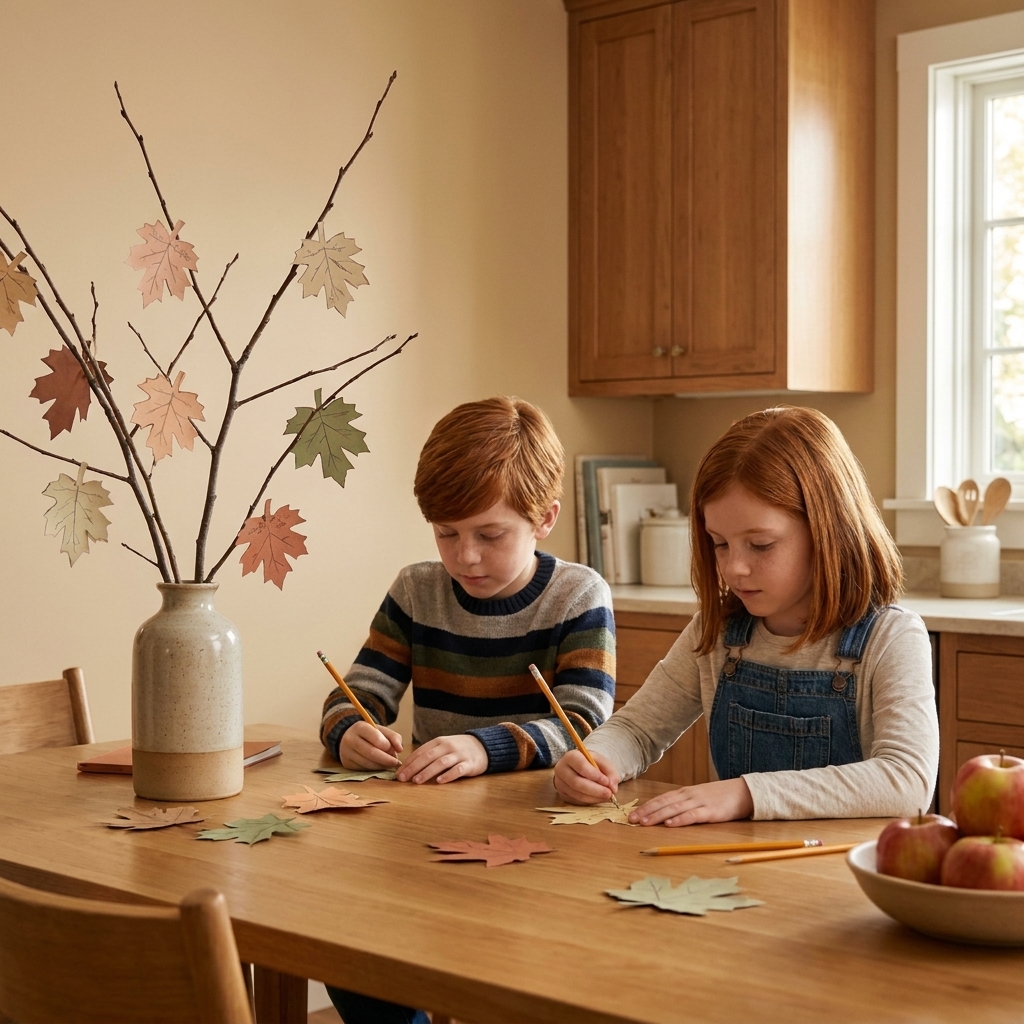
Elementary kids can move beyond single words and into meaningful reflection. This is where you get those unexpectedly sweet insights, like gratitude for a teacher or for “how we always read together at bedtime.”
Elementary-friendly setup
- Smaller leaves are fine, or mix sizes
- Provide pencils and fine-tip markers
- Add a basket of prompts for kids who freeze up
Writing prompts for elementary kids
- “A challenge I got through this year was…”
- “Someone who helped me recently is…”
- “A place I feel safe is…”
- “A family tradition I love is…”
- “Something I can do now that I could not do last year is…”
Elementary add-ons (choose one)
- Gratitude why: Add one extra line that starts with “because.” Example: “I am thankful for my sister because she plays board games with me.”
- Secret gratitude leaves: Write something kind about another person at the gathering and hang it without telling them. Reveal after dinner.
- Memory leaves: Add the date on the back of each leaf. At the end of the month, store them in an envelope labeled with the year. Future you will have feelings.
Variations
1) Tabletop centerpiece tree
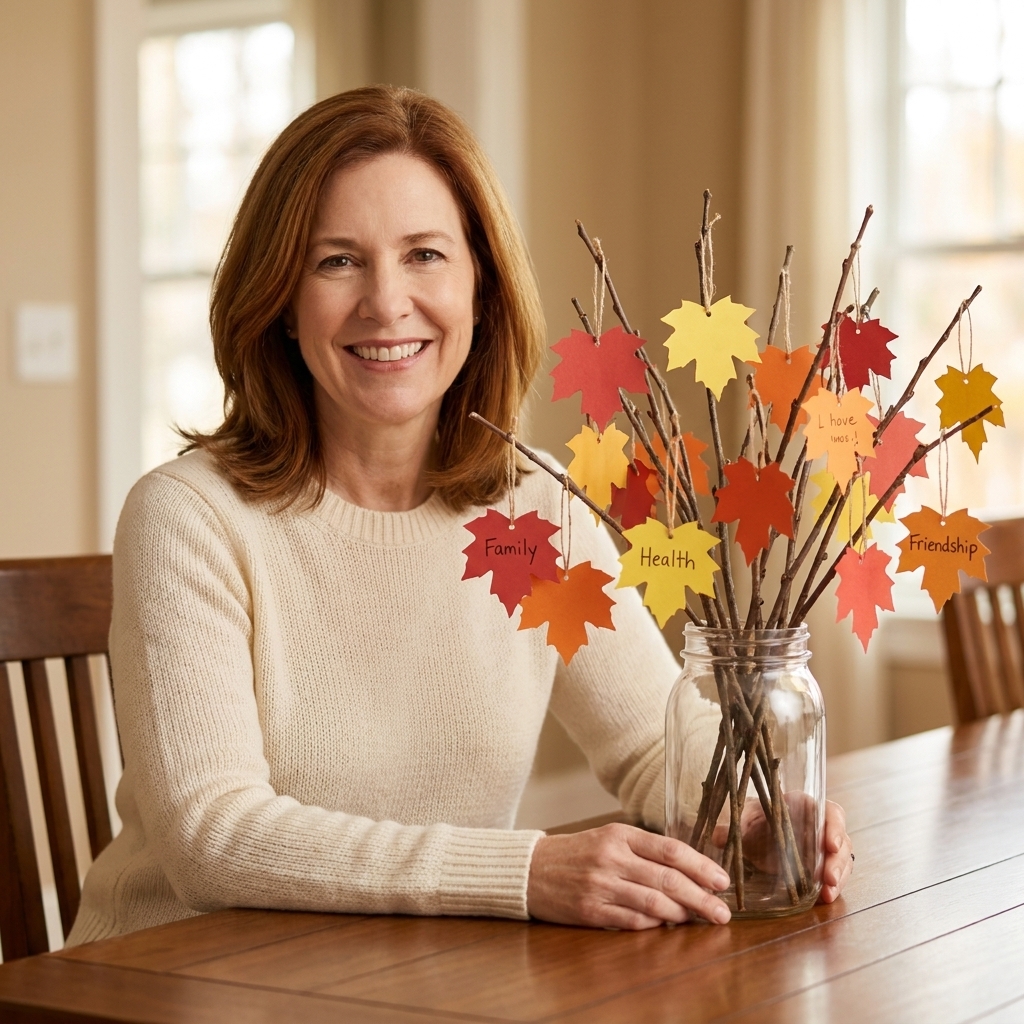
Use a short, branchy stick in a mason jar. Kids add leaves throughout the day. It looks lovely at dinner without taking over the whole room.
2) Thankful pumpkin
Draw or tape a pumpkin shape on the wall and use paper “seeds” or mini leaves as gratitude notes. Great if you cannot find a good branch.
3) Handprint leaf tree
Trace kids’ hands on fall-colored paper and cut them out as leaves. Add a thankful note on each. This is adorable for a toddler and still fun for older siblings.
4) Upcycled book page leaves
If you have a damaged old book or magazine headed for recycling, cut leaves from the pages and write gratitude on top. The printed background makes even quick scribbles look fancy.
Mixed ages: Make it work
If you have more than one child, or you are hosting cousins, you can absolutely do this without losing your mind.
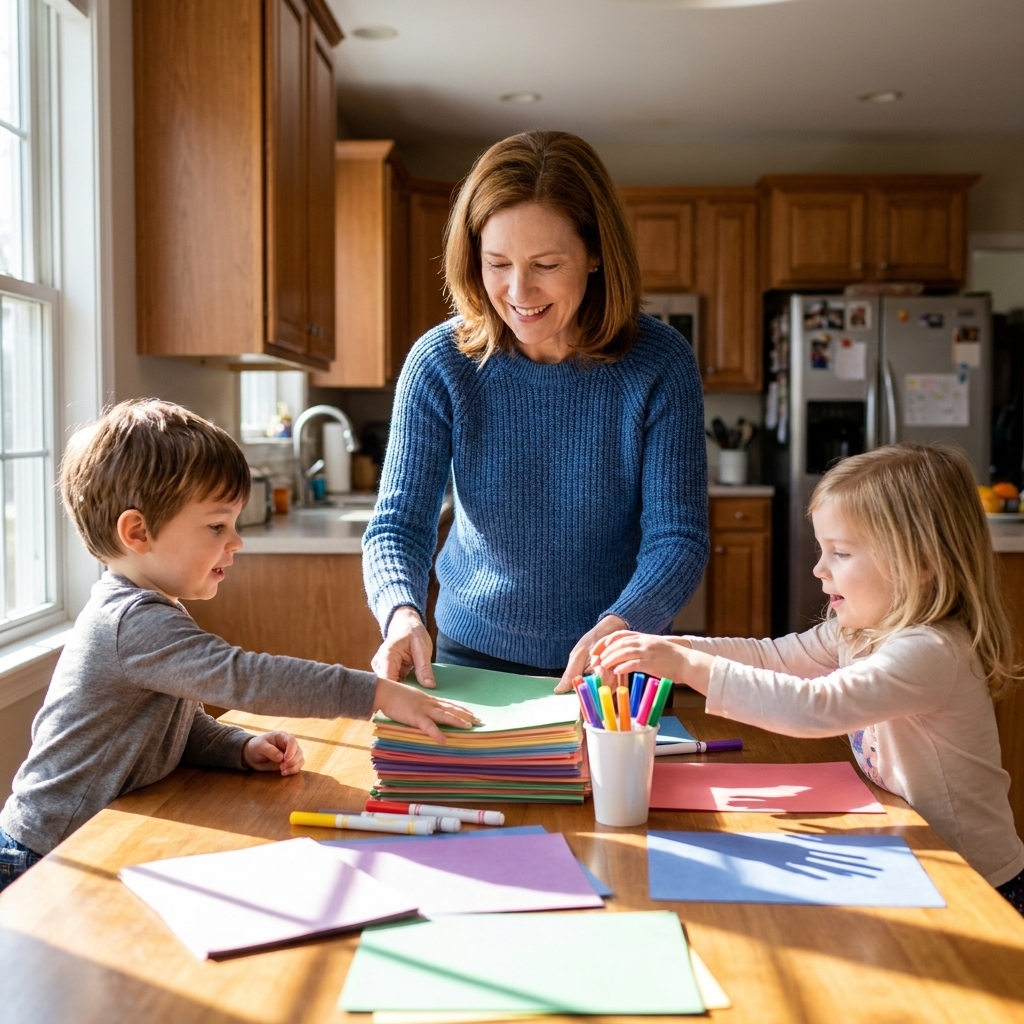
- Prep the tree yourself. Kids do the leaves. This keeps the activity moving.
- Offer two leaf baskets. One basket for little kids (big leaves, stickers). One for big kids (smaller leaves, prompts).
- Give each kid a job. Example: toddler sticks leaves, preschooler decorates, older kid ties pipe cleaners or reads prompts.
- Start earlier than you think. Begin the activity before the meal chaos, or the day before.
Troubleshooting
“My branch keeps tipping over.”
Add more weight to the vase: rocks, dried beans, or rice. If it is still wobbly, set the vase on a tray and use painter’s tape to secure the base, or nestle the branch into floral foam inside the container.
“The leaves keep falling off.”
Use pipe cleaners instead of string for little hands, or tape the strings to the back of the leaf. If you are using a wall tree, switch to painter’s tape or glue dots.
“My child will not think of anything.”
Offer categories: people, places, foods, activities, pets, and “something your body can do.” Or let them draw first and talk while they draw.
“This is turning into a mess tornado.”
Pick one writing tool and one decorating tool, then put the rest away. Also, a cookie sheet under the leaf station is a surprisingly good mess catcher.
Thanksgiving Day ideas
Here are a few low-pressure ways to use the tree during your meal, without forcing shy kids to perform.
- Quiet read: After dinner, one adult reads a handful of leaves aloud.
- Pass the leaf: Each person adds one leaf before dessert.
- Kids host: Let an elementary kid choose three leaves to share and explain why they picked them.
And if all you manage is three leaves total and one of them says “Legos,” congratulations. You made a tradition, you practiced gratitude, and you did not require anyone to sit perfectly still. That is a win in my book.
After Thanksgiving: Save it or let it go
If you want an easy keepsake plan, pick one of these:
- Take a quick photo before you take it down. (This is the lowest-effort memory.)
- Store the leaves flat in an envelope or a gallon zip-top bag labeled with the year.
- Make a mini book by hole-punching the leaves and tying them with ribbon.
- Recycle or compost paper leaves if you are not keeping them. Keep the branch and reuse it next year.
Quick FAQ
When should we start?
You can start any time in November. If you want a simple rhythm, start one week before Thanksgiving and add one leaf per person per day.
How many leaves do we need?
For a family of five doing a week-long tree, 35 leaves is a good target. For a Thanksgiving Day only activity, 10 to 20 leaves usually covers it.
What if we do not celebrate Thanksgiving?
You can use the exact same activity as a thankful tree any time of year. It is especially sweet as a fall tradition, a classroom community builder, or a gratitude practice during tough seasons.