Step-by-step paper tearing, folding, and gluing activities for 3- to 5-year-olds that strengthen little hands and boost early learning.
If your preschooler wants to cut everything (napkins, mail, your important-looking papers), you’re in the right place. Cutting practice is a great fine motor workout for little hands, and it doesn’t need to be Pinterest-perfect to be effective. These 12 paper cutting crafts are designed for quick setup, big confidence boosts, and lots of repeat practice.
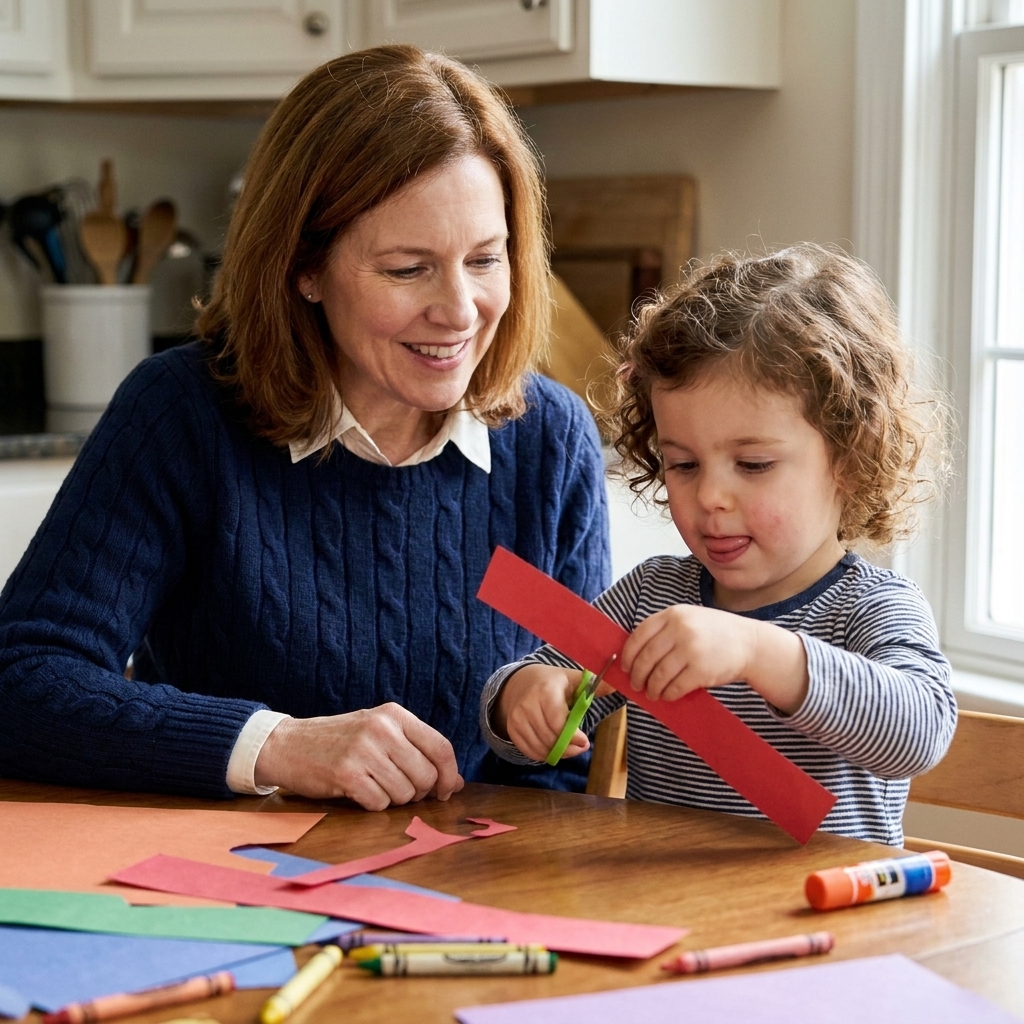
Most of these work best for ages 3 to 5, but my 6- and 8-year-olds still happily do several of them, especially the ones that turn into pretend play.
Quick setup for scissor success
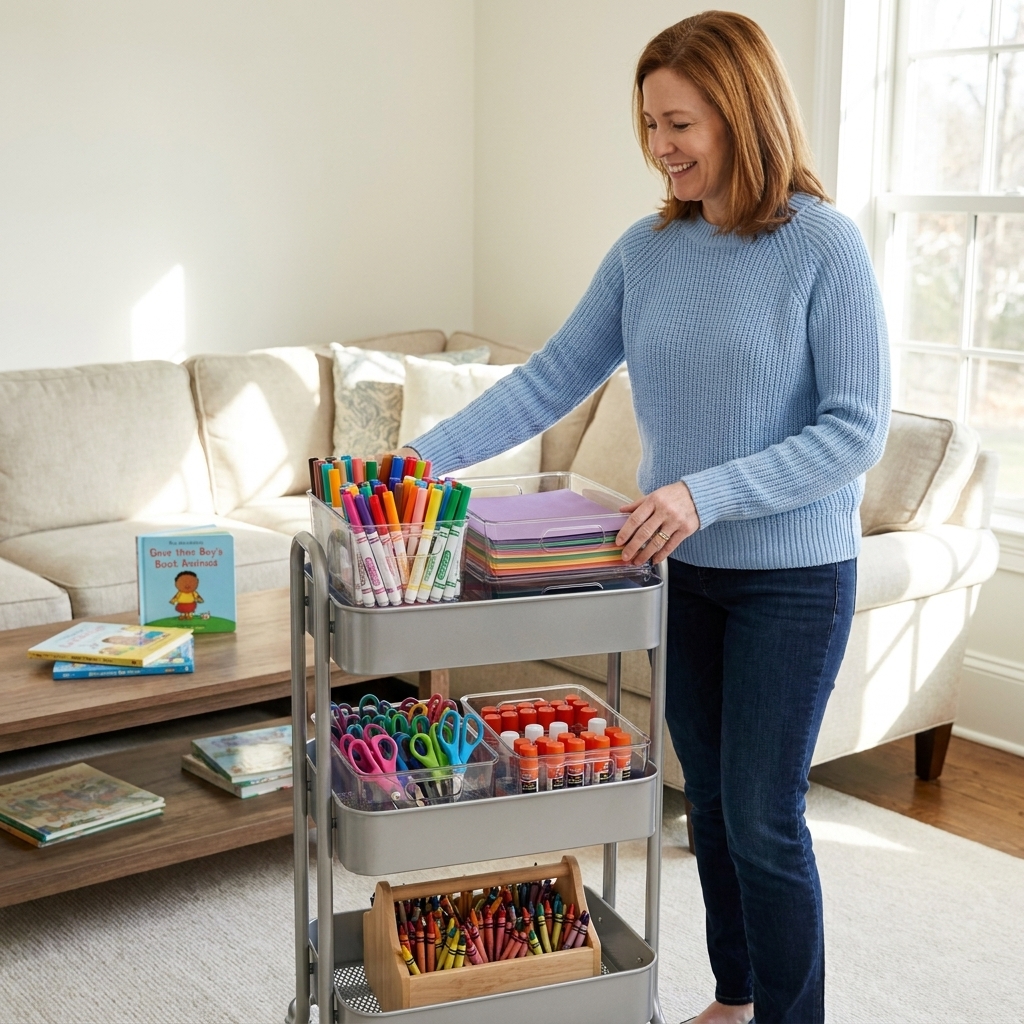
Supplies I keep in my craft bin
- Child-safe scissors (blunt tip). Spring-loaded scissors can help some kids open and close.
- Construction paper plus junk mail, paper bags, and magazine pages.
- Washable glue stick (often fewer tears than liquid glue).
- Markers or crayons.
- Painter’s tape or washi tape for stabilizing paper.
- Optional: hole punch, stickers, stapler (adult-only), paper plates.
How to hold scissors
I say: thumb on top, fingers on bottom. If they forget, no biggie, just reset. For many preschoolers, the real challenge is opening the scissors wide enough, so short cutting sessions with breaks help a lot.
Safety and sanity tips
- Cutting zone: bottoms on chairs, elbows on table.
- One job at a time: cut first, glue later. Switching tools midstream is when chaos blooms.
- Start with smaller paper: a half sheet is easier to control than a floppy full page.
- Give “helper holds”: you can hold the paper steady while they snip until they build control.
- Scissor rules: walk with scissors closed and point-down, and pass handle-first. Store scissors out of reach when you’re done.
Skill ladder
- Beginner: snips into strips and fringes, no lines needed.
- Developing: straight lines and gentle curves.
- Confident: simple shapes, spirals, and cutting on drawn paths.
12 easy paper cutting crafts
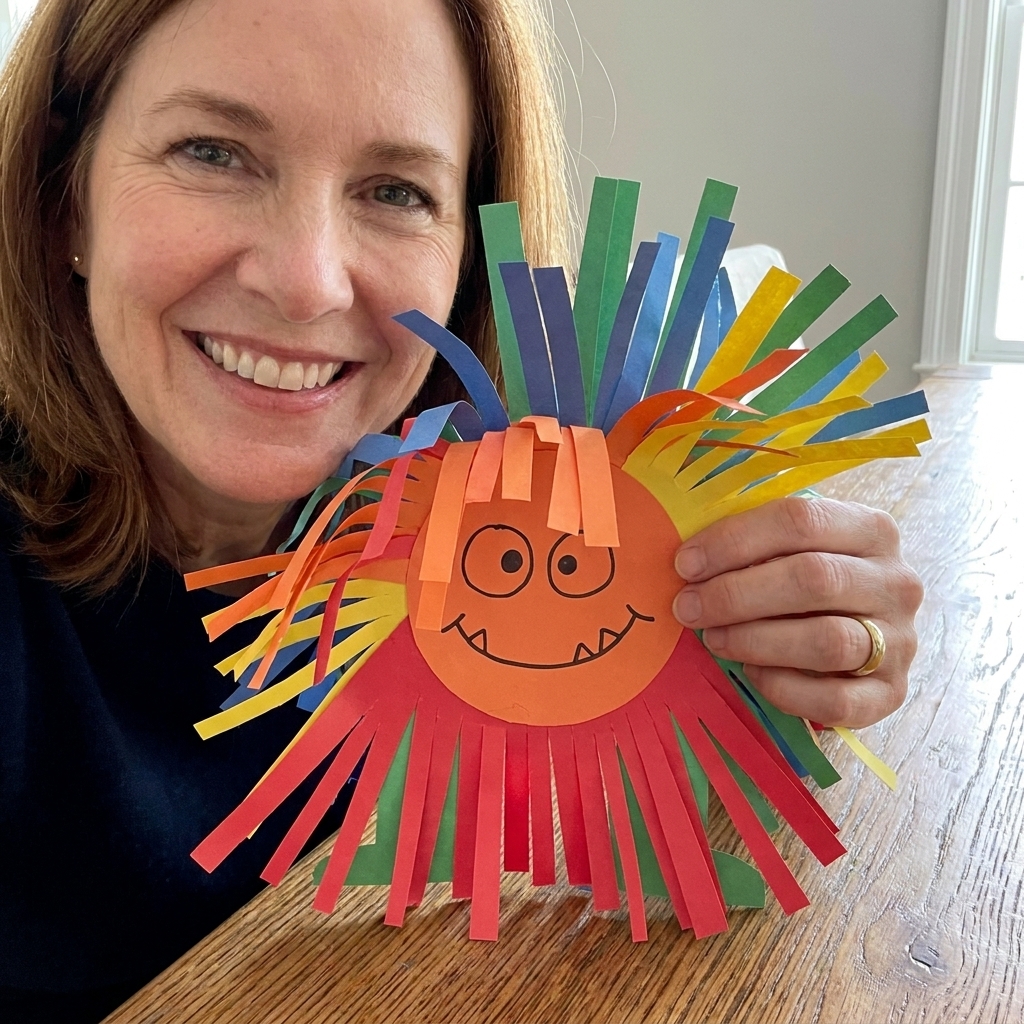
1) Fringe Monster
Skills: repeated snips, hand strength, stopping control
You’ll need: construction paper strip, markers, glue stick, googly eyes (optional)
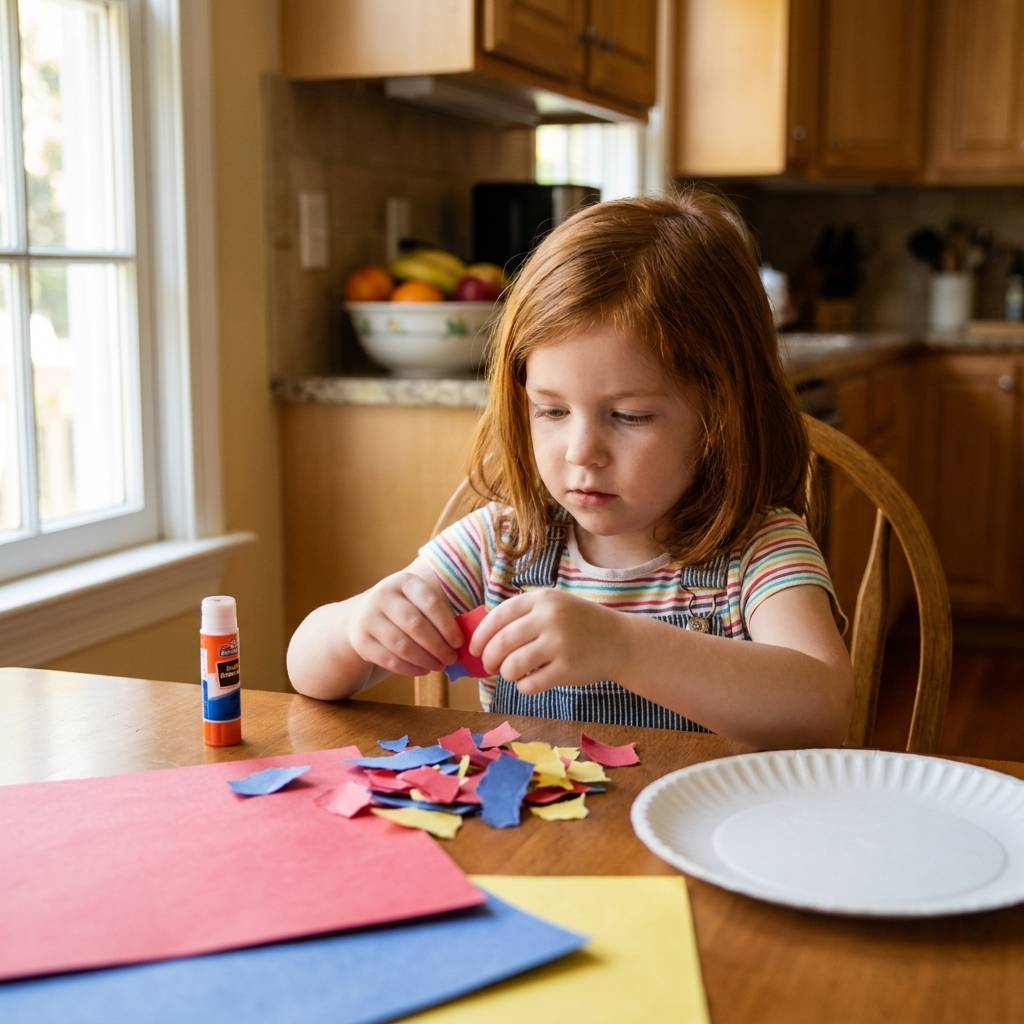
- Cut a strip of paper about the width of your child’s hand (adult can prep, or let them tear it).
- Show how to make little snips from one long edge, stopping before the other edge.
- Draw a silly monster face on the uncut side.
- Glue the monster onto another sheet to “trap” the fringe hair.
Try this: Make “spiky,” “curly,” or “tiny bangs” by changing snip size. Variety is sneaky practice.
2) Snip-and-Sort Paper Salad
Skills: snipping, bilateral coordination, visual sorting
You’ll need: green paper, red paper, yellow paper, bowl or plate
- Give your child strips of colored paper.
- They snip pieces into a bowl to make “lettuce,” “tomatoes,” and “cheese.”
- Sort by color or size, then mix it up and serve to stuffed animals.
Troubleshooting: If pieces go flying, use a deep mixing bowl and scoot it close to their cutting hand.
3) Paper Haircuts
Skills: cutting on a boundary, stopping at a line
You’ll need: paper with simple faces drawn, strips of paper for “hair,” glue stick
- Draw a few simple faces on paper.
- Glue paper strips on top as hair.
- Kids “trim” hair with short snips. Curly bangs are encouraged.
Extension: Make a “before and after” wall with tape and let them choose the next customer.

4) Straight-Line Road Strips
Skills: straight cutting, accuracy, stamina
You’ll need: paper with thick road lines, marker, toy cars (optional)
- Draw wide straight “roads” (two parallel lines) on a page.
- Kids cut along the road to make long strips.
- Tape the strips to the floor for a quick car track.
Tip: Thick lines are kinder than thin ones. Preschoolers need room to succeed.
5) Curvy Snake Trails
Skills: turning the paper while cutting, gentle curves
You’ll need: paper, marker, crayons
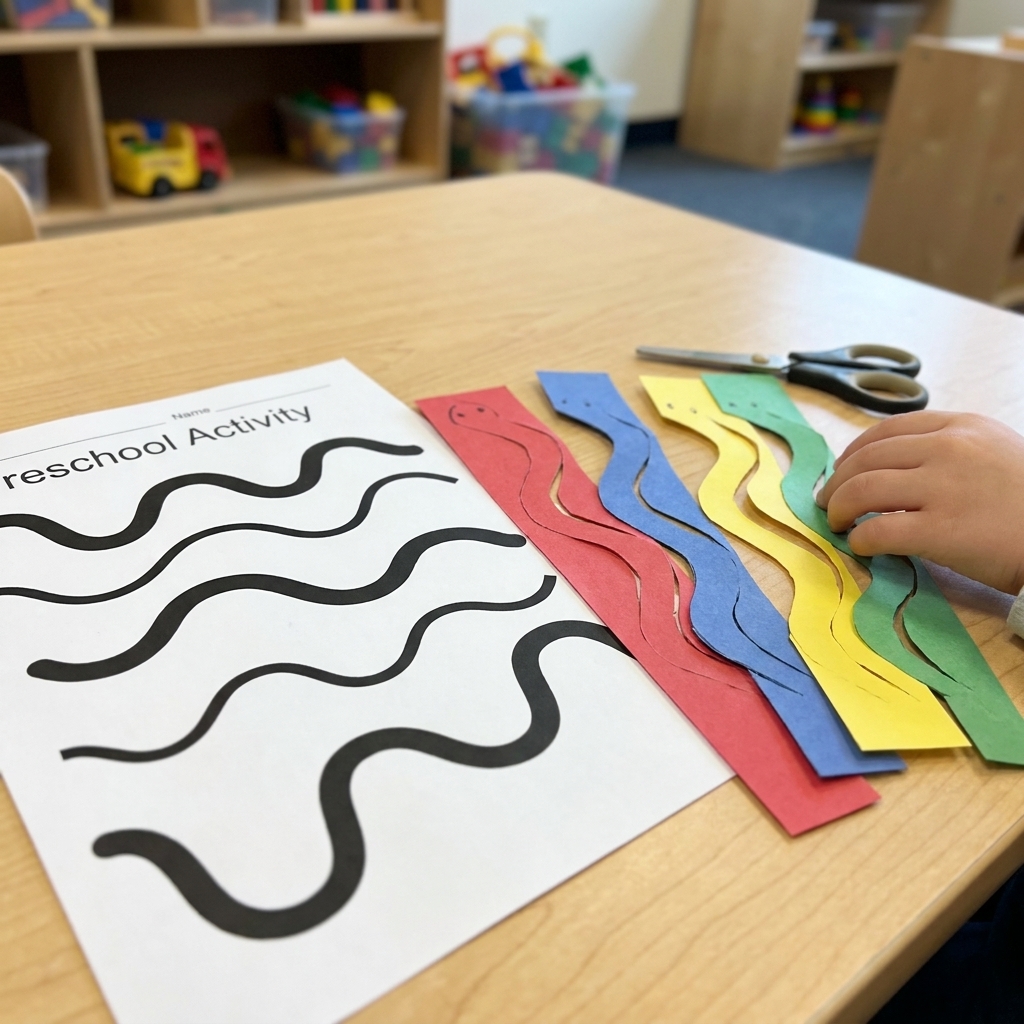
- Draw a few chunky wavy lines across the page.
- Kids cut on the line to make “snakes.”
- Color and name each snake, then curl them around a pencil.
Watch for: Many kids forget to move the paper, not the scissors. Help them turn the paper with the helper hand.
6) Paper Weaving Placemat
Skills: straight cuts, spacing awareness, patience
You’ll need: one sheet for base, strips for weaving, tape or glue
- Adult: Fold a sheet in half and cut slits from the fold, stopping 1 inch before the edge.
- Kids: Cut thick strips from another paper.
- Weave strips over and under through the slits. Tape ends on the back.
Make it easier: Start with just 3 to 5 strips. That’s plenty for preschool attention spans.
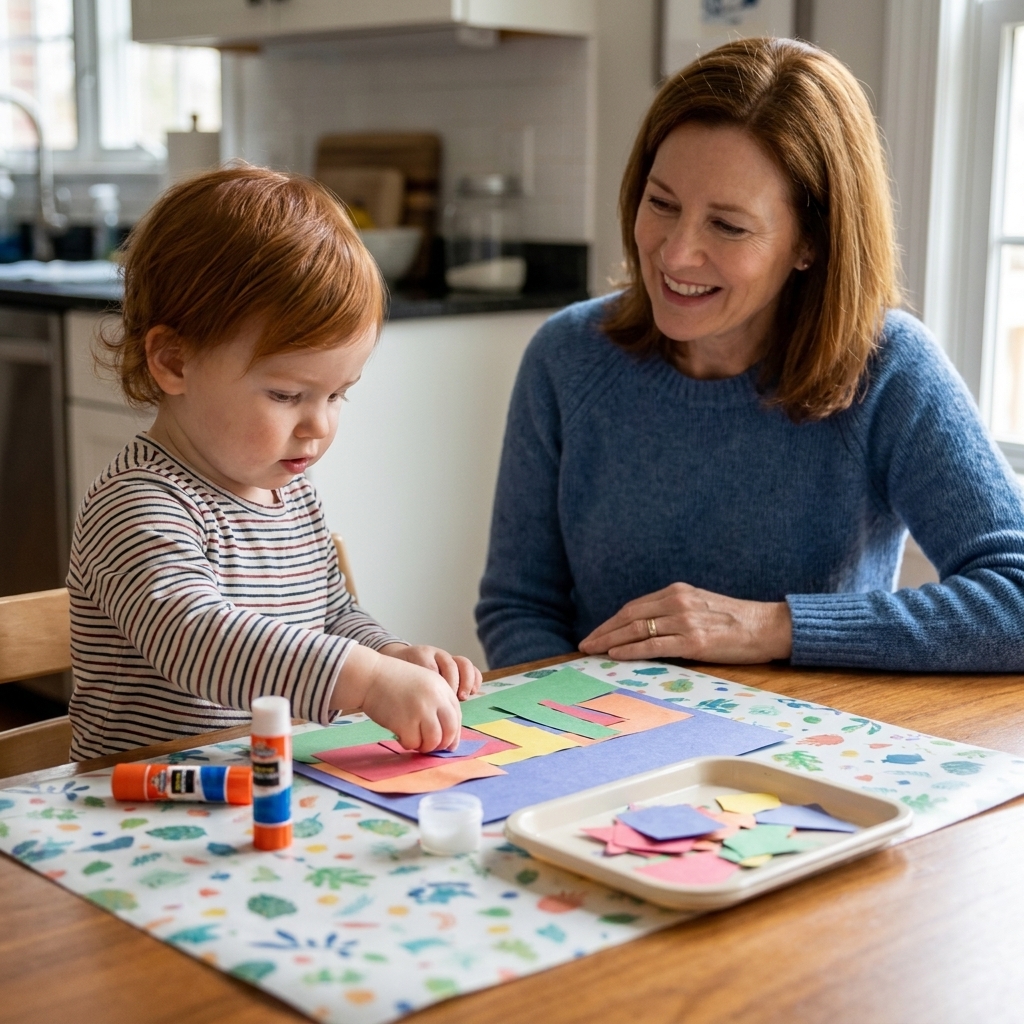
7) Confetti Collage Birthday Card
Skills: snips, hand strength, glue control
You’ll need: scrap paper, glue stick, folded cardstock
- Have your child snip tiny bits from scraps to make confetti.
- Spread glue on the card front.
- Sprinkle confetti and press down.
Less mess trick: Put the card inside a shallow tray while sprinkling.
8) Paper Plate Sun Rays
Skills: cutting around an edge, repeated snips
You’ll need: paper plate, yellow paper, glue, crayons
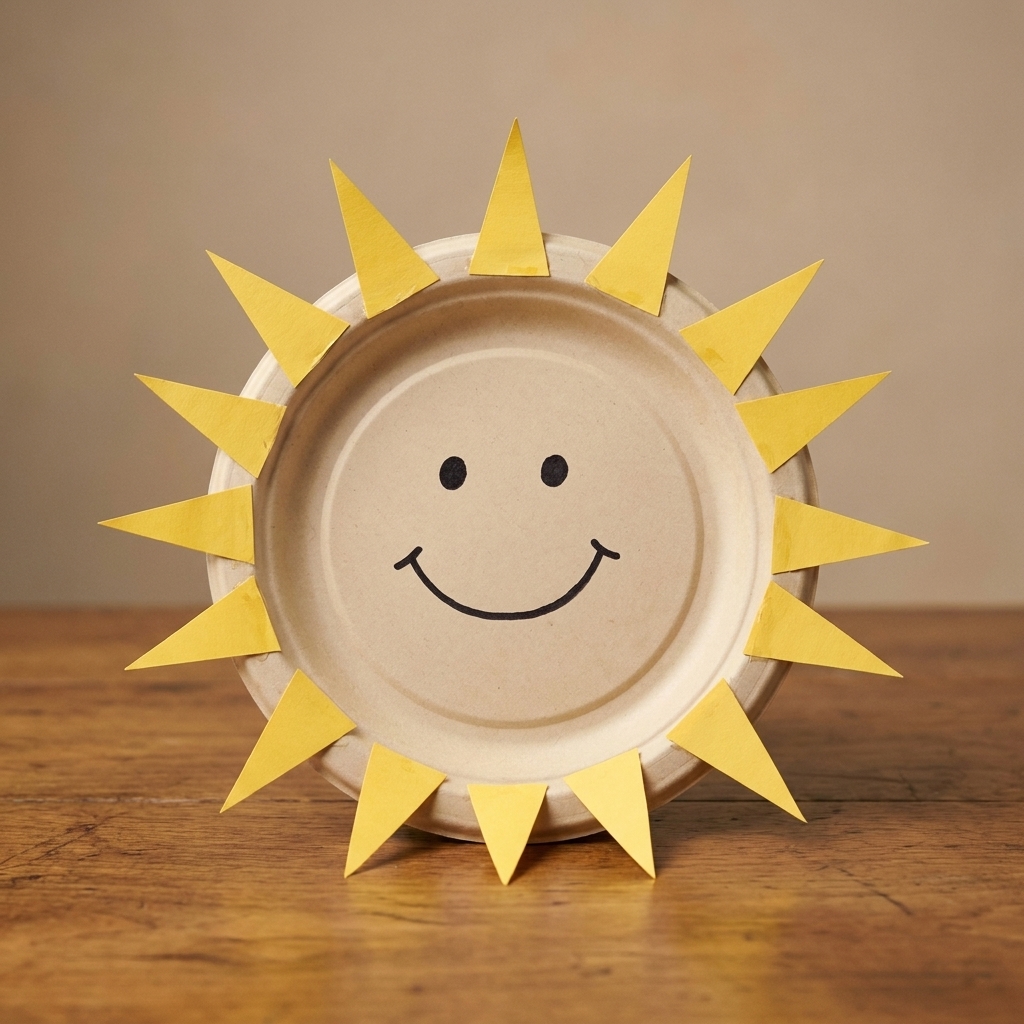
- Color the paper plate center like a sun face.
- Kids cut long triangle or rectangle rays from yellow paper.
- Glue rays around the back edge of the plate.
Option: Use orange and yellow rays for extra practice and a fuller sun.
9) Shape Sticker Cut-Outs
Skills: cutting around shapes, precision, visual planning
You’ll need: dot stickers or any stickers, paper, marker
- Stick a few stickers spaced out on a page.
- Draw a simple shape around each sticker (circle, square, triangle).
- Kids cut out each shape and make a picture by gluing them onto a new page.
Why this works: Stickers create a “target,” and kids love rescuing each one by cutting it out.
10) Paper Chain Pets
Skills: cutting strips, gluing loops, sequencing
You’ll need: paper strips, glue stick or tape, marker
- Kids cut multiple strips (thick is fine).
- Make loops and connect them into a chain.
- Add a head and tail by drawing on paper and gluing to the first and last loop.
Preschool win: Even imperfect loops still become a pet. My favorite kind of craft.
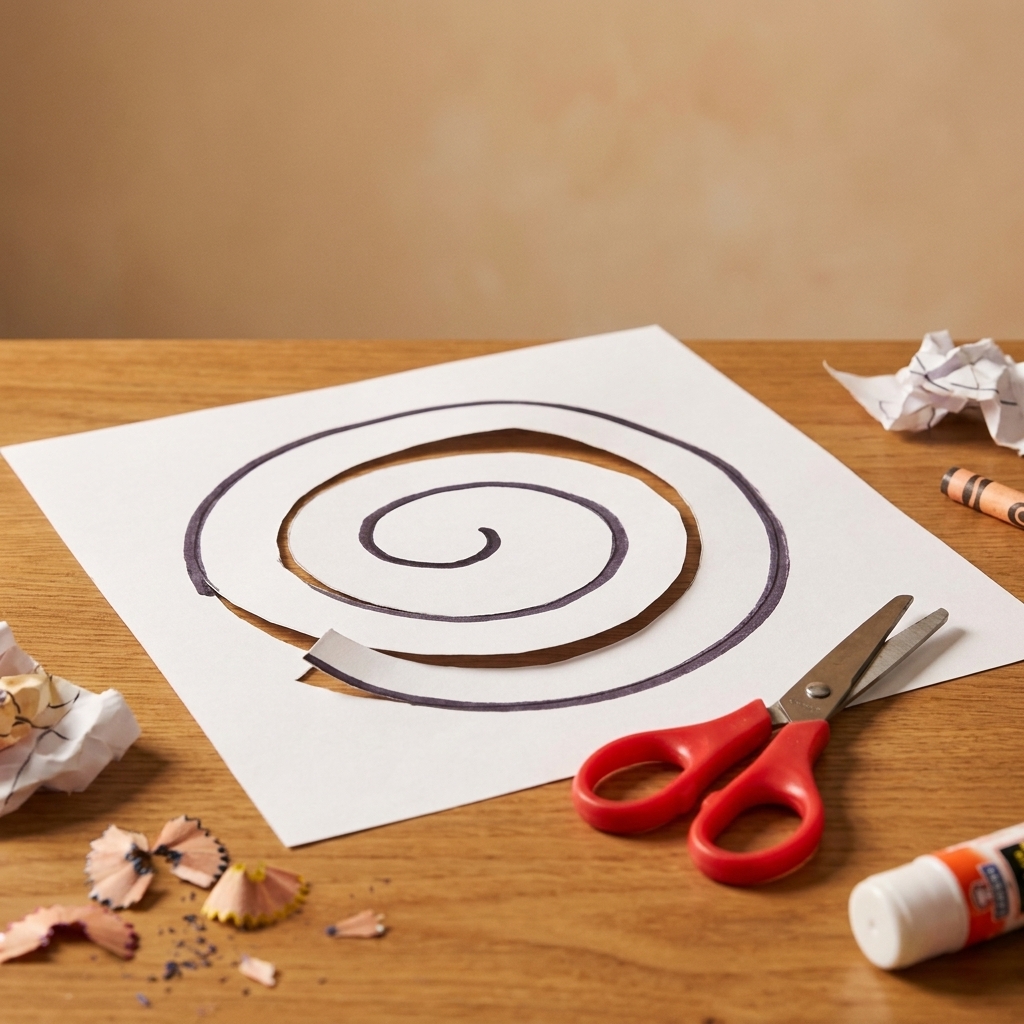
11) Spiral Snail Shell
Skills: continuous cutting, control, turning paper
You’ll need: paper, marker, glue
- Draw a big spiral with a thick marker line.
- Kids cut along the spiral path slowly to the center.
- Glue the spiral onto a paper snail body.
Make it easier: Start with a short, wide spiral. Tight spirals are advanced.
12) Nature Snip Cards
Skills: purposeful snips, real-world connection
You’ll need: cardstock, glue, small nature finds (dry leaves, grass, flower petals)
- On a walk, collect a few small flat nature items.
- Back home, put a dab of glue on cardstock.
- Kids snip grass or petals into smaller pieces and press onto the glue to make a “nature picture.”
Note: Use dry, clean items. Avoid anything wet or sappy unless you want a sticky scissors situation.
Common scissor skill hiccups
- They rip instead of cut: Try paper bags, manila folders, or light cardstock. If it’s too thick and frustrating, go thinner. The goal is “easy wins.”
- They fold the paper while cutting: Use smaller pieces and show how the helper hand holds the paper far from the scissors.
- Their hand gets tired fast: Do 2-minute cutting bursts, then switch to gluing or coloring.
- They cut random chunks and get upset: Start with fringe, confetti, and snip cards. “On the line” can come later.
Choosing the right scissors
Look for blunt-tip, kid-sized scissors that open smoothly. If your child struggles to open the blades, spring-assisted scissors can be a confidence saver. And if the scissors chew paper instead of cutting cleanly, it isn’t your child’s fault. Dull blades can make cutting feel impossible.
Left-handed note: If your child is left-handed, true left-handed scissors can make a big difference. It also helps if you sit across from them to model, so your hands mirror theirs.
FAQ
What age should a child start using scissors?
Many kids can start supervised scissor practice around age 2.5 to 3 with blunt-tip safety scissors and very simple snipping activities. Readiness varies a lot, and that’s normal. If they’re not ready, try tearing paper, play dough, and tong games to build hand strength first. Stay close, and keep scissors put away when you’re not right there.
How long should we practice scissor skills?
For preschoolers, 5 to 10 minutes is plenty. Short, happy practice beats long, frustrating sessions every time.
What paper is easiest for beginners?
Construction paper and paper bags are great starter options. They’re stiff enough to control but not so thick that little hands get discouraged.
A gentle reminder
Cutting crafts aren’t about perfectly matching the line. They’re about building brave little hands that keep trying. Save a few early “wonky” cutouts in a folder. In a month or two, you’ll be amazed at the progress.
If you want a super simple next step, repeat favorites from this list. Repetition is where the magic lives, even when it looks like a pile of paper crumbs on your floor.