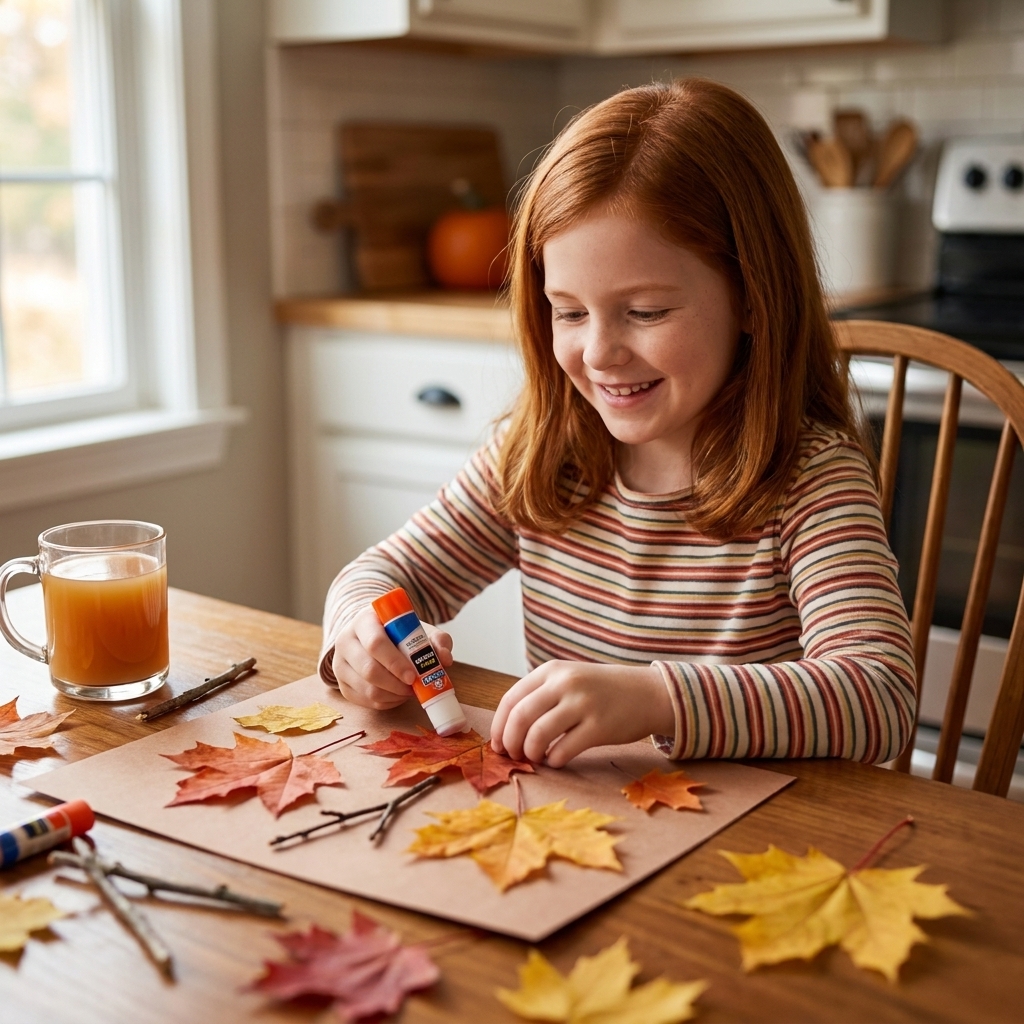
A cozy list of simple autumn nature crafts for kindergarteners. Quick setup, big creativity, and lots of leaf and twig fun for ages 5 to 6.
Every fall, my kids come home with pockets full of “treasures.” A crunchy red leaf. A tiny acorn cap. A stick that is apparently a very important wand. And honestly? This is my favorite kind of math supply shopping because it is free, it is sensory-rich, and it does not come with 47 tiny plastic pieces that live under the couch forever.
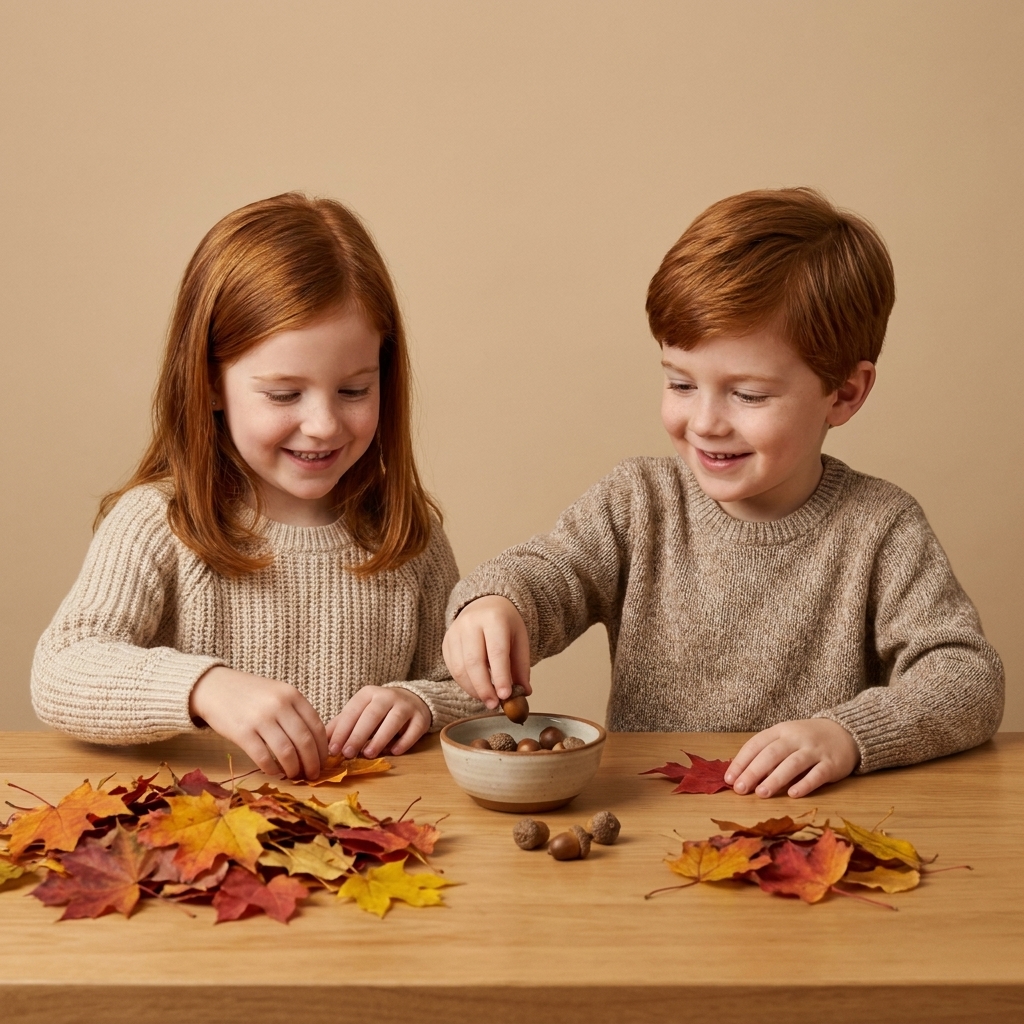
Below are 15 tactile math activities using fall leaves and acorns that build counting, sorting, number sense, and simple addition. They are meant to be low-pressure and joy-forward. If your child counts “1, 2, 3, 8, 9” while also pretending the acorns are baby hedgehogs, you are still doing it right.
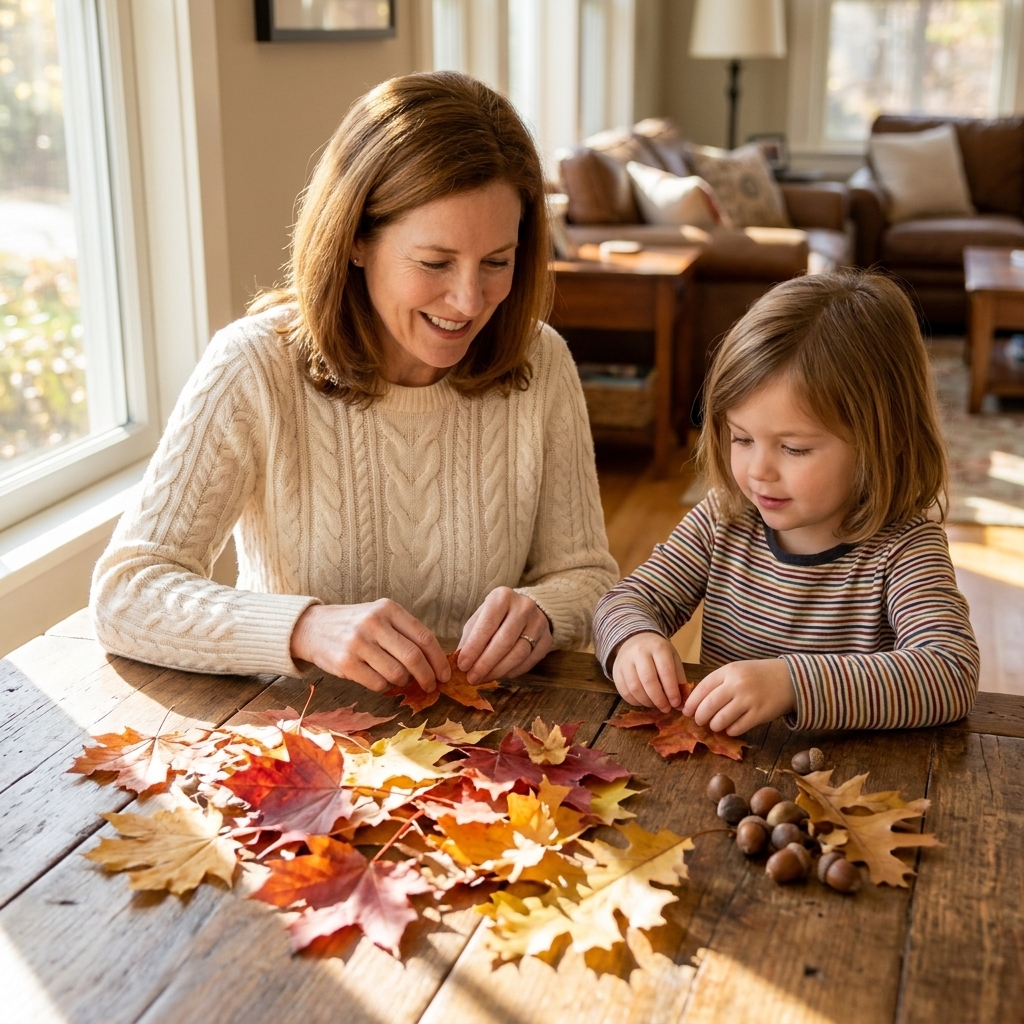
Before you start: foraging and prep
What to collect
- 10 to 30 acorns (bigger ones are easier for little hands)
- 10 to 30 leaves (a mix of sizes and colors is perfect)
- Optional extras: pinecones, small rocks, sticks, acorn caps
Quick cleaning and inspection
- Leaves: wipe gently with a dry paper towel. If they are damp, let them air-dry on a towel.
- Acorns: rinse quickly in a colander if muddy, then dry thoroughly. For indoor play, I like to lay them on a towel overnight.
- Do a quick adult check: toss anything cracked, soft, sticky, or moldy. Acorns can sometimes hide tiny bugs or larvae, so if an acorn looks suspicious or has small holes, leave it outside.
Safety notes (especially under age 3)
- Acorns are a choking hazard for young children, especially under age 3. Stay close, and use larger items (big leaves, pinecones) if you have a mouther.
- If your child has allergies or sensitive skin, wash hands after nature play.
- Avoid collecting from areas that may be treated with pesticides.
- Skip anything sharp or dirty (splintery sticks, plants with thorns, or items near animal droppings).
Grab-and-go supplies (optional)
- Muffin tin or egg carton
- Painter’s tape or masking tape
- Paper plates or a baking tray (my favorite “contain the mess” trick)
- Washable tray, placemat, or tablecloth (leaves and acorns can be dusty, and acorns can leave tannin stains)
- Marker and scrap paper
- Dice
15 tactile math activities
Each activity includes a quick setup, how to play, and easy variations for different ages. Mix and match. You do not need to do them in order.
1) Leaf and acorn counting tray
Setup: Put leaves and acorns on a baking tray or cookie sheet.
How to play: Ask your child to count out a specific number: “Can you give me 6 acorns?” Then swap roles and let them boss you around. Kids love that part.
Make it easier: Start with 1 to 5.
Make it harder: Ask for two sets: “Give me 4 acorns and 3 leaves.”
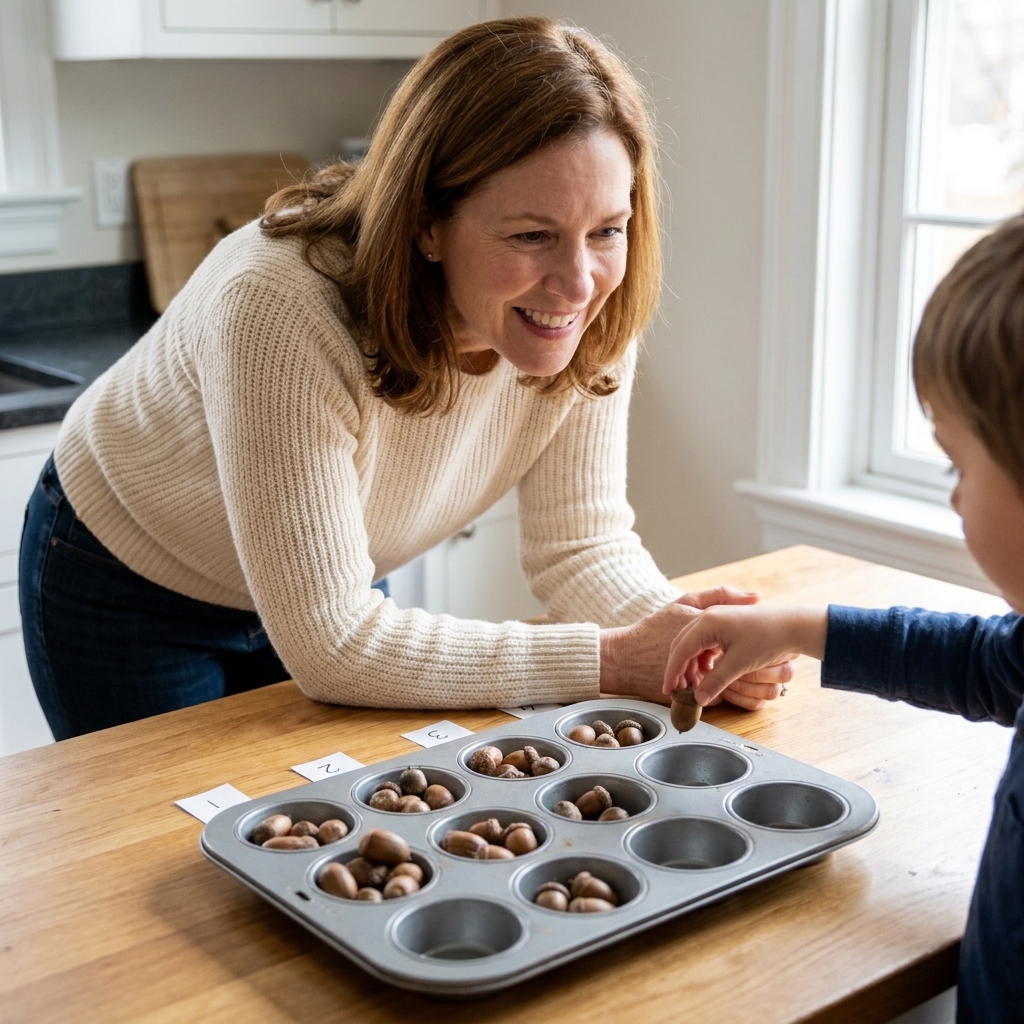
2) Muffin tin number matching
Setup: Write numbers inside muffin tin cups (or on small paper squares in each cup).
How to play: Your child fills each cup with that many acorns.
Make it easier: Use dots instead of numerals for preschoolers.
Make it harder: Mix leaves and acorns, for example: “7 total, at least 2 leaves.”
3) Sort by color (and count each group)
Setup: Spread out a pile of leaves.
How to play: Sort leaves into color groups (red, yellow, orange, brown, green). Then count each group and compare: “Which has more? Which has fewer?”
Make it easier: Only sort into two colors.
Make it harder: Put the counts in order from least to most.
4) Sort by size: big, medium, small
Setup: Choose a mix of large and small leaves, plus acorns if you want.
How to play: Create three piles: big, medium, small. Count how many items are in each pile.
Teacher tip: If “medium” is tricky, start with just big and small. Add medium later.
5) Ten-frame with acorns
Setup: Draw a 10-frame on paper (two rows of five boxes).
How to play: Roll a die or call a number 0 to 10. Your child fills the ten-frame with acorns.
Math skill: Subitizing (with the ten-frame structure) and making ten.
Make it harder: Ask “How many more to make 10?”
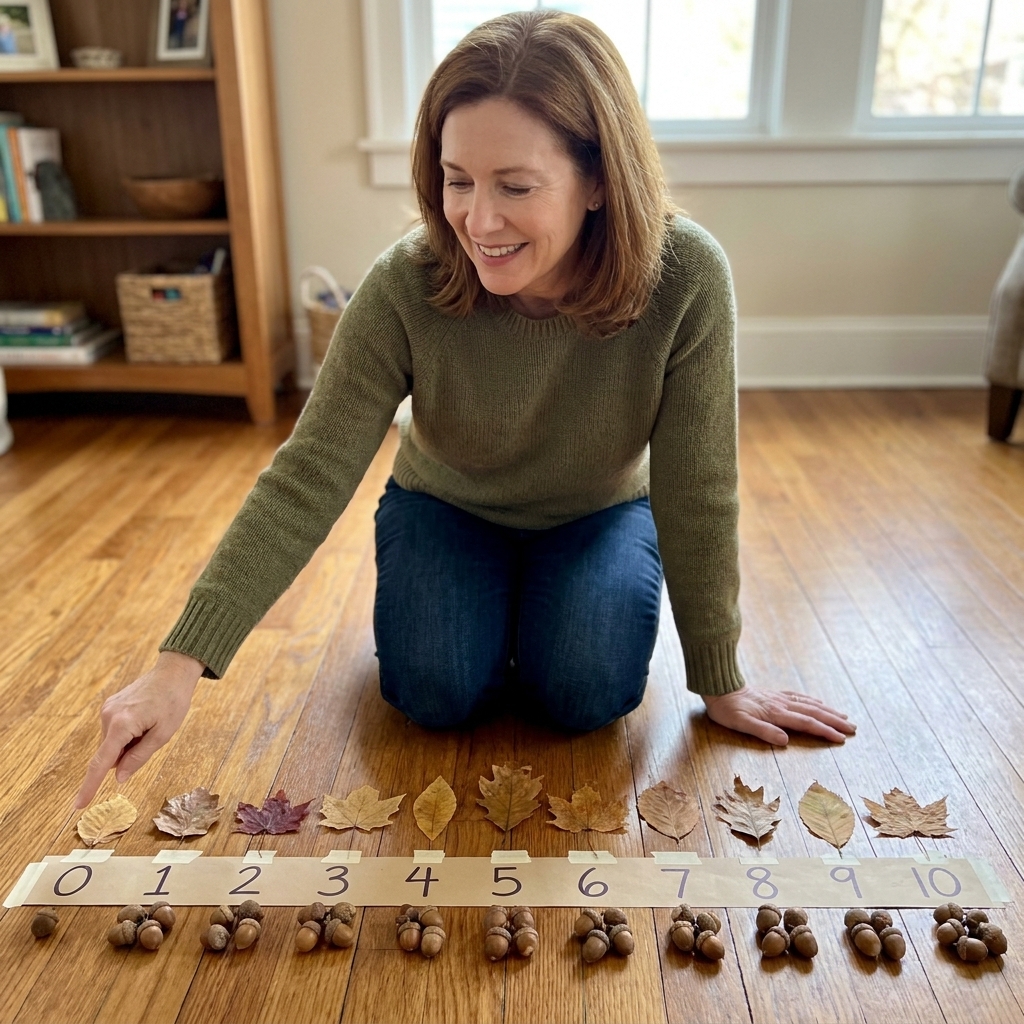
6) Leaf number line
Setup: Tape down a simple number line using paper strips: 1 to 10 (or 1 to 20). Place one leaf above each number as a “marker” for where piles will go.
How to play: Place 1 acorn on 1, 2 acorns on 2, and so on. Kids love seeing the piles grow.
Make it harder: Skip count by 2s using pairs of acorns.
7) Nature greater than and less than
Setup: Make two piles of acorns (or leaves). Keep them close but separated.
How to play: Ask which pile has more, fewer, or if they are equal. For older kids, draw the > < symbols on paper and have them choose the correct one.
Make it easier: Use small numbers (1 to 5) with clearly different amounts.
8) Roll and collect (dice game)
Setup: Each player gets an empty bowl. Put a “forest pile” of acorns in the middle.
How to play: Roll a die and collect that many acorns. Play for 10 turns, then count totals.
Make it harder: Use two dice and add them.
Gentle life lesson: Counting at the end is great practice, but also a great moment to model patience when someone miscounts. It happens.
9) Leaf patterns
Setup: Pick two or three different leaf types or colors.
How to play: Make a simple pattern for your child to copy: red, yellow, red, yellow. Or big, small, big, small. Then let them create one for you.
Make it harder: Try ABC patterns or AAB patterns.
10) Acorn hat counting
Setup: Place a few acorns in a row. Add caps to some of them.
How to play: Ask, “How many acorns are wearing hats?” Count capped vs uncapped, then compare.
Make it harder: Ask for totals: “There are 10 acorns. 4 have hats. How many do not?”
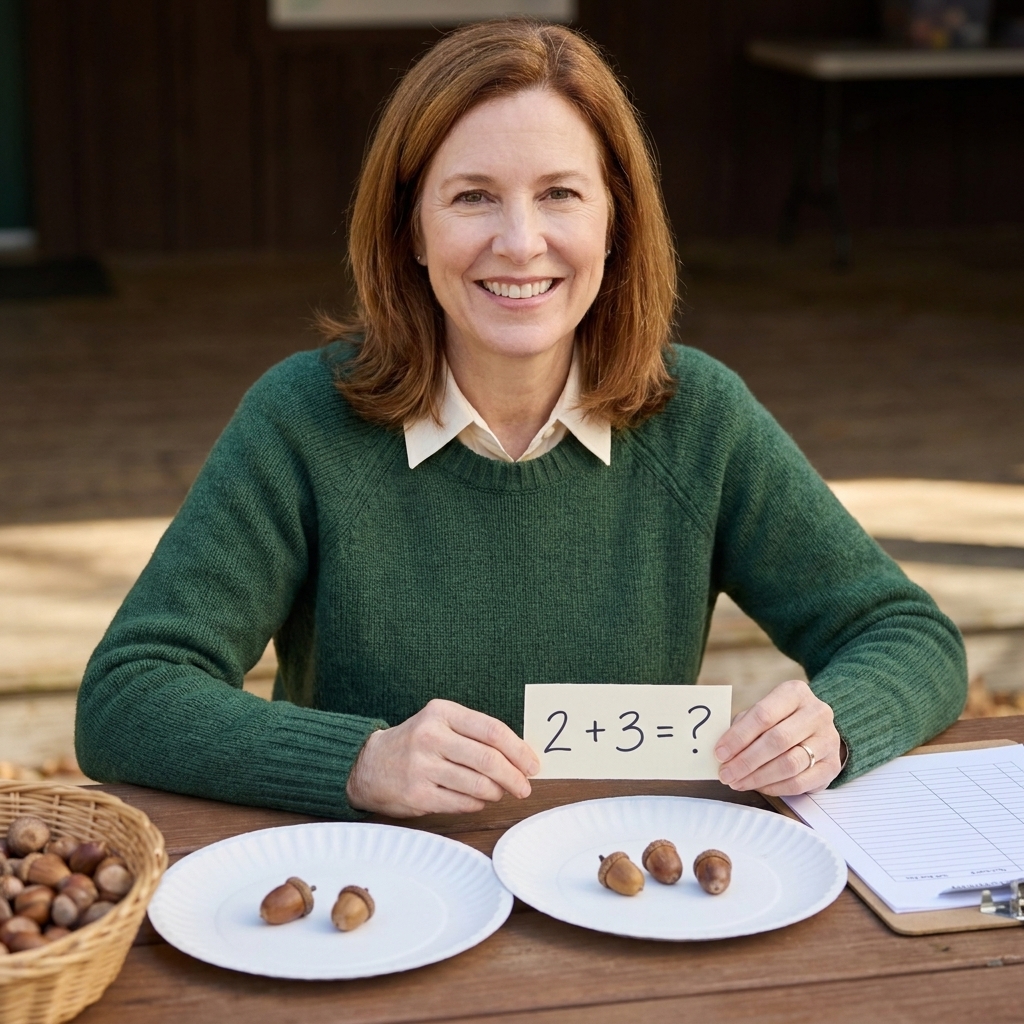
11) Simple addition with two leaf plates
Setup: Set out two paper plates. Put one leaf on each plate to label them Plate A and Plate B (or just call them “this plate” and “that plate”).
How to play: Put 3 acorns on one plate and 2 on the other. Push them together and count all: 3 + 2 = 5.
Make it easier: Keep totals under 10.
Make it harder: Write the equation on paper and have your child match it to the piles.
12) Leaf subtraction: blown away
Setup: Start with a small pile of acorns, like 8.
How to play: Tell a quick story: “Eight acorns were on the ground. Two rolled away.” Physically remove 2 and count what is left.
Make it silly: Use a pretend wind sound or let your child “blow” one away with their hand. Kindergarten teacher trick: stories help kids remember what subtraction means.
13) Build a number (compose and decompose)
Setup: Choose a target number, like 7. Place 7 items total in front of your child (mix leaves and acorns).
How to play: Ask, “Can you make 7 in a different way?” Examples: 5 acorns + 2 leaves, then 3 acorns + 4 leaves.
Make it harder: Try 10, and see how many combinations they can find.
14) Estimate, then count
Setup: Put a small handful of acorns in a bowl.
How to play: Ask for an estimate first: “How many do you think?” Then count together.
Make it easier: Keep the group small (under 10).
Make it harder: Do two bowls and estimate which has more before counting.
15) Nature store (counting and word problems)
Setup: Make a pretend store with leaves as “items” and acorns as “coins.”
How to play: Price items simply: one leaf costs 2 acorns, a big leaf costs 3. Let your child buy and pay exact amounts.
Make it easier: Everything costs 1 acorn.
Make it harder: Introduce “change” by overpaying and counting back.
Make it work by age
Ages 3 to 4: keep it short and tactile
- Focus on counting 1 to 5, sorting, and patterns.
- Use big leaves and pinecones if acorns feel too small.
- Stop while it is still fun. Five minutes can be a win.
Ages 5 to 6: number sense and making ten
- Add ten-frames, comparing groups, and totals to 10.
- Encourage one-to-one counting (touch each acorn as you count).
- Try simple story problems with addition and subtraction.
Ages 7 to 9: stretch the thinking
- Use two dice for addition, and introduce missing addends (“7 + ___ = 10”).
- Have them record equations on paper.
- Try skip counting by 2s and 5s using grouped acorns.
Troubleshooting
If counting keeps getting mixed up
- Slow down and touch each object once while saying the number.
- Line items up in a row rather than counting in a pile.
- Count together, then have your child try again.
If your child only wants to play pretend
Lean into it. Pretend play is not “instead of” learning. It is a bridge to it. Turn the acorns into “sleepy squirrels” that need to be counted into beds (muffin tin cups), or “lost acorns” that need to be added back to the pile.
If the mess is stressing you out
- Contain it with a tray, sheet pan, or shower curtain liner on the floor.
- Set a 10-minute timer and do a quick sweep-up together.
- Remind yourself: a lived-in house can still be a lovely place to learn.
Quick FAQ
Do I need to sanitize acorns for indoor play?
If you are playing at the table and your kids are past the “put everything in my mouth” stage, a quick rinse and thorough dry is usually enough. The bigger thing is inspection: discard cracked, soft, or moldy acorns, and skip any with tiny holes. If you prefer extra caution, keep nature items in a bin reserved for supervised play and wash hands after.
What if we cannot find acorns?
No problem. Use pinecones, small smooth rocks, chestnuts, seed pods, or even dried beans from the pantry. The math skills are the same.
What if I do not want to bring acorns indoors?
Do these activities outside on a porch, patio, or park picnic table, or keep them “tray-contained” near the door. Same learning, less worry about pests and cleanup.
How long should these activities take?
For preschoolers, 5 to 10 minutes is plenty. For early elementary kids, 10 to 20 minutes works well, especially if you add a recording sheet or story problems.
One last cozy reminder
Fall math does not need a worksheet to count. If your child is touching, moving, sorting, and talking about quantities, they are building real number sense. Grab a handful of leaves, a few acorns, and let nature do some of the teaching. You bring the snacks. That is the balance I aim for.