Ten backyard water sensory bins that can keep kids cool and learning all summer. Budget-friendly supplies, simple set-ups, safety notes, and age tweaks for t...
If my house had a motto, it would be: “In case of chaos, add a sensory bin.” Sensory bins are my go-to for toddler play because they check three magical boxes at once: they keep little hands busy, they build real skills (hello, future zipper and pencil control), and they are wonderfully forgiving. No perfect craft outcomes required.
Below are 15 easy sensory bin ideas you can pull together with what you already have. Each one includes the fine motor skills it builds, quick setup steps, and a simple way to adjust for younger toddlers or older siblings.
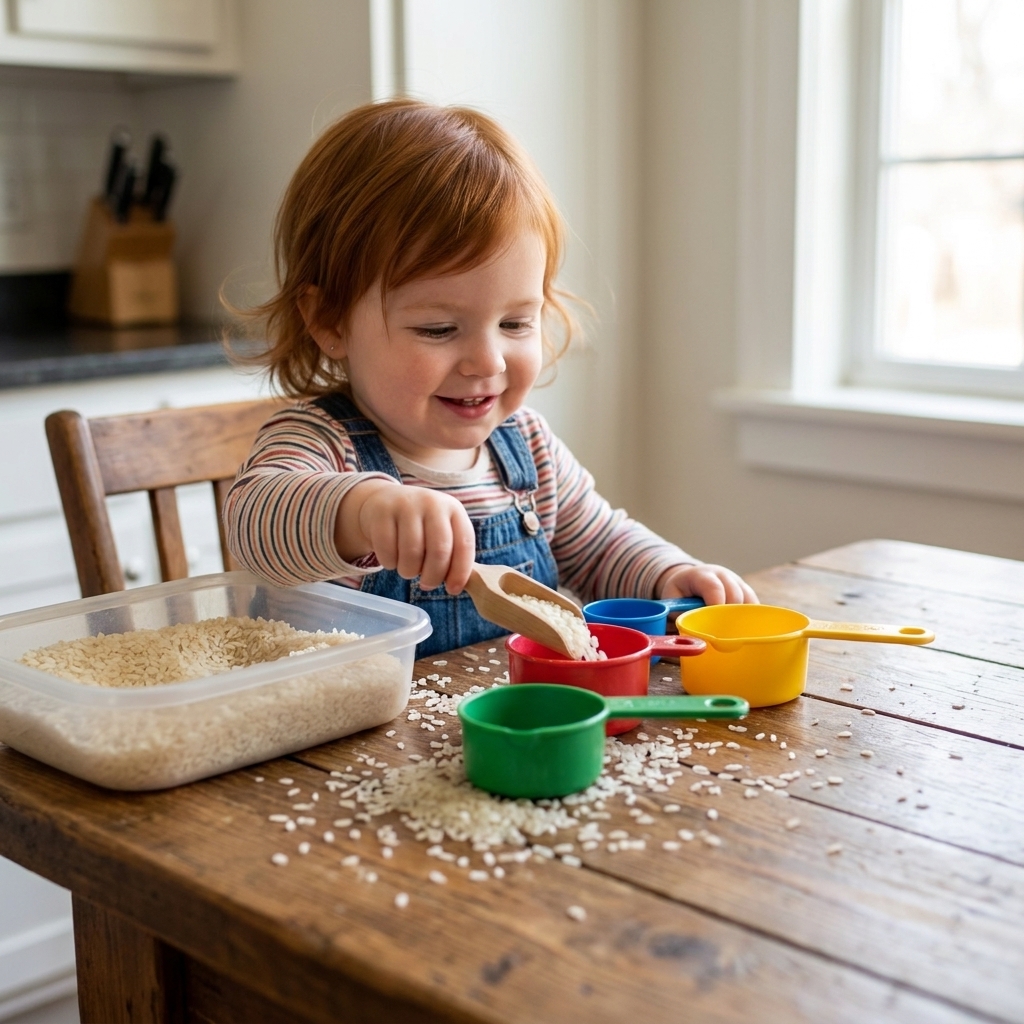
Sensory bin basics (keep it simple)
My favorite bin rules
- Go shallow (with sides): A low plastic under-bed box, a roasting pan, or a tray with higher sides helps keep materials contained.
- Pick one base: Dry rice, oats, pasta, kinetic sand, or water. One base is plenty.
- Add 3 tools: Scoop, cup, and tongs are my classic trio.
- Set a boundary: A towel under the bin or a cookie sheet underneath saves your sanity.
Safety note
Always supervise toddlers closely, especially with small items (pom-poms, beads, mini objects), edible bases, and any water play. If your child is still mouthing everything, choose larger objects and taste-safe bases like cereal, dry oats, cooked pasta, or yogurt in a high chair tray.
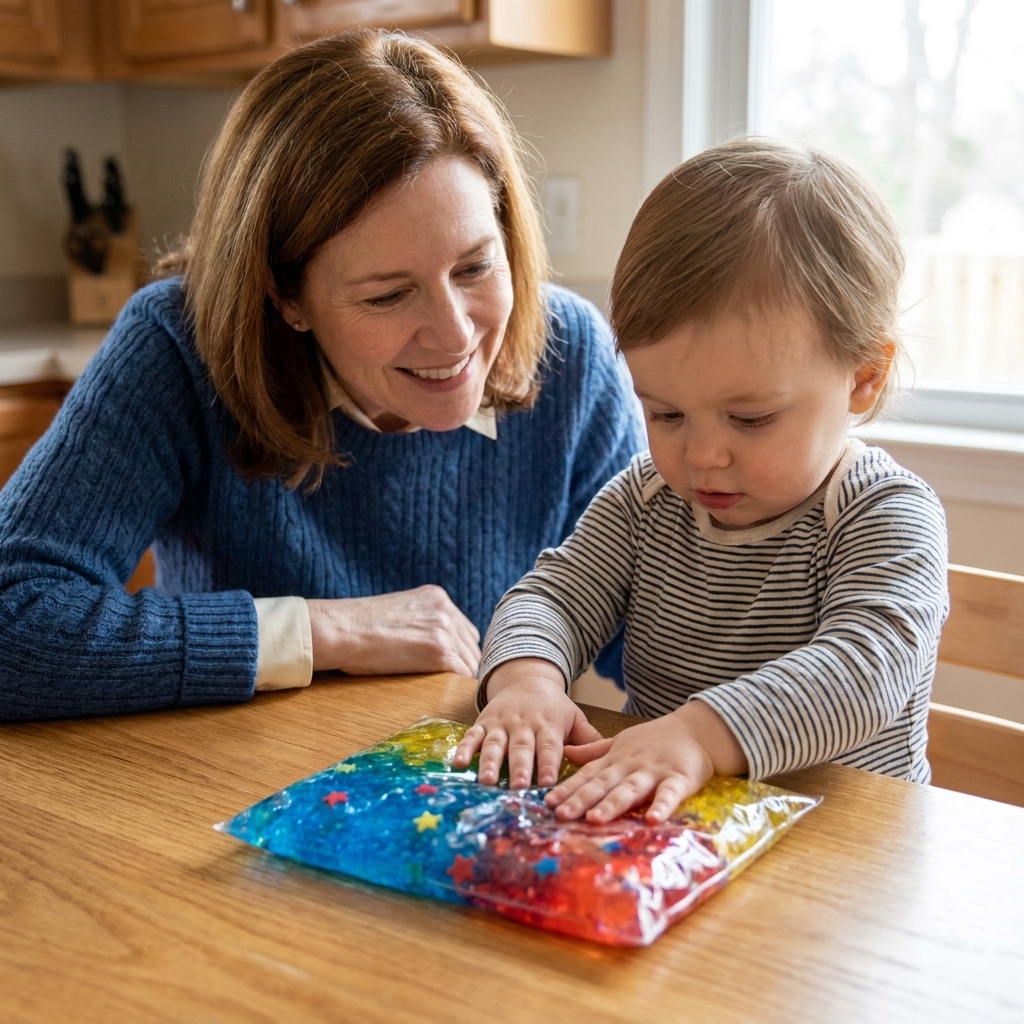
Important: Water beads are not recommended for toddlers. If swallowed, they can expand and cause serious choking or intestinal blockage, and they can be difficult to detect on imaging. For a toddler-focused sensory bin, skip them entirely.
15 easy sensory bin ideas (fine-motor focused)
1) Rainbow Rice Scoop and Pour
Skills: scooping, pouring, wrist rotation, hand-eye coordination
Base: dry rice (plain or colored)
Add: measuring cups, funnels, small containers with lids
- Pour rice into a shallow bin.
- Add cups and a funnel (a rolled paper funnel works too).
- Invite your toddler to “fill, dump, and refill.”
Make it easier: use bigger cups and bowls.
Make it harder: add a muffin tin for “one scoop per cup.”
2) Oatmeal Spoon Transfer
Skills: spoon control, bilateral coordination (one hand holds, one hand scoops)
Base: dry oats
Add: two bowls, spoons of different sizes
- Set two bowls in the bin or on a tray.
- Fill one with oats and keep one empty.
- Practice transferring oats bowl to bowl.
Quirky mom tip: put the bowls inside the bin so the misses stay contained.
3) Pasta and Tongs Rescue
Skills: pincer grasp, hand strength, tong control
Base: dry pasta shapes (penne, rigatoni, shells)
Add: kid tongs, ice cube tray, small cup
- Pour pasta into the bin.
- Challenge your toddler to pick up pasta with tongs and drop into the tray.
- Count each piece as it lands if your child enjoys numbers.
Make it easier: start with big pasta like rigatoni.
Make it harder: switch to mini tongs or tweezers (past the mouthing stage only).
4) Pom-Pom Pick Up and Post
Skills: pincer grasp, hand-eye coordination, graded pressure (not squishing)
Base: pom-poms
Add: clean, empty spice jar or clean, empty grated-cheese container with holes, tongs
- Add pom-poms to the bin.
- Place an empty container with a sprinkle lid or holes.
- Let your toddler “post” pom-poms through the holes.
Safety: choose jumbo pom-poms for younger toddlers, and skip this if your child is still in the put-everything-in-mouth phase.
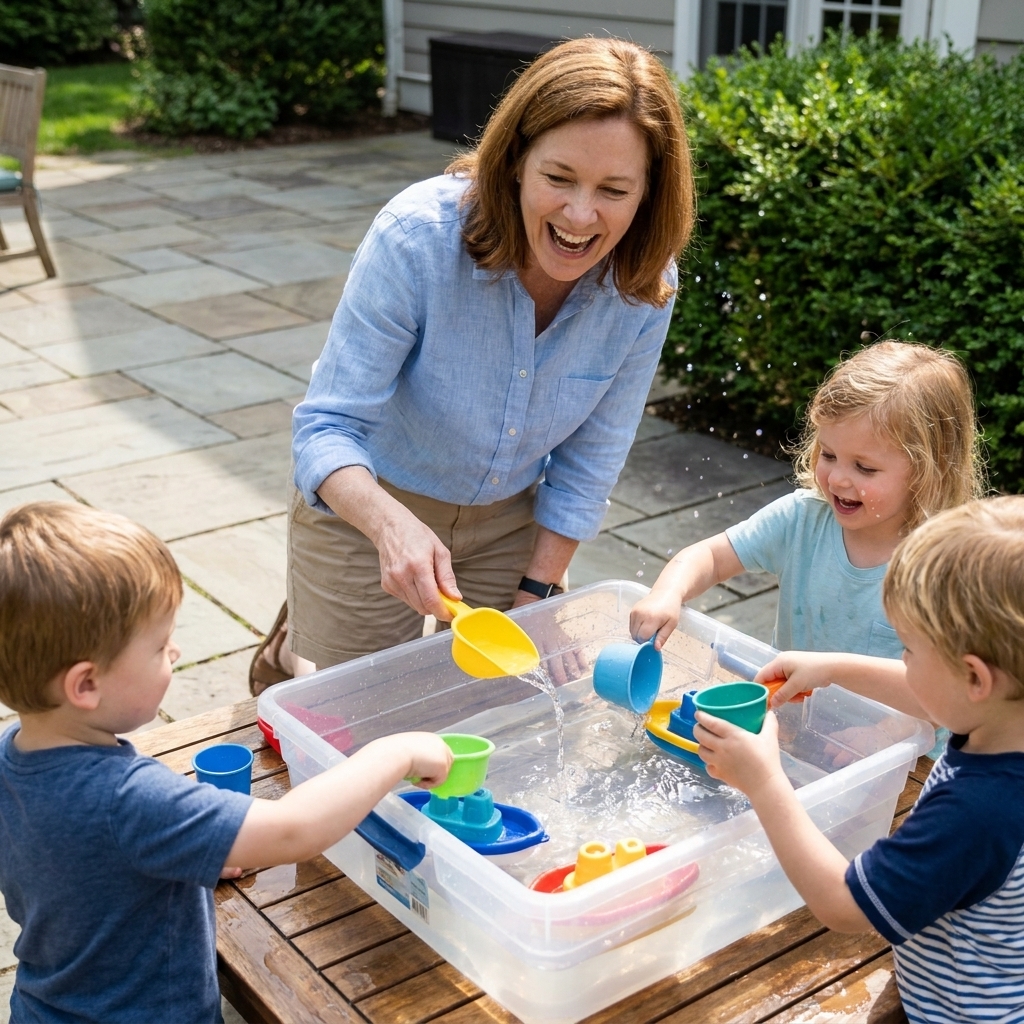
5) Water Wash Station (Toy Bath)
Skills: squeezing, pouring, utensil grip, coordination
Base: warm water (in a shallow bin)
Add: sponge, small brush, cups, plastic animals or cars
- Fill the bin with 1 to 2 inches of water.
- Add a sponge and a few small toys.
- Demonstrate squeezing the sponge into a cup.
Make it calmer: add a towel under the bin and keep a drip cup nearby.
Safety: warm, not hot, and watch for slippery floors and speedy toddlers.
6) Bubble Foam Scoop Play
Skills: scooping, sensory tolerance, hand strength
Base: bubble foam (water + a little dish soap, whisked)
Add: scoops, small bowls, ladle
- Make a bowl of foam and add it to the bin.
- Offer scoops and bowls for transferring foam.
- Encourage “mountains and storms” scooping play.
Quick ratio: try about 1 cup water + 1 to 2 tablespoons dish soap, then whisk until fluffy.
Toddler-friendly tip: if foam feels too yucky, let them start with tools only, then slowly touch with one finger.
7) Kinetic Sand Treasure Dig
Skills: finger strength, digging, tool control
Base: kinetic sand
Add: small cups, toy shovel, big, toddler-safe “treasures”
- Hide a few treasures in the sand.
- Provide a scoop and cup for digging.
- Practice brushing sand away using fingertips.
Make it harder: use tweezers to pick out treasures (only if your child is past mouthing and you can supervise closely).
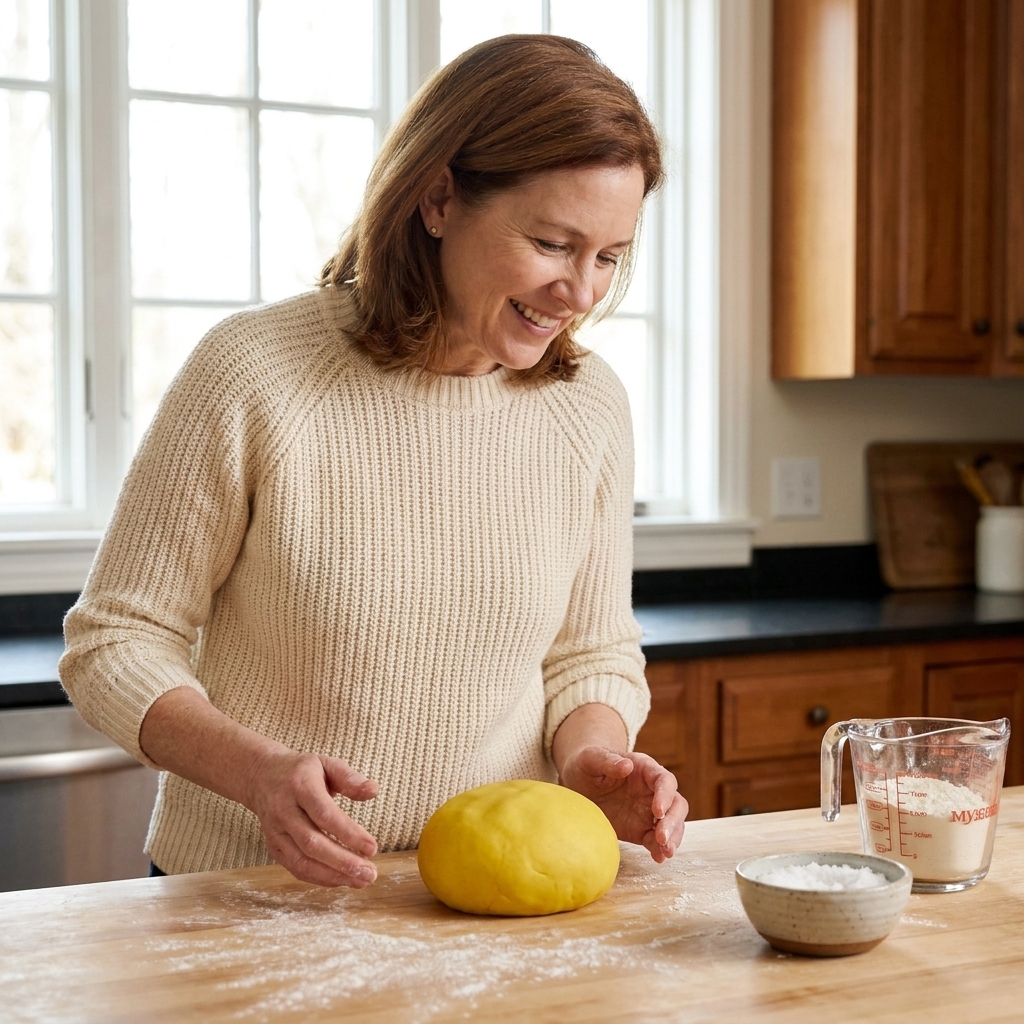
8) Play Dough Snack Shop Bin
Skills: pinching, rolling, scissor readiness, hand strength
Base: play dough
Add: plastic knife, child-safe scissors, cookie cutters, muffin tin
- Put a few dough colors in the bin or on a tray.
- Offer tools and a muffin tin for “orders.”
- Encourage pinching off small pieces and rolling balls.
Teacher trick: tell them to make tiny peas. Those little pinches are fine motor gold.
Safety: use child-safe scissors with close supervision. Also note that many store-bought play doughs contain wheat.
9) Clothespin Color Grab
Skills: hand strength, tripod grasp practice, bilateral coordination
Base: none needed, but a bin keeps pieces together
Add: clothespins, colored paper strips, pom-poms
- Put pom-poms in the bin.
- Clip clothespins onto the rim of the bin or onto paper strips.
- Challenge your toddler to pick up pom-poms using clothespins like “pincher claws.”
Make it easier: use bigger clothespins or chip clips.
10) Cereal Threading Tray
Skills: hand-eye coordination, pincer grasp, early lacing
Base: cereal like O-shaped cereal or large tube pasta
Add: pipe cleaners or shoelace with taped tip
- Put cereal in a tray or bin.
- Offer pipe cleaners for threading.
- Let your toddler slide pieces on and off.
Safety: supervise closely. If your child mouths non-food items, skip the pipe cleaner or shoelace and stick to simple transferring instead.
11) Sticky Note Peel and Stick Bin
Skills: finger isolation, pincer grasp, wrist stability
Base: none
Add: sticky notes, an upside-down box or bin lid
- Stick notes all over a box or bin lid.
- Invite your toddler to peel them off and restick.
- Turn it into “mail” by sticking notes into a container.
Make it harder: tear sticky notes into smaller squares for tiny pinches.
12) Sock Match and Stuff Bin
Skills: bilateral coordination, hand strength, practical life skills
Base: clean socks
Add: small ball (or rolled socks), small basket
- Fill the bin with socks and a few rolled “sock balls.”
- Have your toddler stuff balls into socks and pull them back out.
- Bonus: match pairs by color.
Real-life bonus: it feels like play, but it is basically laundry training.
13) Painter’s Tape Pull-Up Tray
Skills: pincer grasp, shoulder stability, crossing midline
Base: none
Add: painter’s tape, tray or bin lid, small toys to “free”
- Tape a few small toys lightly onto a tray.
- Add strips of painter’s tape over and around them.
- Let your toddler peel tape to rescue the toys.
Make it easier: fold tape ends to create little tabs.
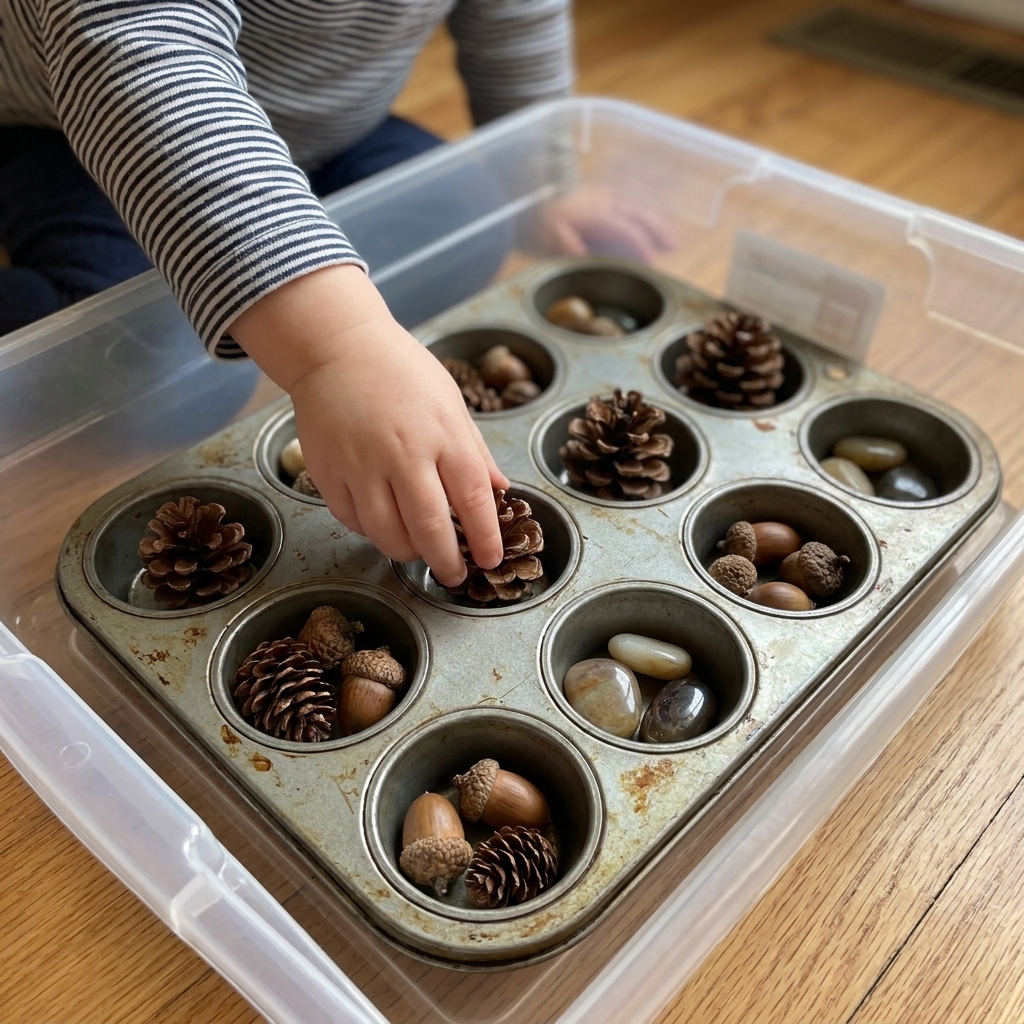
14) Nature Find and Sort Bin
Skills: grasping, sorting, visual discrimination
Base: nature finds like large leaves, big pinecones, chunky rocks, or large acorns
Add: muffin tin, cups, tweezers
- Go on a quick nature walk and collect a handful of items.
- Dump them into the bin.
- Sort into a muffin tin by size or type.
Safety: choose larger items only, inspect for sharp bits, mold, and bugs, and skip tiny rocks or acorns for kids who still mouth objects. Rocks can also be a tooth hazard if they get chomped.
15) Ice Cube Rescue Bin
Skills: tong control, grip strength, persistence
Base: ice cubes (plain or with a larger toddler-safe item frozen inside)
Add: tongs, cup of warm water, baster or dropper
- Add ice cubes to the bin.
- Provide tongs and a cup of warm water.
- Let your toddler transfer ice, drip warm water, and watch melting happen.
Make it calmer: do this at the kitchen table with a towel underneath.
Safety: warm water only, not hot. Keep the bin stable and mop up drips quickly to avoid slips.
How to keep sensory bins low-mess (for real life)
- Use a bin buddy towel: One dedicated towel under the bin catches most spills.
- Set a scoop limit: “Rice stays in the bin” works better than “Don’t spill.”
- Offer a sweep-up job: A small brush and dustpan turns cleanup into fine motor practice too.
- Store in a shoebox: Keep the base in a labeled container so you can reuse it all week.
And if it still gets messy? You did it right. Sensory play is supposed to be hands-on and a little chaotic.
Fine motor skills toddlers build with sensory bins
When toddlers scoop, pinch, squeeze, and sort, they are practicing the foundational movements that later show up as:
- Using a spoon and fork more smoothly
- Turning pages one at a time
- Zipping jackets and managing buttons
- Holding crayons with more control
- Building stamina for drawing, coloring, and early writing
If your child plays the wrong way, that is still skill-building. Dumping is exploration. Stirring is wrist strength. Filling and emptying is coordination. Process over perfection, always.
Quick FAQ
What age are sensory bins best for?
Most kids can enjoy sensory bins from around 12 months and up with close supervision and age-appropriate materials. For toddlers, I stick to bigger tools and larger items that are not a choking risk.
How long should a toddler play with a sensory bin?
Even 5 to 10 focused minutes is a win. Some days you will get 30 minutes. Some days you will get 90 seconds. Both count.
What is the easiest sensory bin filler?
Dry rice, dry oats, or pasta are the easiest because they store well and you can reuse them. If your child still mouths everything, try edible options like cereal or cooked pasta on a tray.
How do I sanitize sensory bin materials?
For dry fillers, I store them in a sealed container and toss them if they get wet or dirty. Tools can be washed with warm soapy water. For water play bins, empty and rinse right after play.
Your next easy step
If you are feeling overwhelmed, pick just one: rice + scoop + two cups. That is a complete sensory bin. Add tongs tomorrow. Add a muffin tin next week. You do not need a theme to build skills, you just need hands in a bin.
And if your living room is currently held together by hot glue and washi tape too, you are in excellent company.