Step-by-step slime removal for fabric, carpet, upholstery, and hair using vinegar, ice, oil, and dish soap. Includes glitter slime tips and common mistakes t...
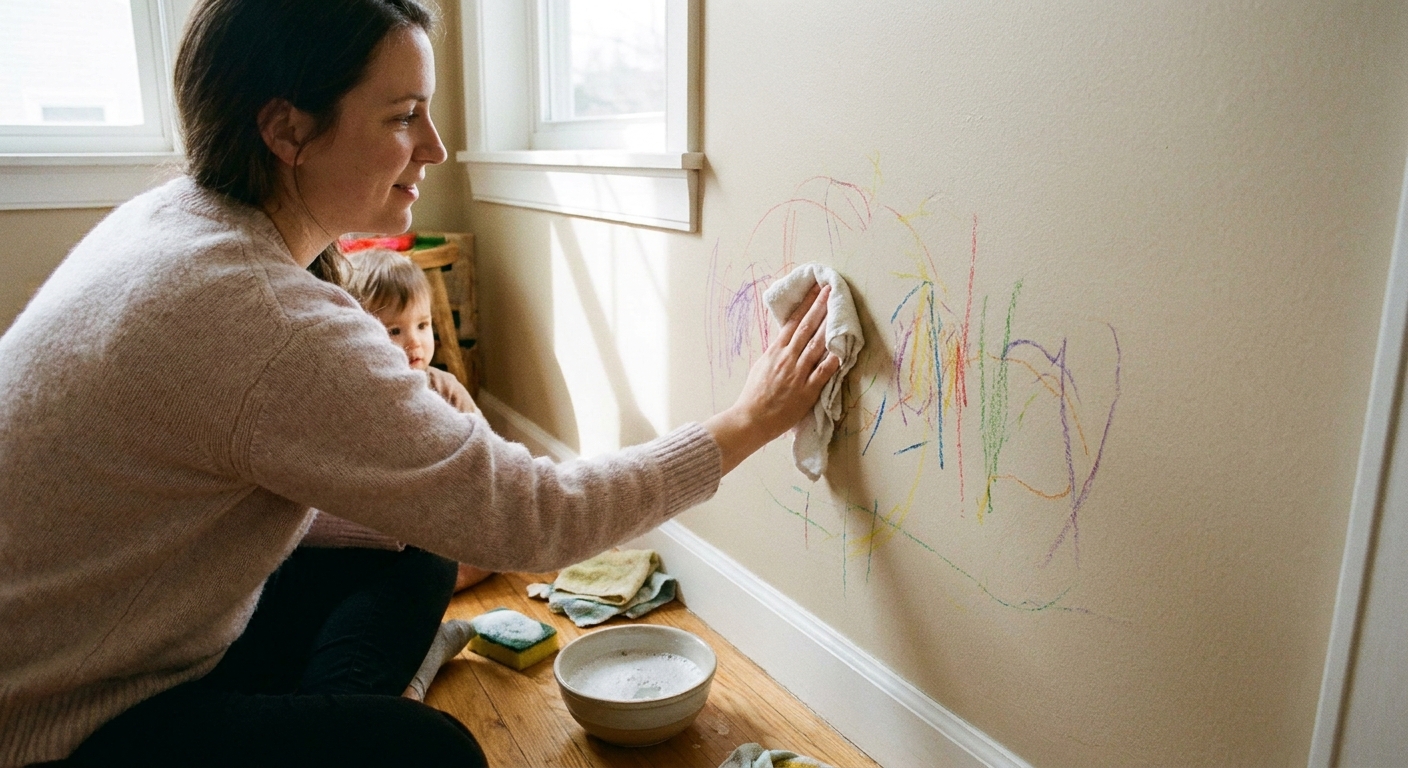
If you have kids, you have crayons. And if you have crayons, one day you will turn around and realize your wall has been lovingly decorated with a bold, confident swirl of “sunset orange.”
I taught kindergarten for eight years, and now I am home with three kids (3, 6, and 8). I have cleaned crayon off just about everything except, somehow, the dog. The good news is that wax crayon looks dramatic but usually comes off with a calm, systematic approach.
The simple system that works (almost) every time
Crayon is mostly wax plus pigment. If you jump straight to scrubbing with something harsh, you can grind pigment into paint, dull a wood finish, or fuzz up fabric. Instead, use this three-step order:
- Lift excess wax first: Gently scrape or blot up what you can without spreading it.
- Use gentle warmth (when appropriate): Warmth softens wax so it can transfer onto paper or a cloth.
- Finish with mild cleaner: A little dish soap and warm water goes a long way for the remaining oily residue and pigment.
Before you start: Test any method in a hidden spot first, especially on flat paint and stained wood. And whatever you do, try not to panic-clean. Fast scrubbing is how most wall paint gets scuffed.
What you will want to grab
You do not need a specialty cleaner cabinet. Here is my realistic “under the sink” list:
- Plastic scraper or an old gift card
- Paper towels
- Soft microfiber cloths (or old cotton T-shirts)
- Dish soap
- Warm water
- Baking soda (optional, for gentle abrasion)
- White vinegar (optional, for a light final wipe on some surfaces)
- Hair dryer (for walls and wood)
- Iron (for fabrics)
- Laundry stain remover or liquid detergent
A quick caution: Magic eraser-style sponges can work, but they are mildly abrasive. On flat or matte paint, they can leave a shiny patch. I use them as a last step, lightly, after testing.
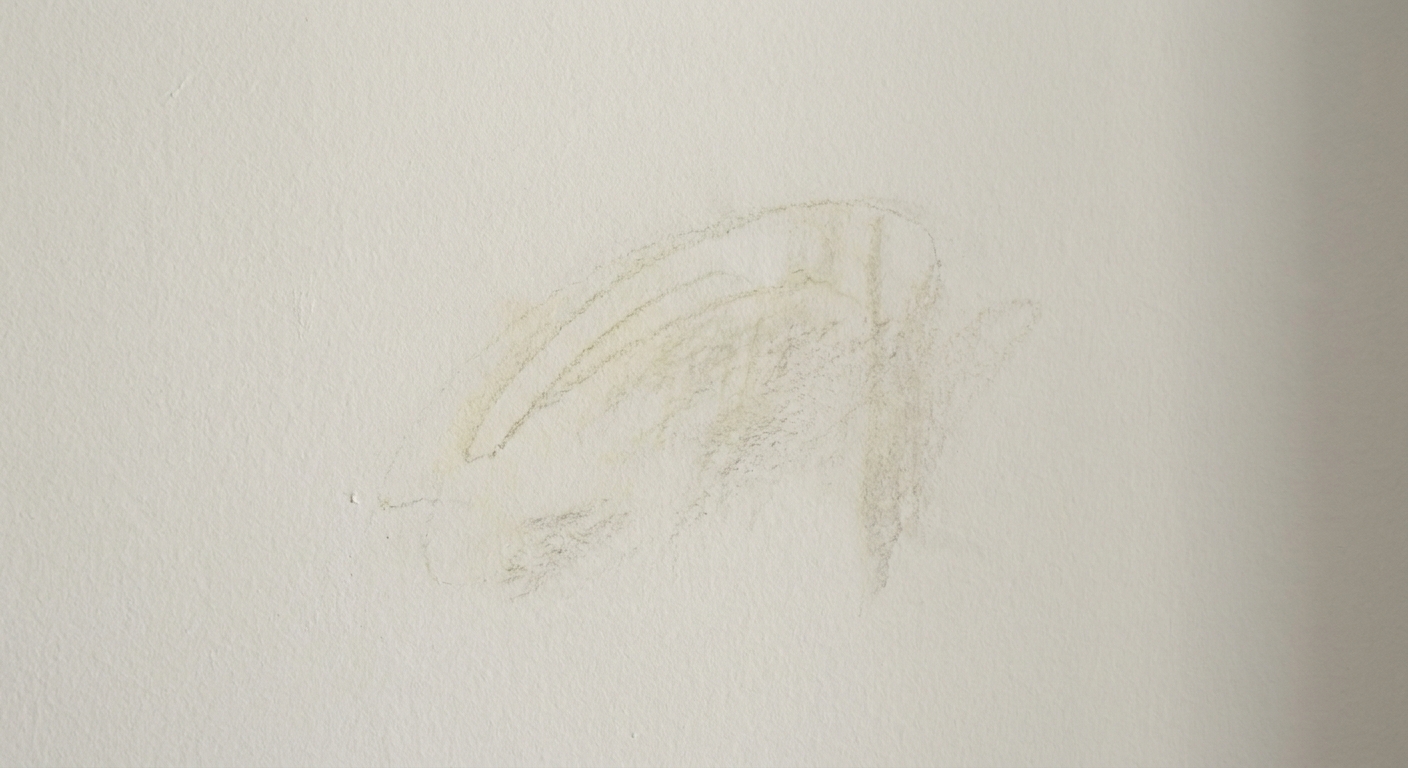
How to remove crayon from painted walls
Painted drywall is common, but not all paint finishes behave the same. Glossy and satin finishes are usually forgiving. Flat and matte finishes can absorb pigment and show scuffs more easily.
Step 1: Lift any built-up wax
If the crayon line feels raised or waxy, use a plastic scraper or old card and very gently lift the thickest bits. Work from the outside of the mark toward the center so you do not spread wax or pigment onto clean paint.
Step 2: Warm and blot (best for heavy wax)
Hold a hair dryer several inches away on low heat and warm the crayon for 10 to 20 seconds. Immediately press a paper towel onto the area to absorb softened wax. Repeat as needed, moving to a clean area of the towel each time.
Tip: Keep the dryer moving. Too much heat in one spot can soften paint, especially on older walls.
Step 3: Wash gently with soapy water
Mix a few drops of dish soap into a bowl of warm water. Dip a soft cloth, wring it well (you want damp, not drippy), and wipe with light strokes and minimal pressure. On flat paint, gentle straight strokes often look better than rubbing, which can burnish the sheen. Then wipe again with plain water to remove any soapy film.
If a shadow remains (especially on flat paint)
Sometimes the wax is gone but a faint tint lingers. Try one of these, in order:
- Baking soda paste: Mix baking soda with a tiny bit of water to make a paste. Rub very lightly with a soft cloth, then wipe clean.
- Magic eraser-style sponge: Use a light touch and stop the second you see paint sheen changing.
When spot painting makes more sense: On flat paint, certain reds and blues can leave a ghost mark even after careful cleaning. If you have removed the wax and the wall looks clean but still tinted, a small spot prime-and-paint touch-up may be the neatest fix. I know that is not the fun answer, but it is the one that saves the wall.
How to remove crayon from finished wood
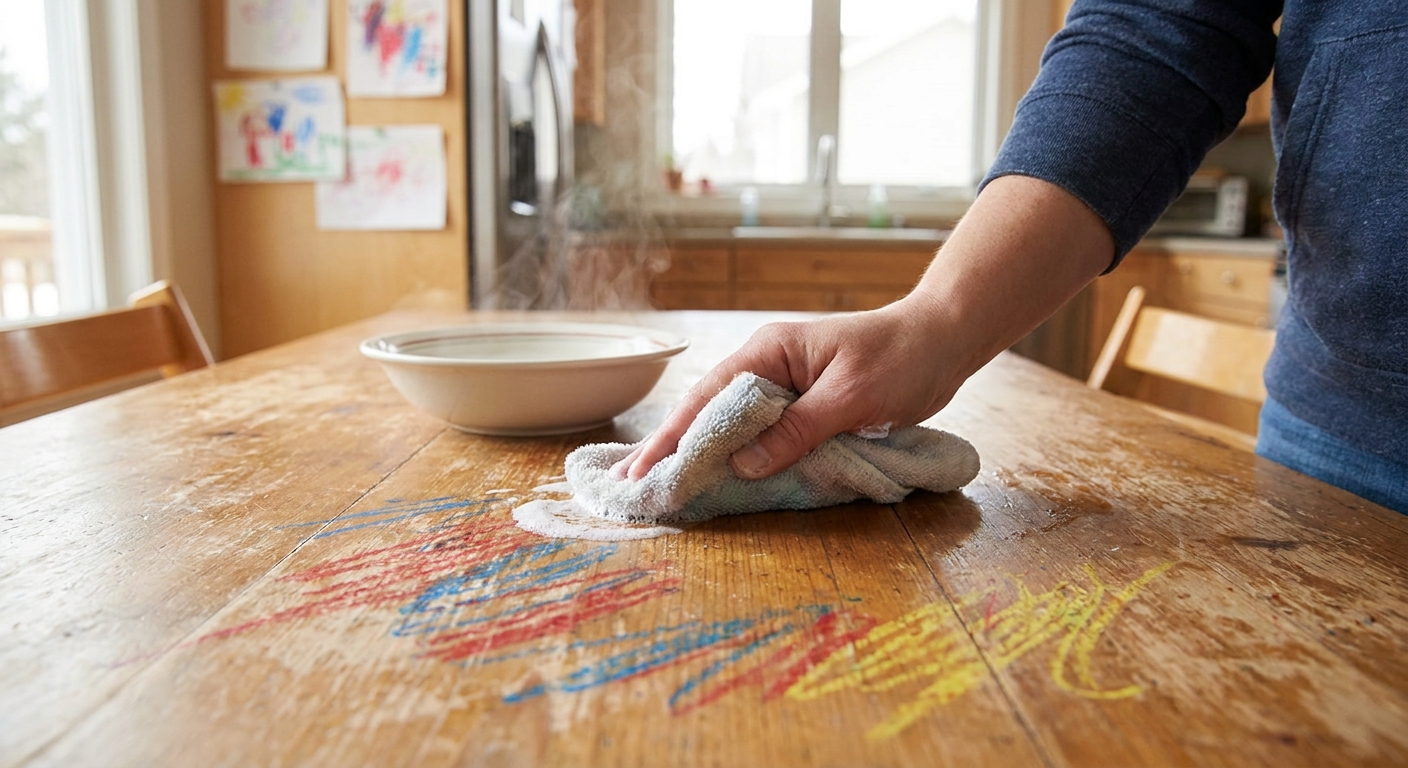
Finished wood usually means there is a protective topcoat (polyurethane, varnish, lacquer) over the stain. That is good news, because you are cleaning the finish, not bare wood. The big goal is to avoid scratching or stripping that finish.
Step 1: Start dry and gentle
Wipe with a dry microfiber cloth first. If the crayon is fresh, you may pick up more than you think.
Step 2: Warm and lift
Use a hair dryer on low for short bursts, then wipe immediately with a clean cloth. You are trying to soften the wax, not heat the wood.
Step 3: Clean with mild soap
Use the same soapy-water method as with walls: damp cloth, light pressure, then a clean damp wipe (water only). Dry right away.
For stubborn residue
- Baking soda paste: Use a tiny amount and gentle pressure, then wipe and dry.
- A drop of cooking oil on a cloth: This can help loosen waxy residue, but test first. On older pieces, open-grain wood, or oil-finished wood, oil can darken the surface or leave a film that attracts dirt. Use the smallest amount possible and follow with dish soap to remove any oily residue.
Avoid on finished wood: Acetone, nail polish remover, and harsh solvent cleaners can cloud or strip finishes fast. Also avoid metal scrubbers, which can leave scratches that will catch the light forever.
How to get crayon out of clothes (washable fabrics)
Crayon on clothing can look intimidating because the wax can melt and spread in the dryer. If you suspect crayon made it into the washer and dryer already, do not worry. You still have options, but you will want to avoid more heat until the wax is out.
Step 1: Scrape off any wax you can
If there are chunky bits, gently scrape them away with a spoon edge or plastic card.
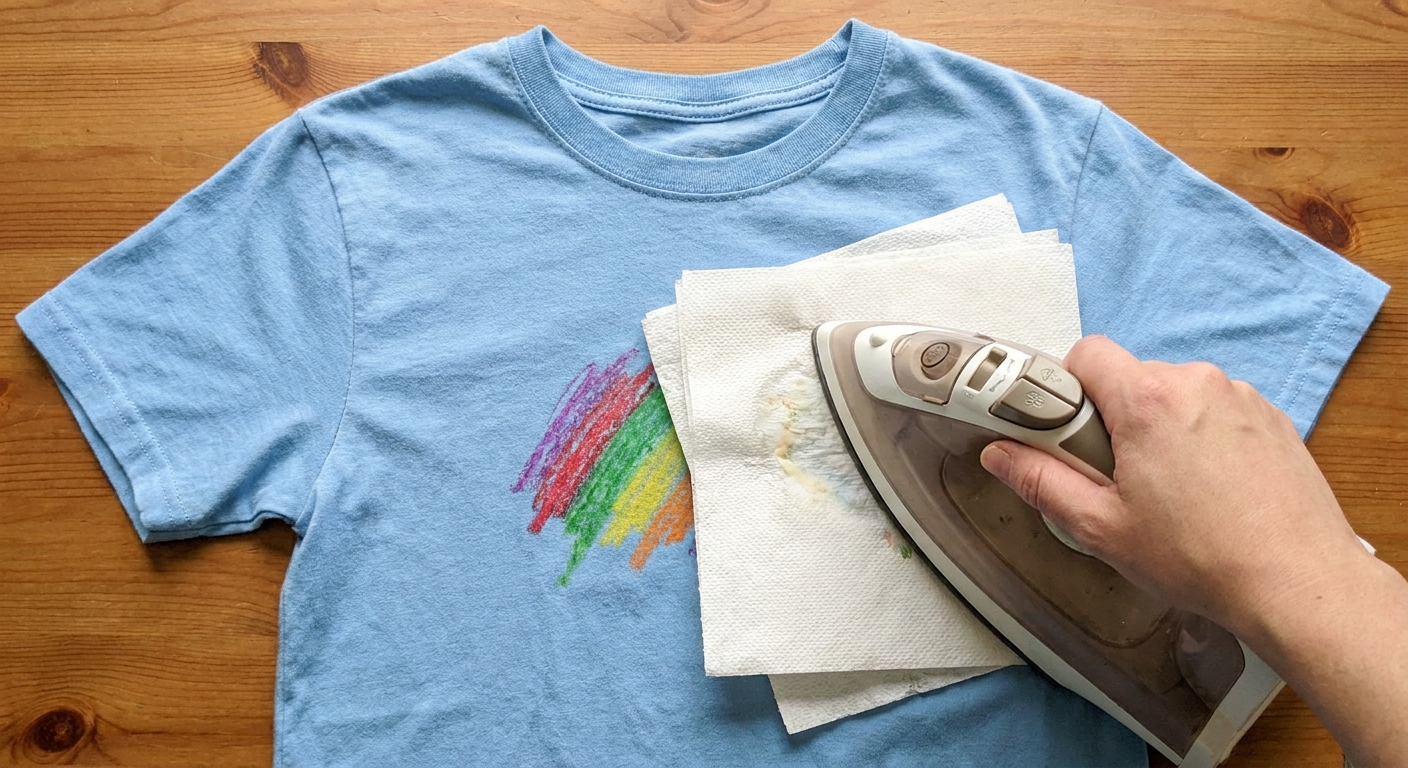
Step 2: Use the iron-and-paper method
This is my go-to for wax:
- Place the garment on an ironing board (or a thick towel on a hard surface).
- Put a few layers of paper towels under the stained area.
- Put another paper towel on top of the stain.
- Set your iron to low heat with no steam.
- Press briefly, then lift and check. You should see wax transferring to the paper towel.
- Move to clean paper towels and repeat until you stop seeing wax transfer.
Important: Do not iron directly on the fabric without a paper towel barrier. You are trying to pull wax out, not press it in.
Step 3: Pretreat pigment and oily residue
After de-waxing, you may still see color. Pretreat with liquid laundry detergent or a stain remover. Gently work it in with your fingers or a soft toothbrush.
Step 4: Wash and air-dry first
Wash using the warmest water that is safe for the fabric. Then air-dry and check before using the dryer. Dryer heat will set any remaining stain.
If the stain is still there: Repeat the pretreat and wash. Stubborn crayon color often fades in rounds.
Special cases and quick fixes
Crayon on upholstery and carpet
These are common targets, and they are also where people get into trouble with too much heat. Start by lifting any bits of wax with a plastic card. Then:
- Blot, do not scrub: Use a dry paper towel or cloth to pick up loose wax and pigment.
- Spot-clean gently: Use a tiny amount of dish soap in warm water on a cloth and dab. Rinse by dabbing with plain water, then blot dry.
- If wax is heavy: Try a cautious warm-and-blot approach with a hair dryer on low, but keep it moving and stop if you see the fabric pile changing. You want softening, not melting it deeper.
If the upholstery is labeled “S” (solvent only) or “X” (vacuum only), skip the DIY liquids and call a pro. Ask me how I know.
Crayon on delicate or non-washable fabrics
For wool, silk, velvet, or “dry clean only” items, avoid irons, vigorous rubbing, and random stain experiments. Gently lift any surface wax with a plastic card and take it to a professional cleaner. Tell them it is wax crayon, so they treat it like wax plus pigment.
Crayon on wallpaper
Wallpaper is tricky because scrubbing can tear or lift it. Start with a dry microfiber cloth. If you need more, try a barely damp cloth with a tiny amount of dish soap, and dab instead of rubbing. Stop immediately if the paper surface starts to rough up or the print begins to fade.
Crayon on unfinished wood
If the wood is unfinished, wax can soak in. Try the gentle warmth-and-blot method first, then a very light sanding may be necessary. If it is a cherished piece, it may be worth asking a local woodworker or refinisher before experimenting.
Crayon on painted trim, doors, and cabinets
Trim and doors are often semi-gloss, which is easier to clean. Cabinets may have tougher enamel paint, but they also show shiny scuff marks if you get aggressive. Start with the same gentle soapy-water wipe. If needed, step up to baking soda paste. Test first, and keep pressure light so you do not change the sheen.
What not to do (learned the hard way)
- Do not use high heat right away: Hot irons and heat guns can melt wax deeper into paint texture or fabric fibers.
- Do not soak drywall: Too much water can swell drywall paper and leave a visible patch.
- Do not go straight to harsh solvents: They can remove paint, cloud wood finishes, and discolor fabrics.
- Do not put stained clothes in the dryer “just to see”: The dryer is where stains go to become permanent roommates.
FAQ
Will vinegar remove crayon from walls?
Vinegar is not a true degreaser, so it is not my main tool for waxy crayon. If I use it at all, it is as a light final wipe on some washable surfaces after the wax is lifted and the area has been cleaned with dish soap, more like a quick rinse than a primary remover.
What is the safest thing to try first on painted drywall?
A soft cloth with warm water and a couple drops of dish soap. If the crayon is thick and waxy, warm it with a hair dryer and blot before washing.
Why does crayon leave a “shadow” even after cleaning?
Two reasons: pigment can stain porous, flat paint, and wax can sit down in the texture. Removing wax first reduces shadowing, but some colors (especially reds and blues) can still tint. At that point, spot priming and painting is sometimes the cleanest finish.
Can I use a magic eraser on walls?
Yes, with caution. Test in a hidden spot and use light pressure. On flat or matte paint it can leave a shinier patch that catches the light.
What if the crayon went through the dryer?
You can still try the iron-and-paper towel method to pull wax back out of the fabric, then pretreat and rewash. It may take a couple rounds, but it is often salvageable.
A quick pep talk from someone whose house is held together by hot glue
If you are staring at a bright scribble on your wall, you are not failing at parenting. You are raising a kid who found a tool and used it with confidence.
Start gentle, lift the wax first, and work in calm steps. And if you end up doing a tiny spot paint touch-up, welcome to the club. I will save you a seat, and probably a spare roll of paper towels.