
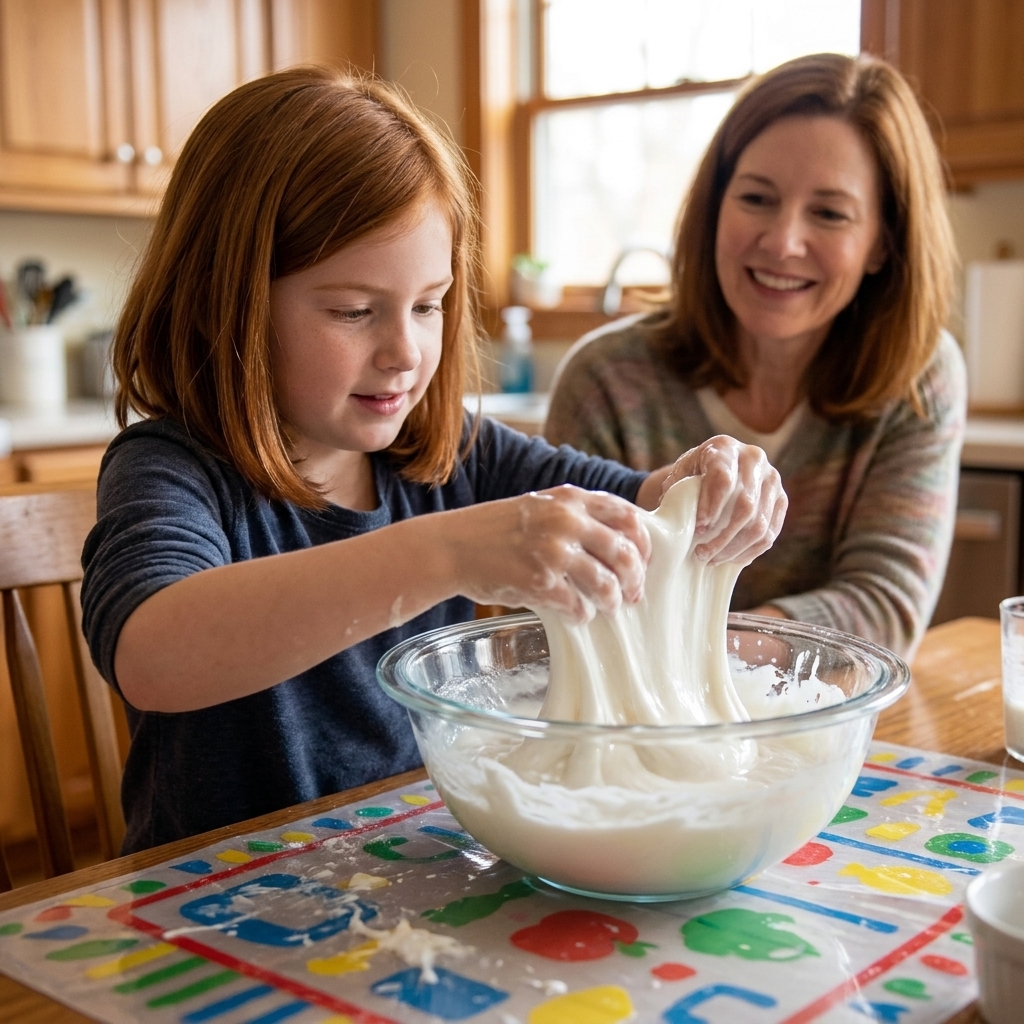
A simple, repeatable 3-ingredient slime recipe that works. Plus my teacher-mom troubleshooting tips for sticky slime, rubbery slime, and easy storage.
If you have kids who love slime, you will eventually have slime somewhere it does not belong. In my house, that usually means a sweatshirt sleeve, a carpet corner, and once, my 6-year-old’s bangs five minutes before school pickup. The good news: you can usually get slime out completely if you go slow, keep the slime cold, and avoid heat until you are 100 percent sure it’s gone.
This guide covers clothes, carpet, upholstery, and hair, plus extra help for colored and glitter slime.
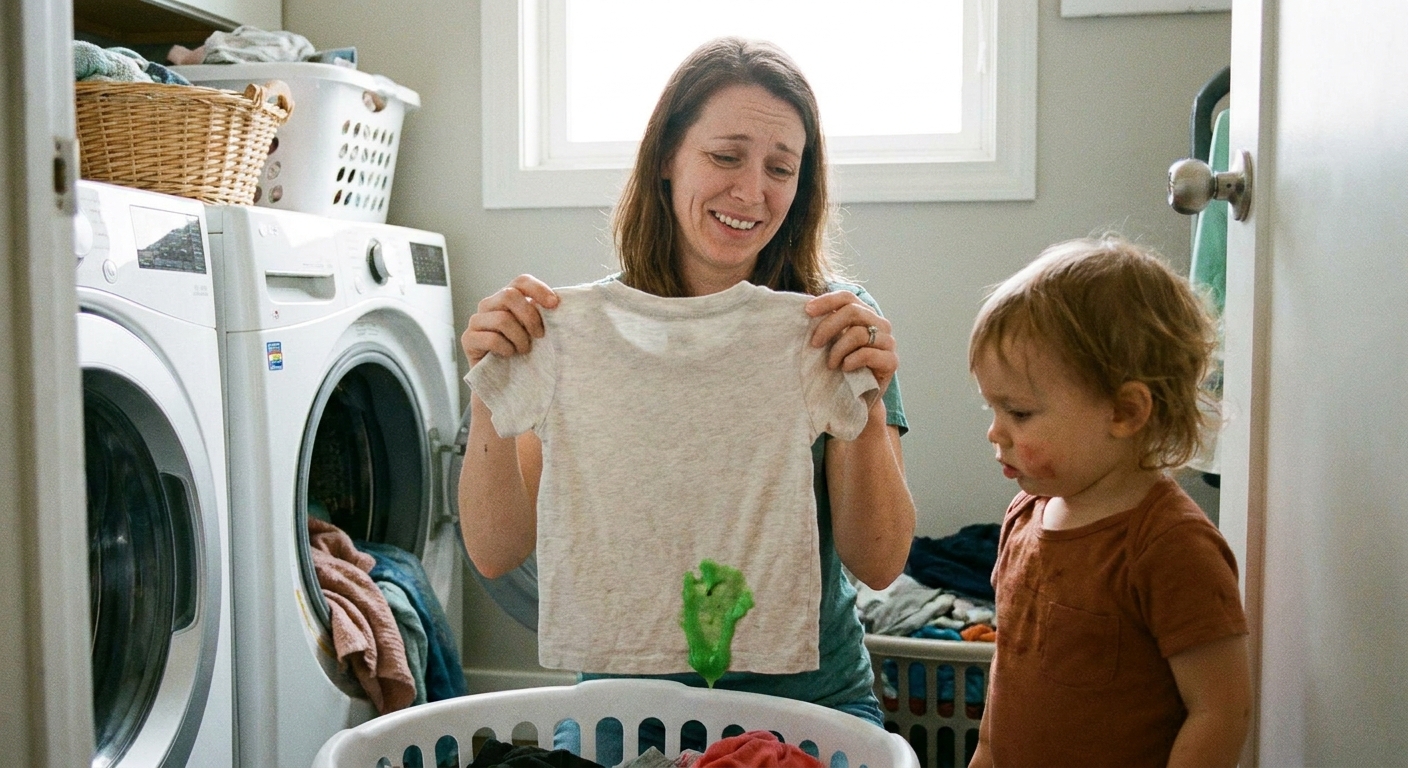
First, do these three things
- Scrape off what you can. Use a spoon, butter knife, or an old gift card. Lift, do not smear.
- Keep it cold. Cold firms slime up and reduces stickiness, which makes it easier to lift off fibers in chunks instead of smearing.
- Test cleaners in a hidden spot. Especially on carpet, upholstery, and delicate fabrics.
What to avoid
- Hot water at the beginning. Start cold to remove the bulk, then follow the care label once the residue is out.
- The dryer until the stain is fully gone. Dryer heat can lock in color and residue.
- Rubbing hard on carpet or upholstery. You can push slime deeper into fibers.
- Bleach on colored fabrics or carpets. It can discolor and does not target the slime base well.
How to get slime out of clothes (vinegar method)
This is my go-to for washable cotton, polyester, and most kid clothes. Vinegar often helps break down the binder in many homemade PVA and borax style slimes, which makes it easier to lift out of fibers.
Quick note: slime formulas vary. If vinegar does not seem to do anything after a couple minutes, switch to dish soap or laundry detergent and keep working in small, patient rounds.
You’ll need
- White distilled vinegar
- Cold water
- Dish soap or liquid laundry detergent
- Spoon or dull knife
- Clean towel
Step-by-step
- Scrape off the blob. Remove as much slime as possible without stretching the fabric.
- Rinse from the back with cold water. Hold the fabric so water pushes slime out, not deeper in.
- Apply vinegar to the spot. Pour or dab on enough to saturate the slime area, not the whole garment. Let it sit for 5 to 10 minutes.
- Gently work it loose. Use your fingers or a soft toothbrush to lift residue. Add a little more vinegar if it feels gummy.
- Wash with detergent in cold or warm water. Check the care label. Cold is safest for bright colors.
- Air-dry and check. If you see any shadow, repeat before using the dryer.
If the fabric is delicate (wool, silk, rayon, special trims)
Skip scrubbing. Blot with cold water, dab with a little diluted vinegar (half vinegar, half water), then rinse. Some fabrics water-spot or distort easily, so if it is a special piece, consider a professional cleaner sooner rather than later.
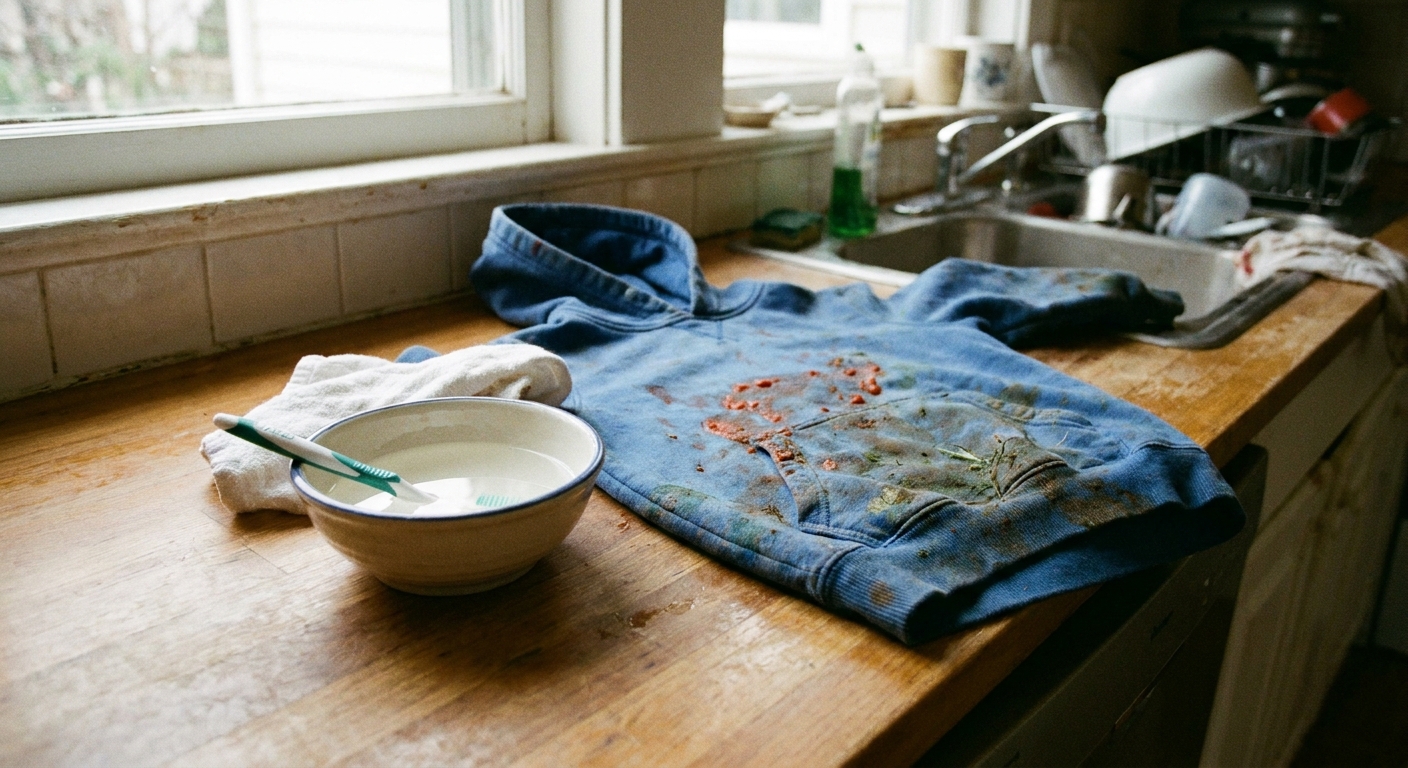
Colored slime stains on clothes
Colored slime can leave dye behind even after the goo is gone. Treat it like a dye stain, but keep avoiding heat until it lifts.
- Do the vinegar steps first to remove all slime residue.
- Then pre-treat with liquid laundry detergent and let it sit 10 minutes.
- Soak in cold water for 30 to 60 minutes if a tint remains.
- Wash again and air-dry to check.
If the item is white or truly colorfast, an oxygen-based bleach soak can help with lingering color, but always patch test first.
Glitter slime on clothes (the sneaky one)
Glitter slime is basically the craft souvenir that never leaves. The slime comes out, and then you realize the glitter has decided to live there now.
Steps
- Remove slime first using the vinegar method above.
- Lift extra glitter with tape. Press packing tape or a lint roller onto dry fabric and peel up.
- Wash inside out. This helps keep loose glitter from redistributing.
Some glitter may remain because it is designed to cling. The goal is “not shedding glitter everywhere” rather than “every single sparkle gone forever.”
How to get slime out of carpet (vinegar + gentle blotting)
Carpet is all about patience. The biggest mistake is scrubbing like you are mad at it. (I have been mad at it. Scrubbing still does not help.)
You’ll need
- Ice cubes or a cold pack
- Spoon or dull knife
- White vinegar
- Warm water (for mixing, not for soaking)
- Dish soap
- Clean white towels
Step-by-step
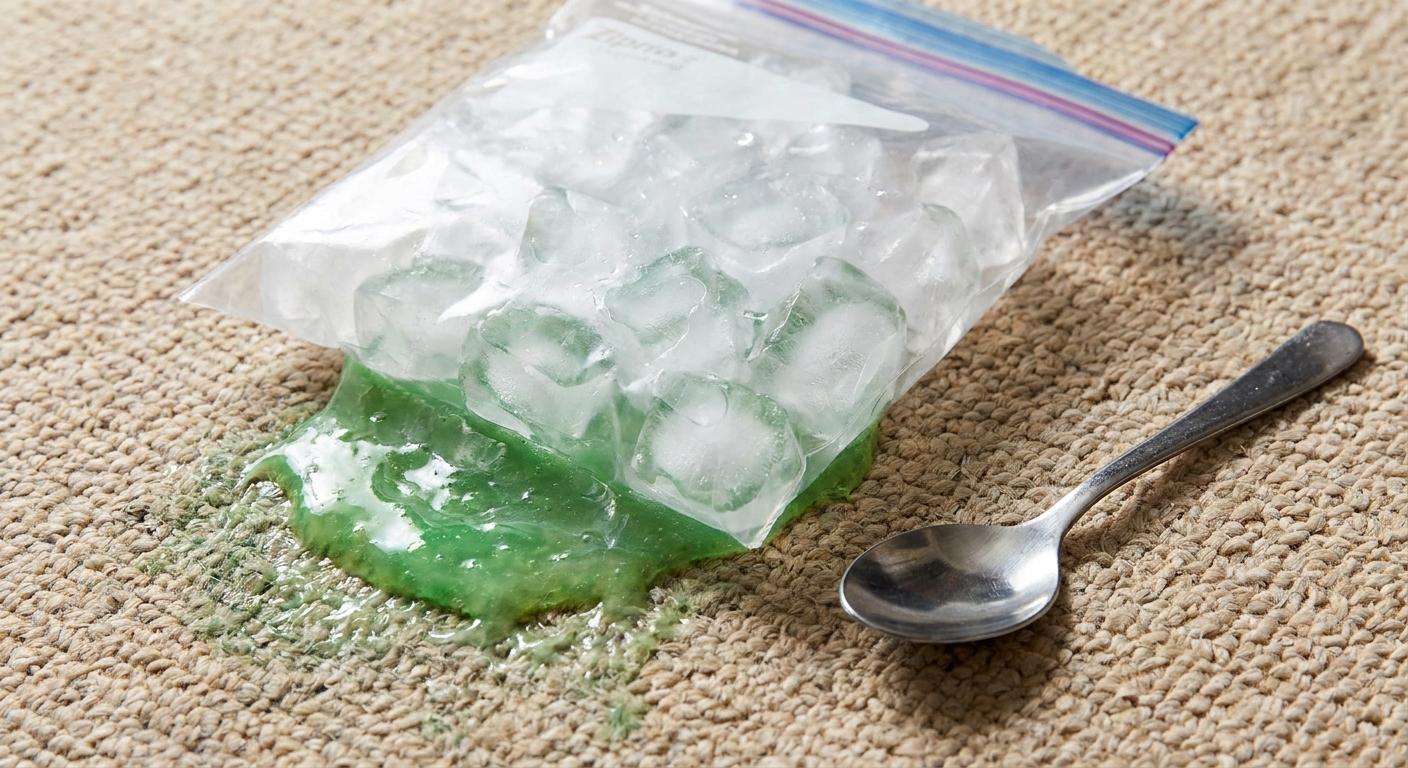
- Freeze it. Put ice in a bag and hold it on the slime for 5 to 10 minutes. You want it firm.
- Lift and scrape. Use a spoon to gently lift chunks. Work from the outside toward the center.
- Blot with vinegar. Dampen a towel with vinegar and press down on the residue. Let it sit briefly, about 1 to 3 minutes, then blot again.
- Blot with a tiny bit of dish soap solution. Mix 1 cup warm water with a few drops of dish soap. Dampen a towel and blot. Do not soak the carpet.
- Rinse-blot with plain water. Use a fresh damp towel to remove vinegar and soap.
- Dry. Press a dry towel on top, then let it air-dry fully. Vacuum when dry to fluff fibers.
If your carpet might be wool or you are not sure
Be extra conservative with moisture and dwell time. Wool and some natural fiber rugs can discolor or felt with the wrong cleaner. If anything looks off while testing, stop and consider a professional rug cleaner.
If there’s color left on the carpet
After the slime is gone, blot the area with a little vinegar again and rinse-blot. If the carpet is light, you can try an oxygen-based carpet spotter, but patch test in a hidden area first.
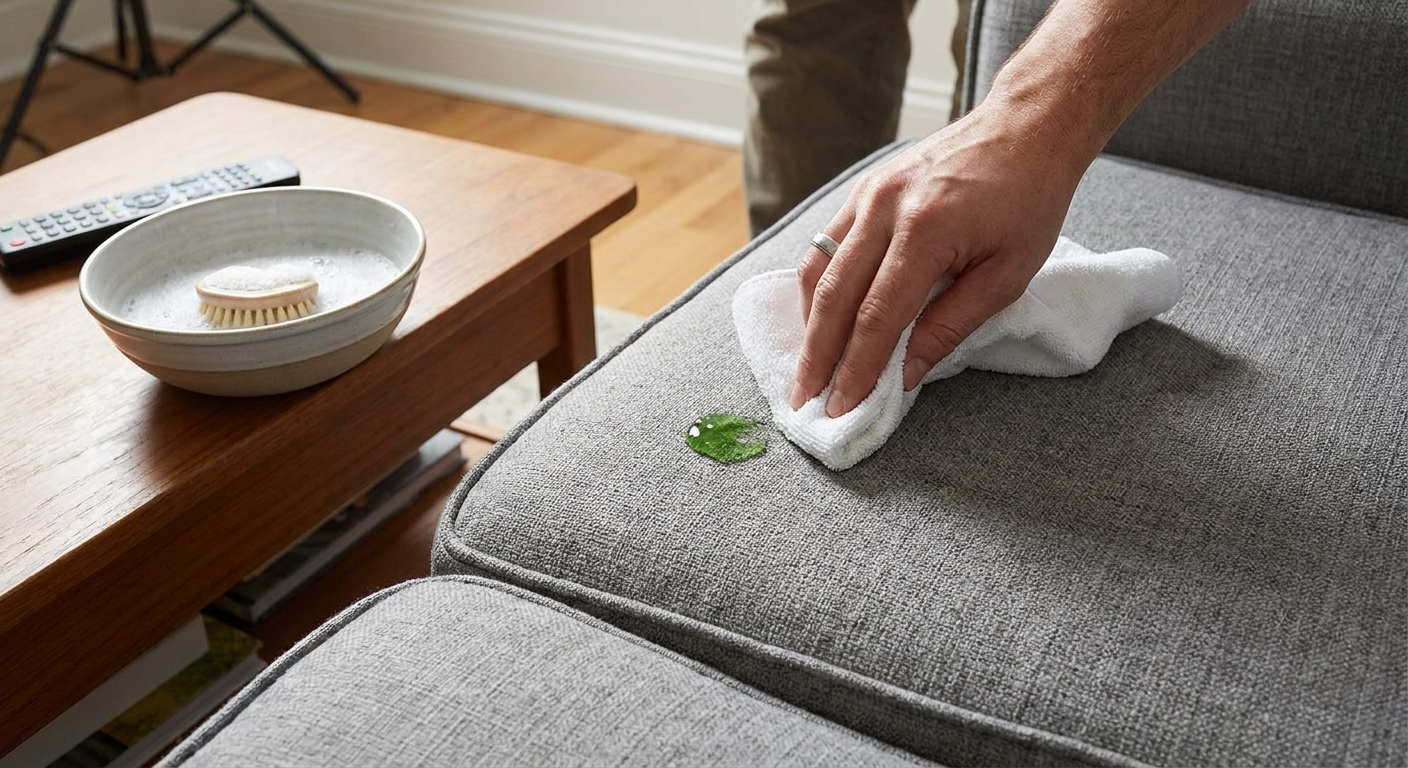
How to get slime out of upholstery (dish soap method)
Couches and dining chairs are tricky because you cannot just rinse them under a faucet. Dish soap is usually the safest first step because it cuts residue without bleaching.
You’ll need
- Spoon or dull knife
- Ice cubes in a bag
- Dish soap
- Two clean white cloths
- Bowl of cool water
Step-by-step
- Check the fabric tag. If you see cleaning codes (W, S, WS), follow those guidelines. W means water-based cleaner is okay. S means solvent-only, so skip water and call a pro or use a solvent cleaner made for upholstery. WS can usually handle either, but still use minimal moisture.
- Freeze and lift. Ice the slime for 5 to 10 minutes, then lift chunks with a spoon.
- Blot with soapy water. Mix a few drops of dish soap into cool water. Dip a cloth, wring it well, then blot. Repeat with clean sections of cloth.
- Blot with plain water. Use a second cloth dampened with plain water to remove soap.
- Dry thoroughly. Press with a dry towel. Aim a fan at the spot if you can.
Go easy on vinegar here. Vinegar is great, but some upholstery dyes can be sensitive. If you test and it looks fine, you can use vinegar the same way you would on carpet, with minimal moisture and a short sit time.
How to get slime out of hair (ice + oil)
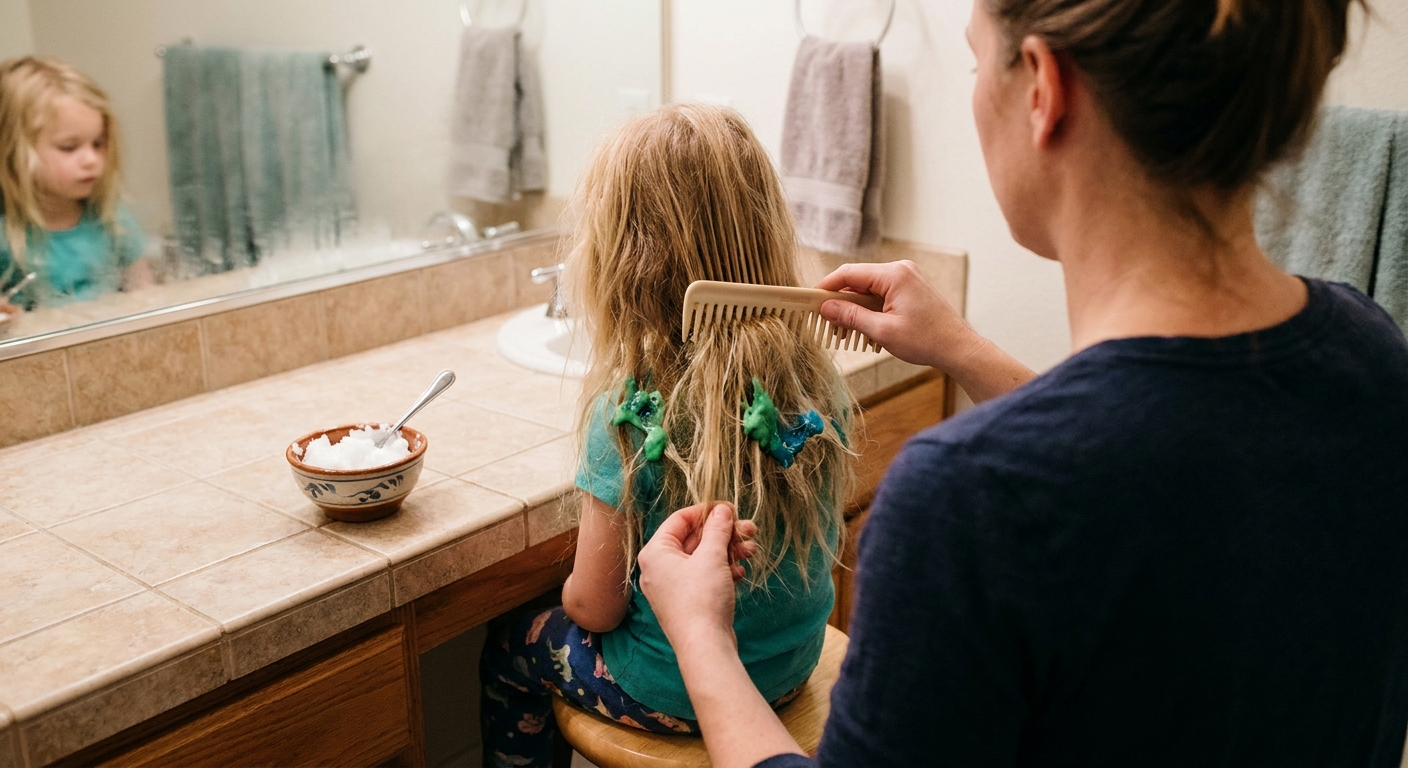
Take a deep breath. Hair slime looks dramatic, but it is usually fixable without scissors. The trick is to make the slime less sticky and then slide it out.
You’ll need
- Ice cubes or a cold pack
- Oil: coconut oil, olive oil, baby oil, or mineral oil
- Wide-tooth comb
- Dish soap or clarifying shampoo
- Towel
Step-by-step
- Freeze the slime. Hold ice on the slime clump for a few minutes. This helps it firm up.
- Gently peel off what you can. Use your fingers to break off chunks. Do not tug hard on the hair.
- Coat the area with oil. Work oil into the slime and the surrounding hair. Let it sit 5 minutes.
- Comb slowly. Start at the ends and work upward with a wide-tooth comb, wiping slime and oil onto a towel as you go.
- Wash out the oil. Use a clarifying shampoo or a small amount of dish soap first, then follow with a regular shampoo and conditioner.
Quick caution: Dish soap can be drying and it stings if it gets in eyes. Use a small amount, keep it on the hair (not the eyes), and condition well after.
If glitter slime is in hair
After you remove the slime, you may still see a few sparkles. Conditioner can help the comb glide while you work the last bits out. A sticky lint roller can help pick up glitter from the forehead, neck, and shoulders after hair is clean and dry.
Stubborn slime: quick troubleshooting
- It turned into a smeary mess. Chill it again with ice, then scrape. Smearing usually means it got warm.
- Vinegar did nothing. You may be dealing with a different slime base. Switch to dish soap or laundry detergent, keep it cold, and work in short rounds. If it is a putty-like product, patch-tested rubbing alcohol can help on some fabrics.
- There’s a sticky patch even after washing. Repeat treatment, then wash again. Residue often needs two passes.
- The stain looks gone when wet but reappears dry. That is leftover dye. Treat again with detergent and cold soak.
- The carpet feels crunchy. That is dried residue or soap. Rinse-blot with plain water and dry again.
Prevention tips (because future-you deserves nice things)
I love slime. I also love not peeling slime out of a rug with a spoon at 9 p.m. These little habits help a lot:
- Use a play mat. A wipeable plastic tablecloth, a silicone craft mat, or even a large baking sheet for smaller kids.
- Smocks save outfits. An art smock or an old button-up shirt worn backward works beautifully.
- Slime rules that kids can remember: slime stays at the table, hair stays tied back, and slime goes back in the container when you are done.
- Skip slime near carpeted bedrooms. If you can, make slime a kitchen or patio activity.
Quick FAQ
Will vinegar ruin clothes or carpet?
White distilled vinegar is generally safe on many washable fabrics and some carpets when used in small amounts, but always patch test first, especially on dark upholstery, wool rugs, or delicate fibers. Use short sit times and do not over-wet.
Can I use hot water to melt slime out?
I would not start there. Cold helps you remove the bulk cleanly. Once the slime residue is out, wash the item according to its care label.
Should I use rubbing alcohol?
On some synthetic slimes it can help, but it can also affect dyes and finishes. I try vinegar and dish soap first because they are gentler. If you use alcohol, patch test, use minimal amounts, and make sure the area is ventilated. Keep all cleaners away from kids and pets.
What if slime already went through the dryer?
Do not panic, but expect extra rounds. Rehydrate the area with vinegar or detergent, work out residue, then wash again. Some dye stains may be permanent if heat set them, but you can often improve them.
Can I mix cleaning products to make it stronger?
No. Do not mix cleaners. Work one method at a time, rinse between steps, and when in doubt, keep it simple and gentle.