A realistic, parent-friendly guide to toddler crafts: low-mess setup, easy materials, and simple ideas that keep little hands busy without wrecking your house.
When the sun is doing the most and the kids are bouncing off the patio furniture, I reach for my most magical parenting tool: a water sensory bin. It can be cooling, calming, and it often keeps everyone busy long enough for me to drink my coffee while it is still warm. Sometimes.
These backyard sensory bins are designed for real life. They use simple supplies, lots of “use what you have,” and they are easy to adapt for toddlers (my 3-year-old), kindergarten and first grade (my 6-year-old), and early elementary kids (my 8-year-old).
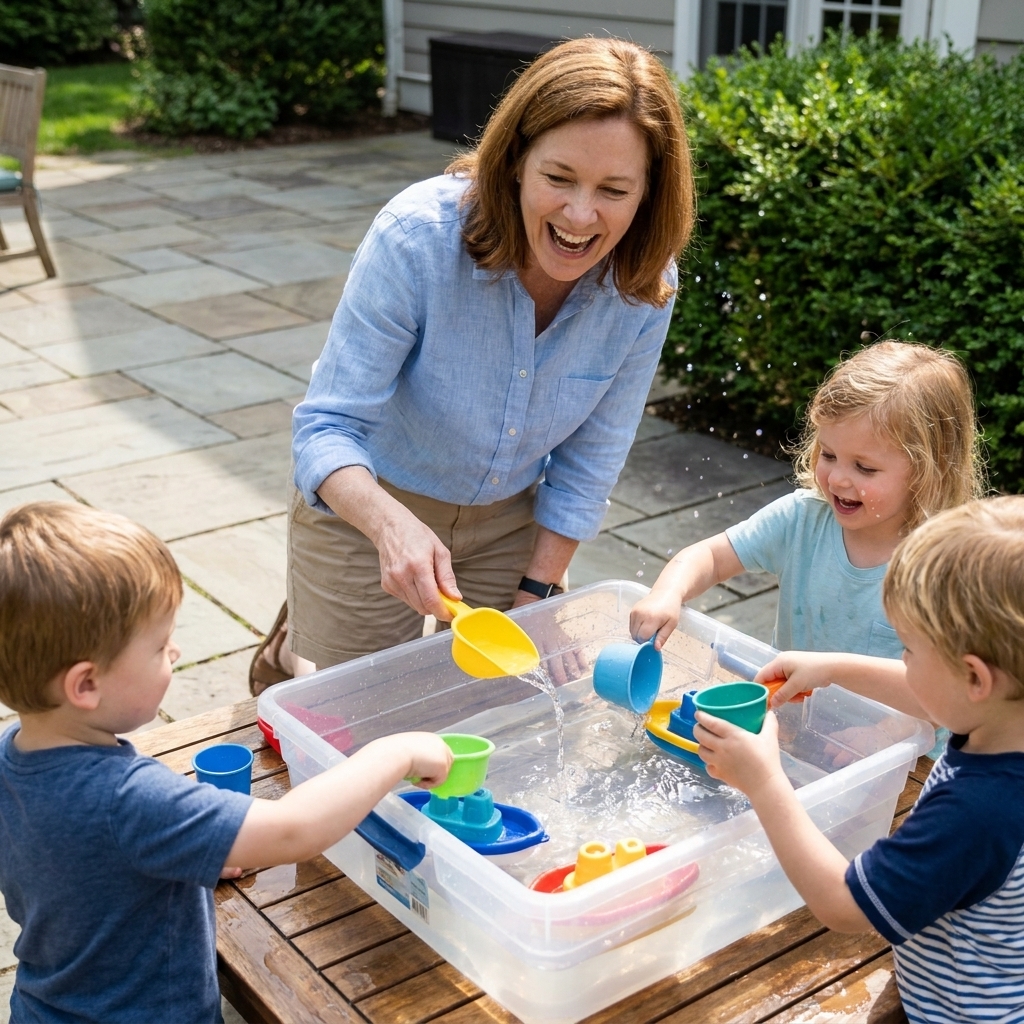
Quick set-up that saves your sanity
My favorite bin set-ups
- Under-bed storage bin: Wide, shallow, and easy for multiple kids.
- Large mixing bowl inside a kiddie pool: Catches splashes and gives toddlers a safe boundary.
- Two-bin system: One “clean water” bin, one “play water” bin for rinsing hands and tools.
Backyard basics
- A towel or two under the bin (or set it directly on grass).
- Bathing suits or “play clothes.”
- Pitcher of water for quick refills.
- Sunscreen and shade, especially for longer play. On scorching days, I set a timer for water breaks and sunscreen reapply.
Safety notes (quick but important)
- Active adult supervision is non-negotiable with water, even shallow bins.
- For toddlers, skip marbles, tiny beads, and anything that fits fully in the mouth.
- If you use ice, teach “hands off the ice” rules for kids who like to taste everything.
- Never leave a filled bin out unattended. Empty it right after play.
- Dump water after play and let the bin dry. Rinse it, and wash with mild soap as needed (especially after bubbles or food coloring).
10 water-based backyard sensory bin themes
Each idea includes what to add, how to play, and easy learning extensions. Pick one and run with it, or rotate themes through the week.
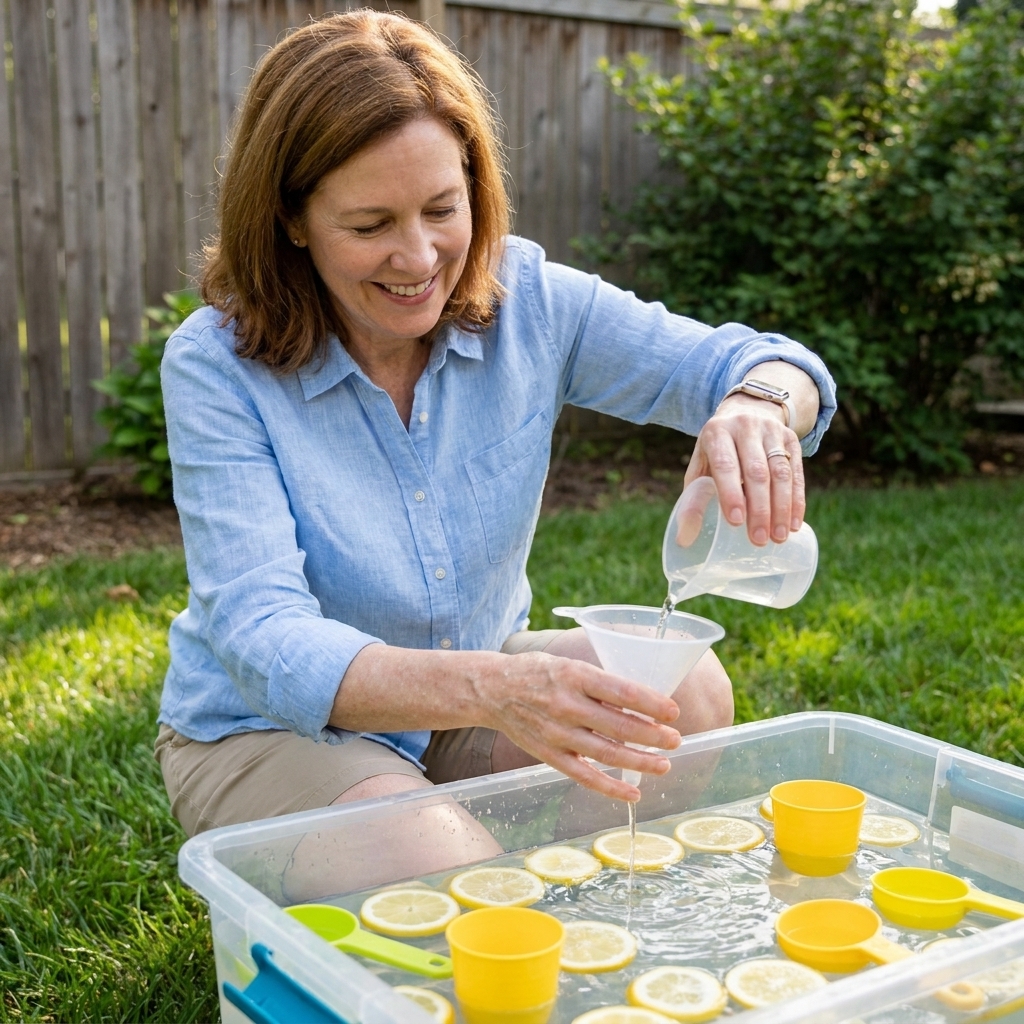
1) Lemonade Pouring Bin
This is my go-to for teaching pouring without turning my kitchen into a swamp.
- Add: Water, a few lemon slices (real or plastic), yellow plastic cups, a pitcher, measuring cups, funnels, stirring spoons.
- Play: Make “orders,” pour from cup to cup, mix “recipes.”
- Learning boost: Count scoops, compare full vs. empty, practice “more” and “less.”
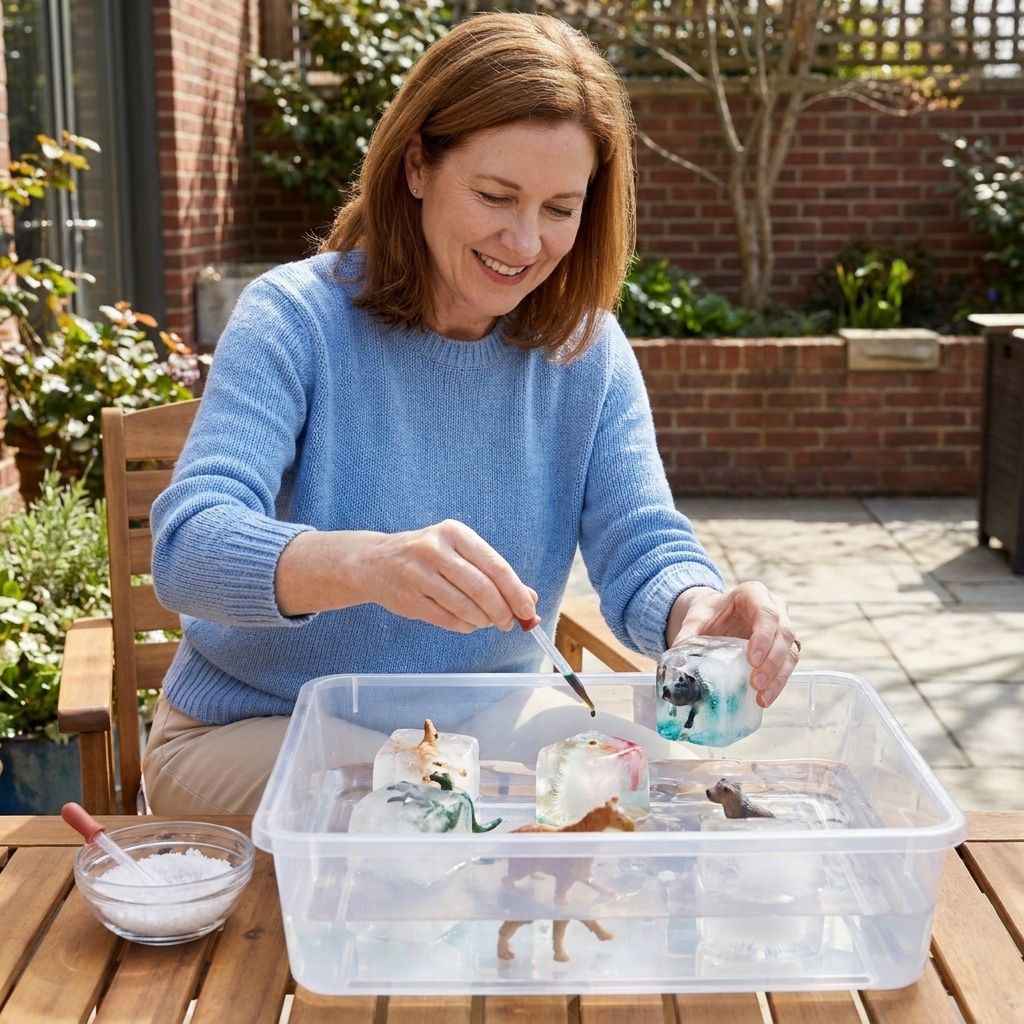
2) Ice Rescue Bin (Dino or Animal)
Kids love a mission. This one buys you time.
- Add: Toy dinos or animals frozen inside ice cubes or a big block, warm water in a bin, droppers or turkey basters, salt, kid-safe tools like a spoon or plastic tongs.
- Play: Melt, drip, sprinkle salt, and rescue the trapped toys.
- Learning boost: Talk about melting, temperature, and time. Older kids can time which method works fastest.
Quick note: Salt speeds melting, but salty water can irritate sensitive skin. Keep it away from eyes and have kids rinse hands when they are done.
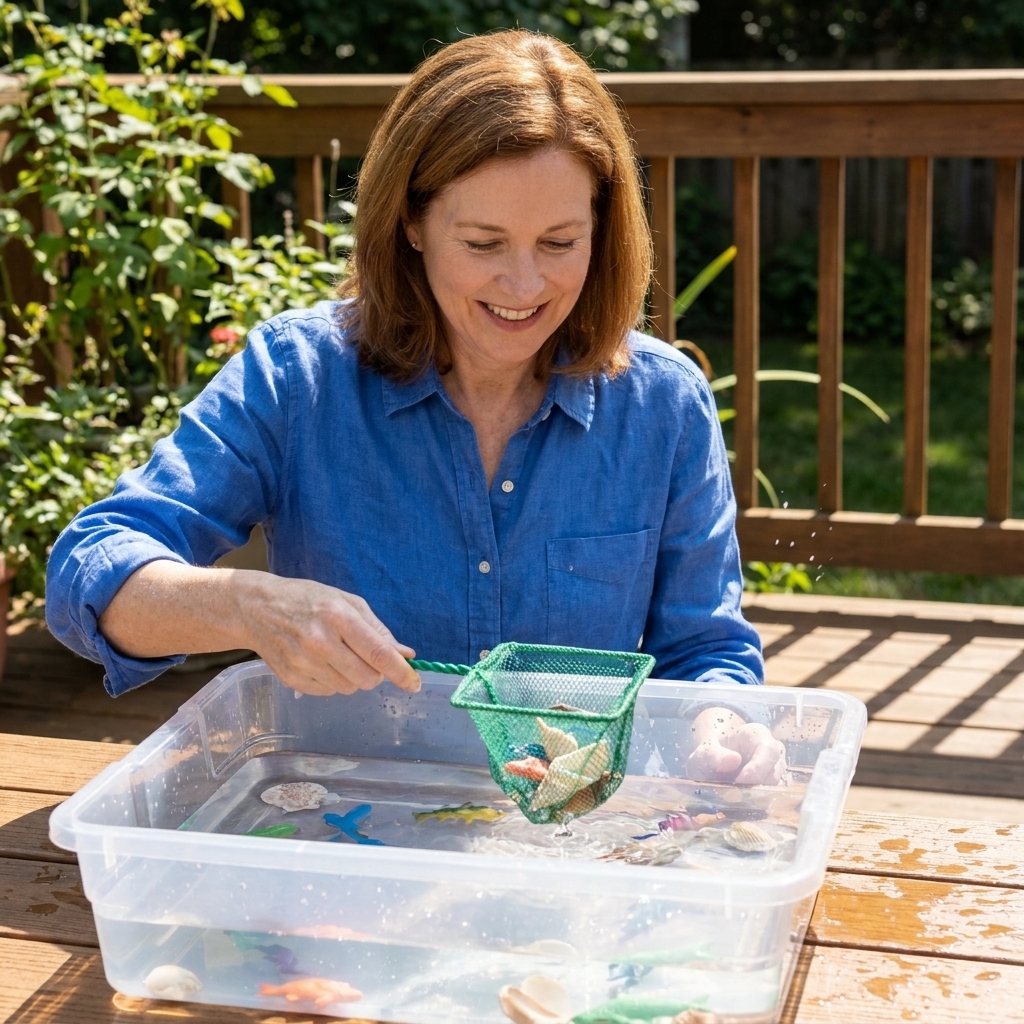
3) Ocean Discovery Bin
Instant beach vibes, minus the car ride and the sand in your snack bag.
- Add: Water with a drop of blue food coloring (optional), seashells, plastic sea animals, clean sponges, a small net, scoops.
- Play: Scoop sea creatures, “save” them with the net, squeeze sponges like tiny waves.
- Learning boost: Sort animals by fins, legs, or shells. Practice gentle handling and “habitats.”
Sensitivity tip: Food coloring can stain and can bother sensitive skin. Plain water works just fine.
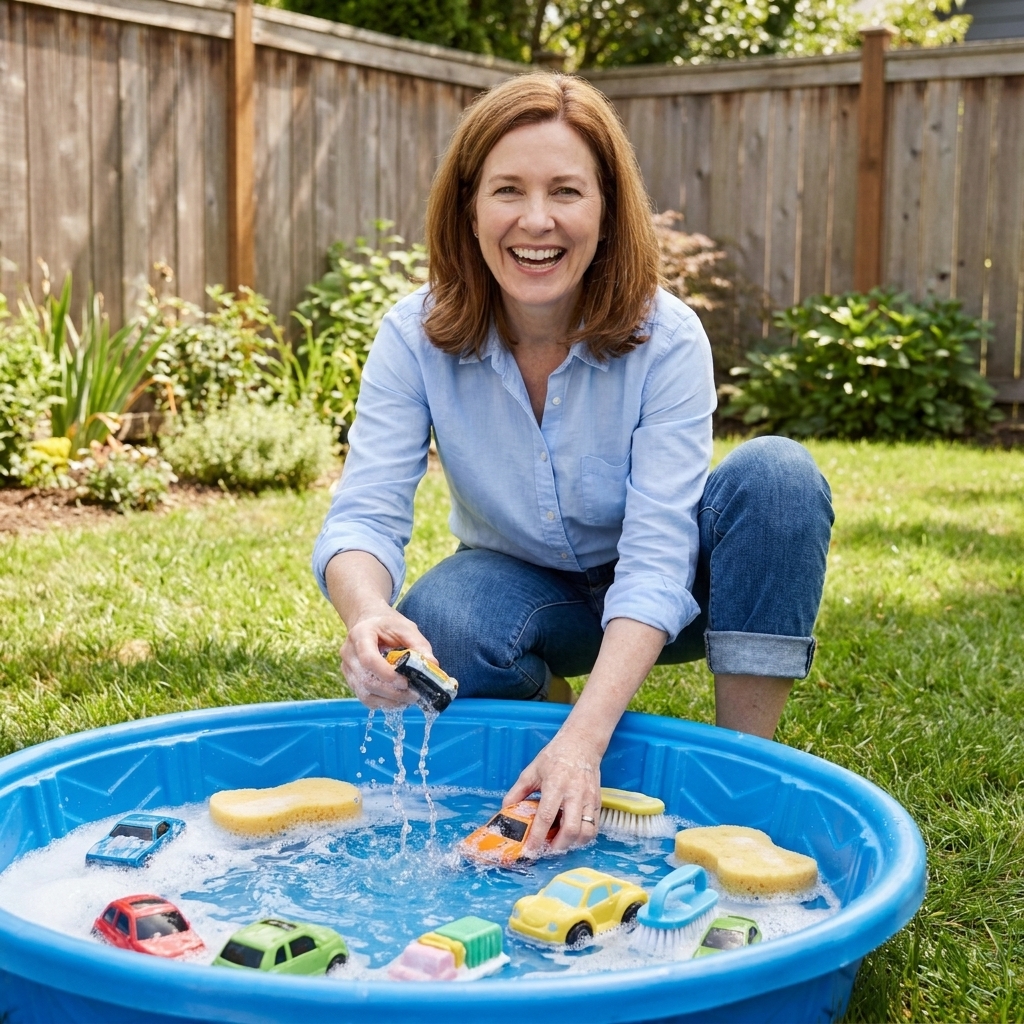
4) Car Wash Bin
This one is a classic for a reason: it is repetitive, satisfying, and weirdly peaceful.
- Add: Water, toy cars, a squirt bottle, dish brush, old toothbrushes, sponges, a little soap (optional).
- Play: Scrub, rinse, “detail,” then park cars to dry on a towel.
- Learning boost: Pretend play and sequencing (wash, rinse, dry). Older kids can make a price list with chalk on the driveway.
Sensitivity tip: If soap tends to dry out your kid’s skin, skip it and let water do the work.
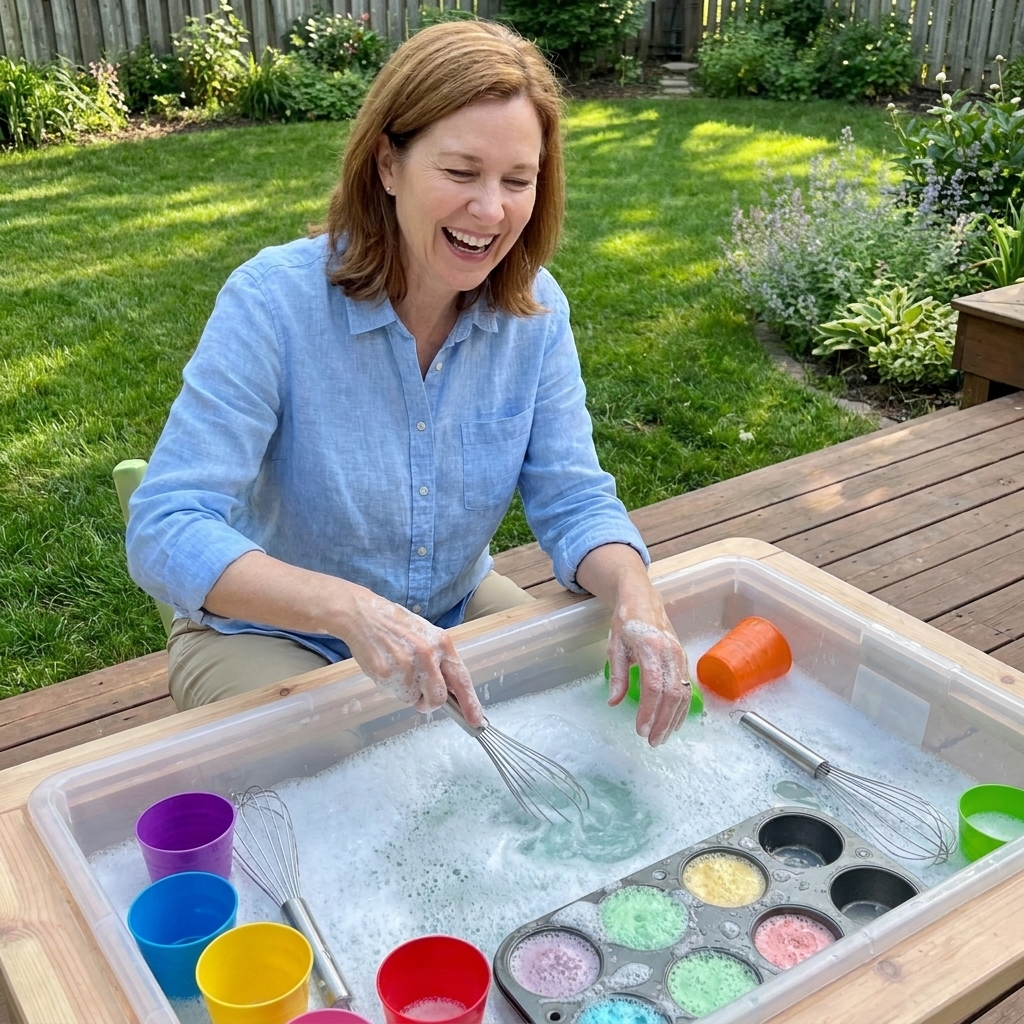
5) Bubble Potion Bin
My house is held together by hot glue and washi tape, but in summer it is powered by bubbles.
- Add: Water, bubble bath or gentle dish soap, whisks, measuring spoons, cups, a muffin tin, pipettes (optional), flower petals or herbs (optional).
- Play: Whisk up foam, “bottle” potions, mix scents with herbs like mint or basil.
- Learning boost: Practice fine motor skills with droppers and spoons. Explore cause and effect (whisk faster, more bubbles).
Sensitivity tip: If your kid has sensitive skin, keep it simple with plain water and tools.
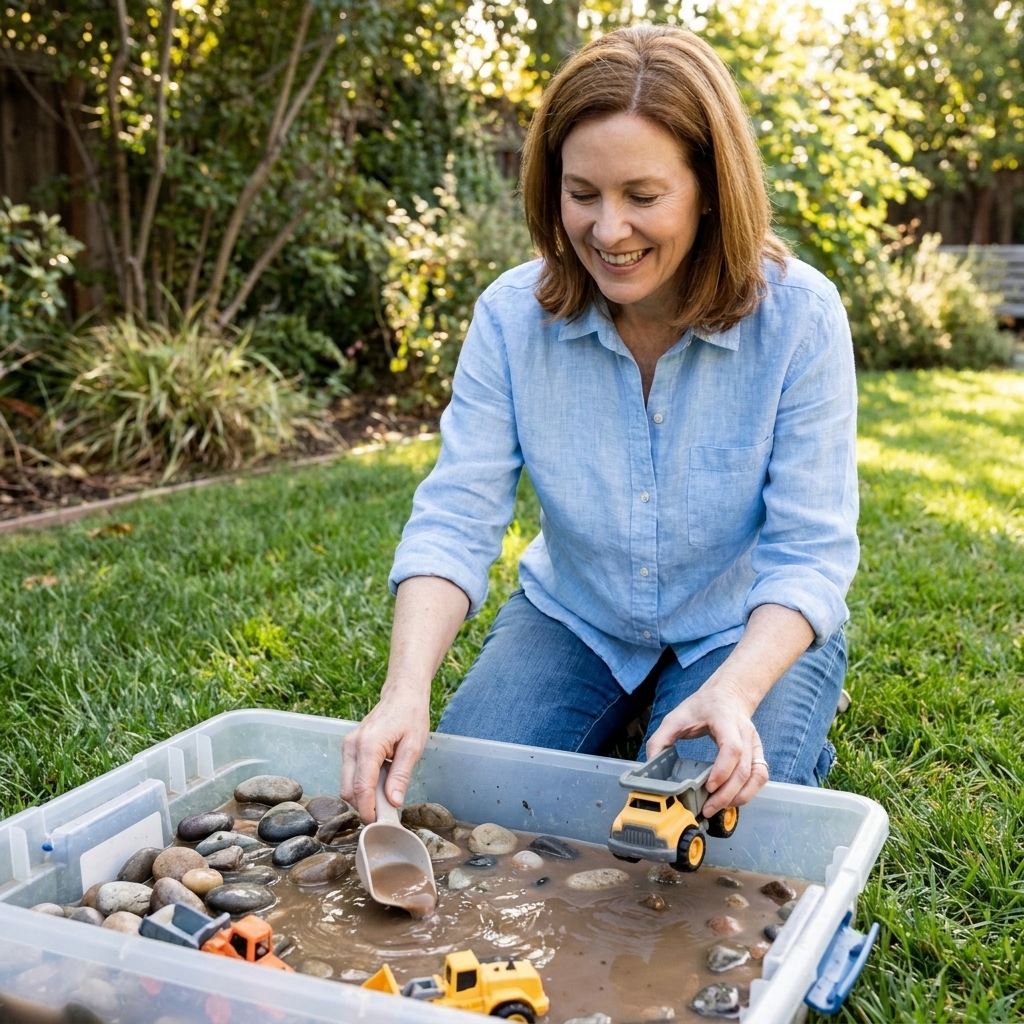
6) Construction Water Bin
For kids who love trucks and big scoops, add water and suddenly it is the best day ever.
- Add: Water, small construction vehicles, rocks, sticks, a handful of pea gravel or aquarium stones (skip for toddlers), scoops, a small sieve.
- Play: Haul “materials,” wash rocks, build a “river” path in the bin.
- Learning boost: Vocabulary (dump, load, heavy, light). Older kids can test what sinks and what floats.
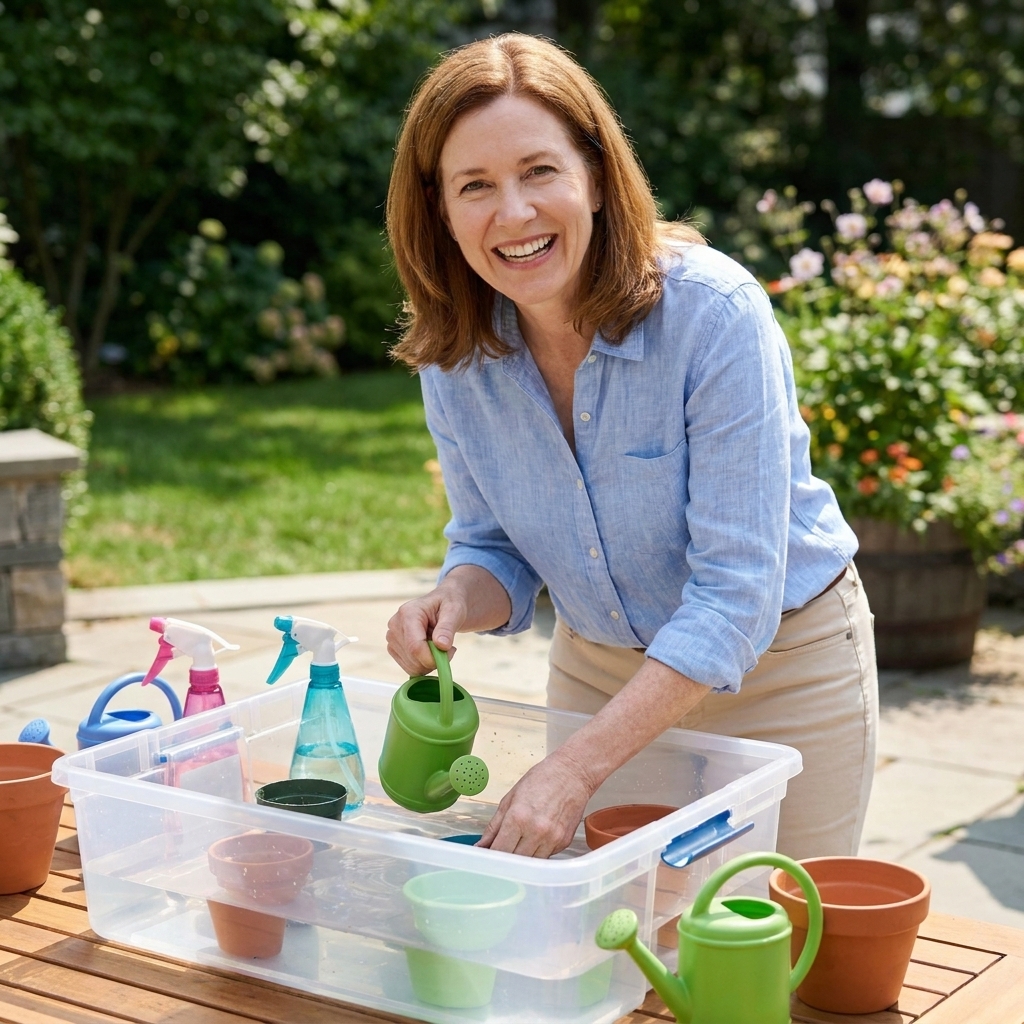
7) Garden Helper Watering Bin
This one is perfect when you want calm play that still feels like a job.
- Add: Water, small watering cans, spray bottles, plastic flower pots, silk flowers or real clippings, a sponge “soil” block.
- Play: Water the “plants,” mist flowers, squeeze and soak the sponge.
- Learning boost: Talk about what plants need to grow. Practice gentle spraying and hand strength.
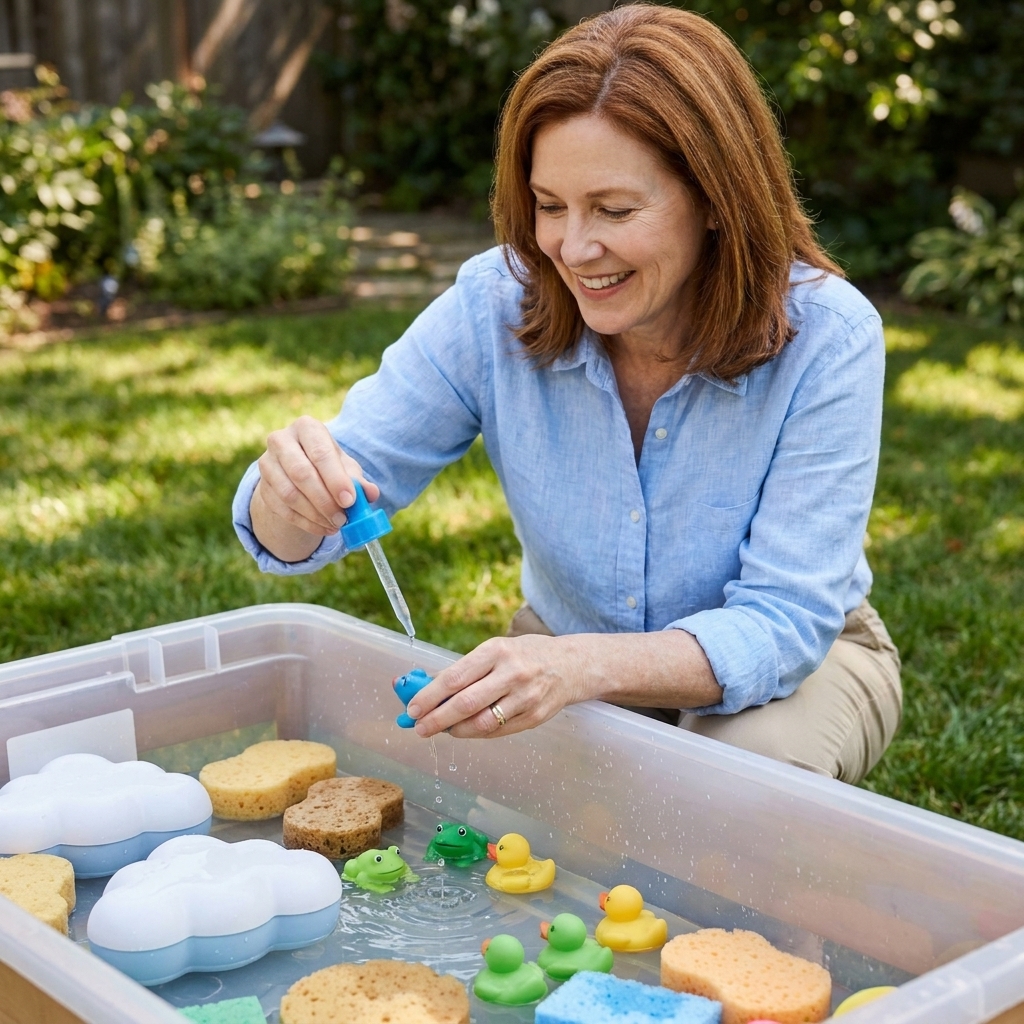
8) Rainstorm Weather Bin
Great for the kid who loves storms but does not love loud thunder.
- Add: Water, cloud-shaped sponges (or regular sponges), droppers, cups, a few plastic animals, and a small umbrella for extra giggles.
- Play: Make “rain” drip from sponges, create puddles, rescue animals from the storm.
- Learning boost: Weather words like drizzle, pour, and puddle. Older kids can measure rainfall with a marked cup.
9) Frozen Treats Scoop Shop Bin
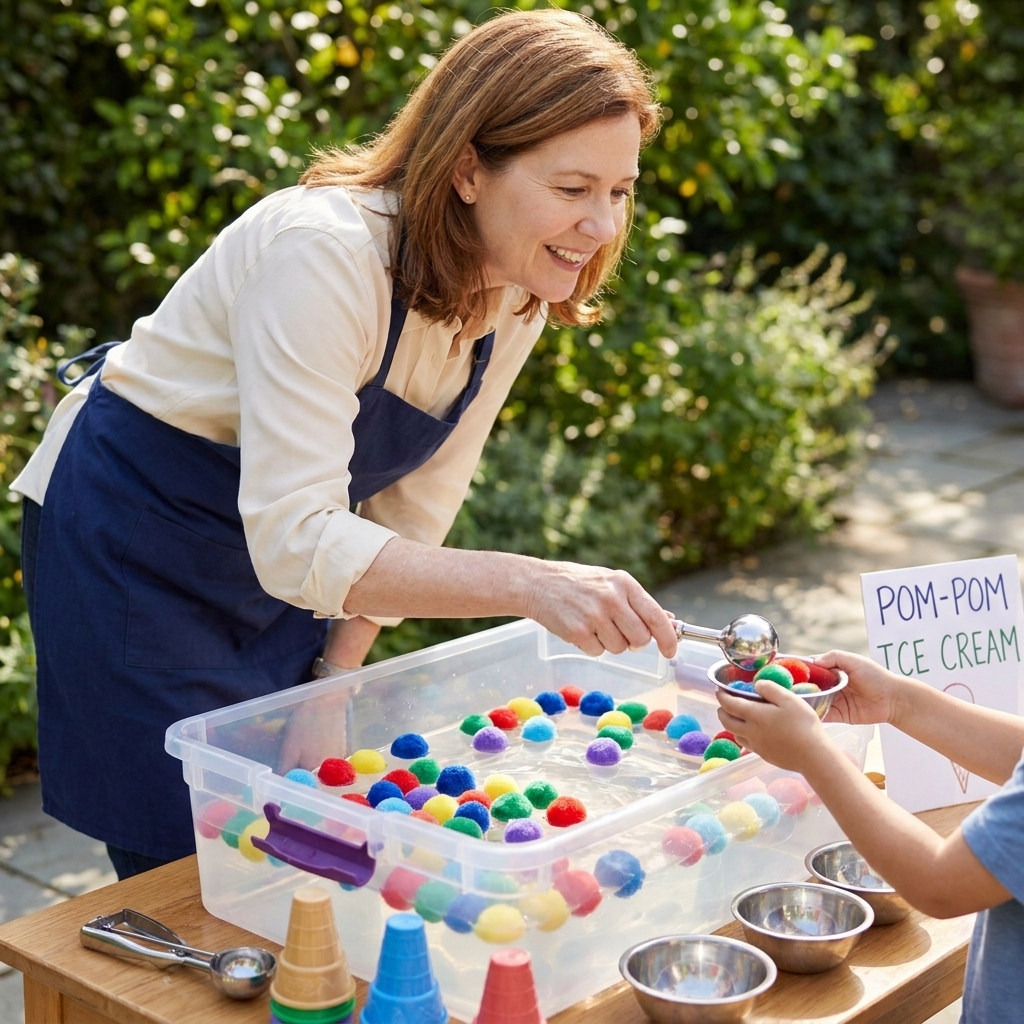
All the pretend ice cream fun, none of the sticky cones melting down tiny wrists.
- Add: Water, large pom-poms or foam balls as “scoops,” an ice cream scoop or big spoon, cups or bowls, muffin tin, a little colander for draining.
- Play: Scoop “flavors,” rinse scoops, serve customers.
- Learning boost: Sorting by color, counting scoops, simple addition for older kids (“2 scoops plus 1 scoop”).
Real-life tip: Pom-poms need to dry completely to avoid funk. If you want a grab-and-go version, swap in plastic balls instead.
10) Pirate Treasure Wash Bin
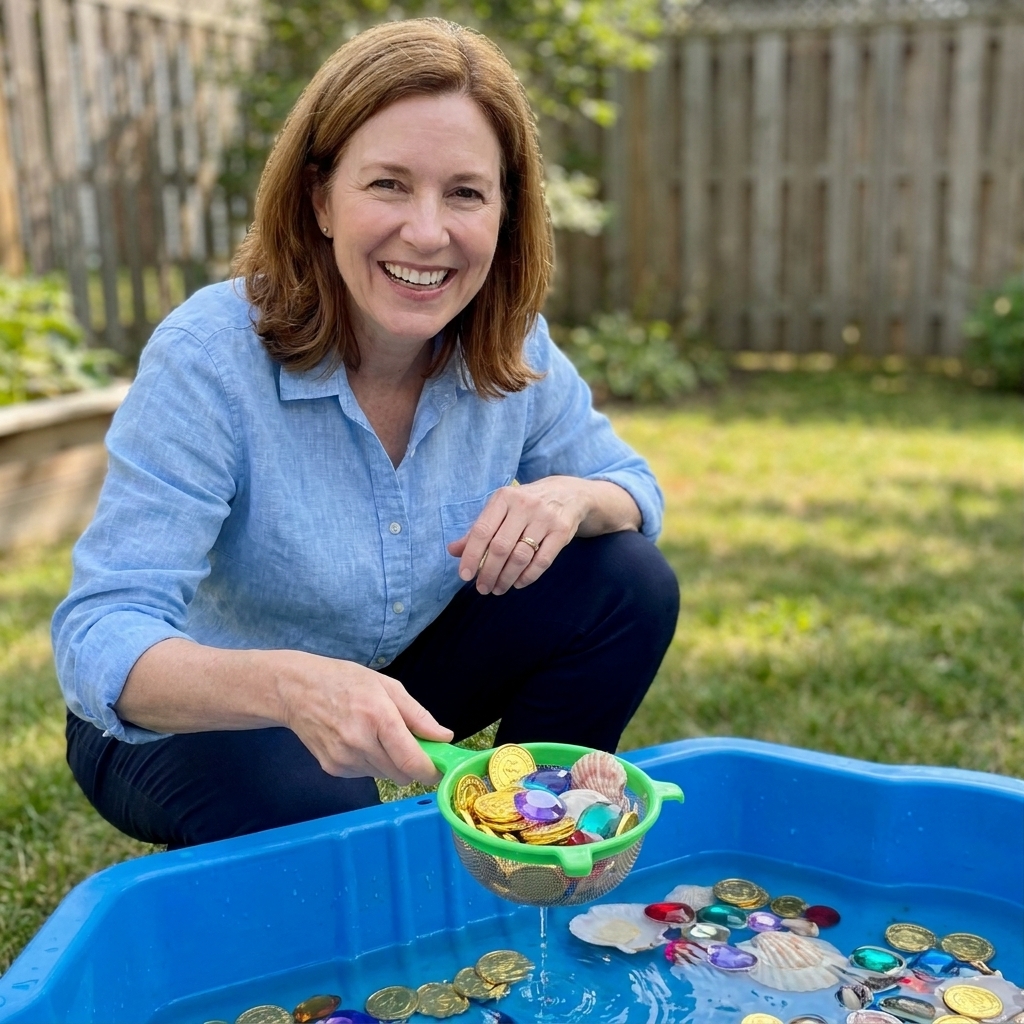
Whenever I need sibling teamwork, I whisper the magic words: “treasure hunt.”
- Add: Water, plastic coins or large “gems,” shells, a small strainer, cups, and a few toy pirates or boats.
- Play: Dig for treasure, wash it clean, sort it into “loot” cups.
- Learning boost: Fine motor with straining and pinching. Older kids can graph treasure types (coins vs. gems) with sidewalk chalk afterward.
Easy age tweaks
Toddlers (1 to 3)
- Focus on pouring, scooping, squeezing.
- Use larger tools: big cups, ladles, chunky sponges.
- Skip tiny add-ins and keep the theme simple.
Preschool and kindergarten (4 to 6)
- Add pretend play roles: cashier, rescuer, vet, pirate captain.
- Introduce simple challenges: “Can you fill this cup to the line?”
- Try new tools: droppers, small funnels, tongs.
Early elementary (7+)
- Turn it into a mini STEM lab: melting race, sink or float predictions, “which tool moves water fastest?”
- Add writing or math: menu prices, tally marks, timed trials.
- Give them a “setup helper” job so they feel like the expert.
Keep it low-mess
- Contain it: Place the bin inside a kiddie pool or on a large towel.
- Set a splash rule: “Water stays in the bin” works better when you show what to do instead, like squeezing sponges into a bowl.
- Dress smart: Swimsuits or just underwear for toddlers. No shame. Laundry is real.
- Use a tool tub: A second bin for scoops and cups keeps things from wandering across the yard.
Simple learning prompts
If you ever feel like you “should” be teaching, this is my gentle reminder: sensory play can support development in all kinds of sneaky, low-pressure ways. But if you want a few easy phrases, here are my favorites.
- “What happens if you pour slowly?”
- “Which one is heavier when it is full?”
- “Can you find two that float?”
- “How many scoops does it take to fill this cup?”
- “Tell me your recipe.”
FAQ
How long should a water sensory bin last?
Most kids happily play for 20 to 45 minutes. If you add a “mission” like ice rescue or treasure washing, you can often stretch it longer.
Do I need special sensory bin fillers?
Nope. For summer, water does the heavy lifting. Add kitchen tools, bath toys, sponges, and a theme, and you are set.
What is the easiest theme for a last-minute setup?
Car wash, garden watering, and lemonade pouring are fast because they use everyday items and do not need prep time.
How do I keep it hygienic?
If multiple kids are sharing, or if tools start going in mouths (it happens), swap in fresh water. Give tools a rinse after each use and a soapy wash once in a while, especially anything that stays damp.
How do I clean up quickly?
Empty the bin right after play. If you used plain water, you can usually dump it onto grass. If you used soap, salt, or food coloring, or if you have runoff rules where you live, pour it into a sink, toilet, or an appropriate drain instead. Then rinse the bin with the hose and toss tools into a small basket to air dry.
Your turn
If you try one of these, pick the theme your kid is already obsessed with right now and lean into it. Dinosaurs, trucks, mermaids, pirates, it all works. Add water, add a few tools, and let the process be the point.
And if your backyard ends up looking like a tiny splash zone for the afternoon, welcome to summer at my house.