10 simple, mess-friendly cardboard box toys kids actually play with. Build a car, castle, dollhouse, marble run, and more using everyday supplies.
If your 7 to 9-year-old loves building, taking things apart, or asking a million “why” questions, you are in the right place. These STEM crafts are made for real-life kitchens and classrooms, not a craft room that looks like a catalog. Most use cardboard, tape, straws, paper, and that mysterious bag of rubber bands in your junk drawer.
My biggest tip (from eight years teaching kindergarten and daily testing with my own 3, 6, and 8-year-olds): set a timer, build fast, then test. The learning happens in the tinkering.
Quick safety first
- Small parts: Balloons, marbles, push pins, coin cell batteries, and paper clips need close supervision, especially if younger siblings are around.
- Hot glue and sharp tools: Adults handle hot glue and any cutting beyond basic scissors.
- Coin cell batteries: Keep them out of reach when not in use, and avoid shorts (more on that in the paper circuit activity).
Easy ways to adjust: For kids who get overwhelmed, pre-cut a few pieces or shrink the goal (“make it stand for 5 seconds”). For kids who want more, add a rule (limited tape, must hold a weight, graph results, redesign round).
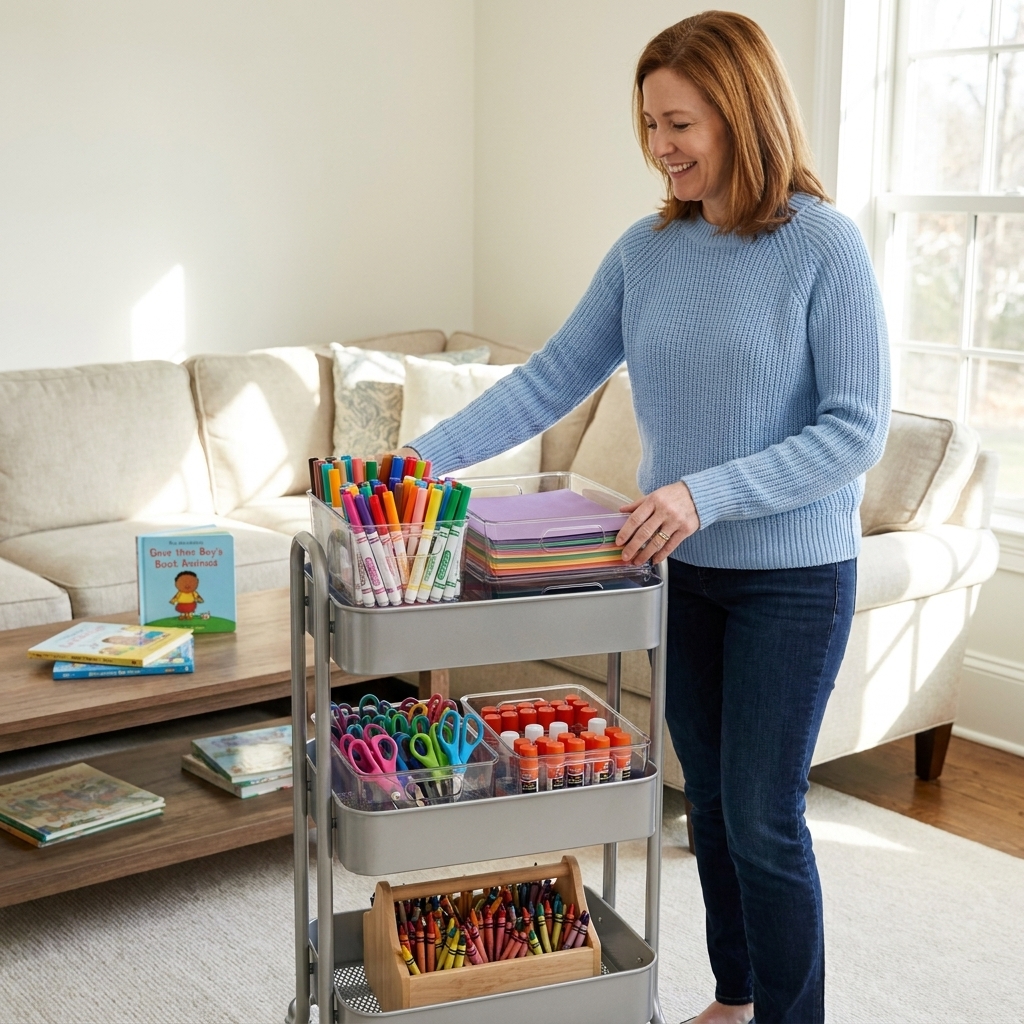
Quick setup: make a STEM bin
Grab a shallow box and toss in these basics. You will use them over and over in the challenges below.
- Cardboard scraps (cereal boxes, shipping boxes)
- Tape: masking, painter’s, clear, washi if you are fancy
- Glue and/or hot glue (grown-up only)
- Scissors, hole punch, ruler, markers
- Straws, popsicle sticks, toothpicks
- Rubber bands, paper clips, binder clips
- String or yarn
- Balloons
- Aluminum foil and plastic wrap
- Coins and a small cup for weights
Kid-safe testing mindset: Ask “What happened?” before “What went wrong?” Then change one thing and test again.
Clean-up tip that saves my sanity: Put a towel, tray, or flattened box under the build zone. When you are done, tip the whole mess into the STEM bin.
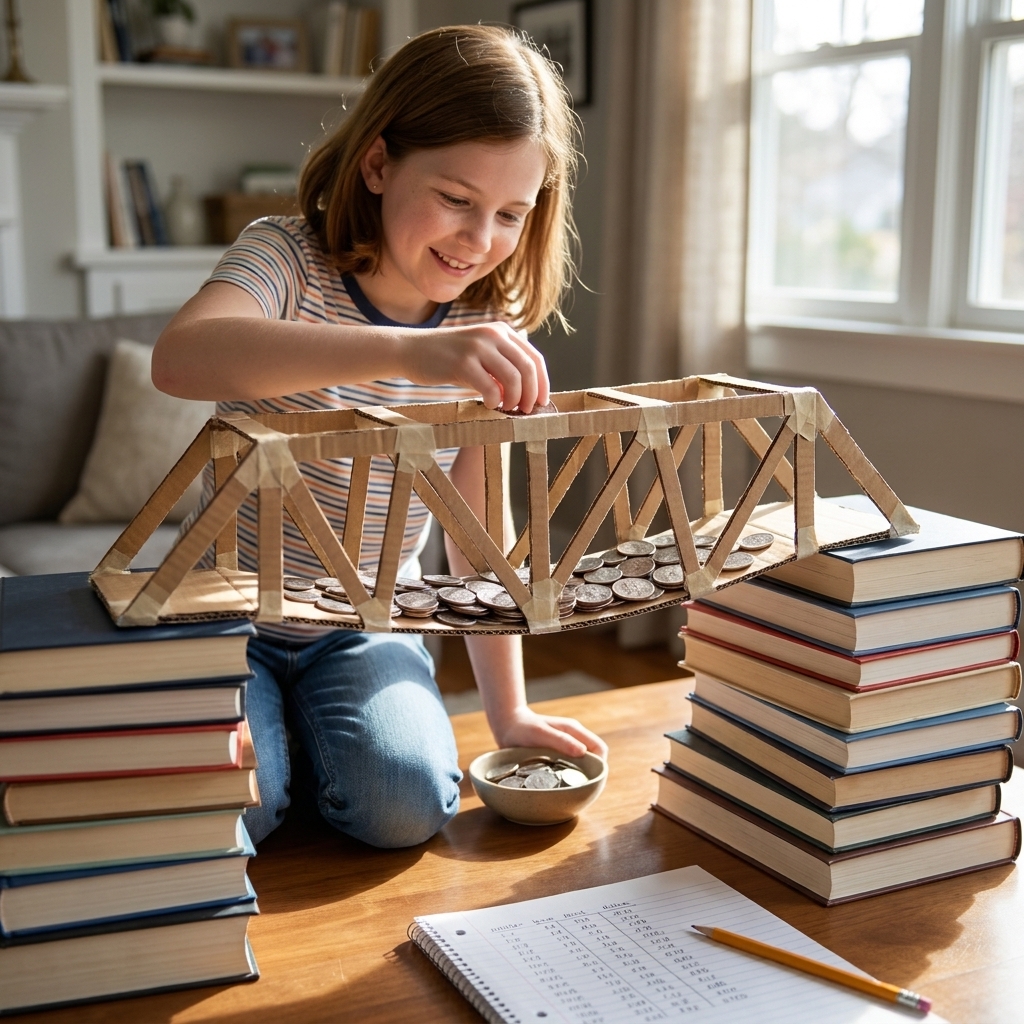
1) Cardboard bridge challenge
STEM focus: engineering, forces, structures
Supplies: cardboard, tape, scissors, books or cups (to make a gap), coins
How to do it
- Set up two stacks of books with a 6 to 10 inch gap.
- Build a bridge that spans the gap using only cardboard and tape.
- Test by adding coins, one at a time, in the center.
Make it harder: No tape in the middle 2 inches of the bridge.
Try this fix: Fold cardboard into a long beam (like a squared-off U shape) instead of using it flat.
2) Straw tower: tallest free-standing build
STEM focus: stability, geometry
Supplies: plastic straws, tape, a ruler
How to do it
- Challenge your child to build the tallest tower that can stand for 10 seconds.
- Measure height and record it.
- Rebuild and try to beat the score.
Make it harder: Limit tape to 12 inches total.
3) Paper airplane science lab
STEM focus: aerodynamics, measurement
Supplies: paper, tape (optional), measuring tape
How to do it
- Make 3 different airplane designs (classic dart, wide wings, and one “kid invention”).
- Fly each one 5 times from the same spot.
- Record distances and find the average.
Make it harder: Add a target landing zone and score accuracy too.
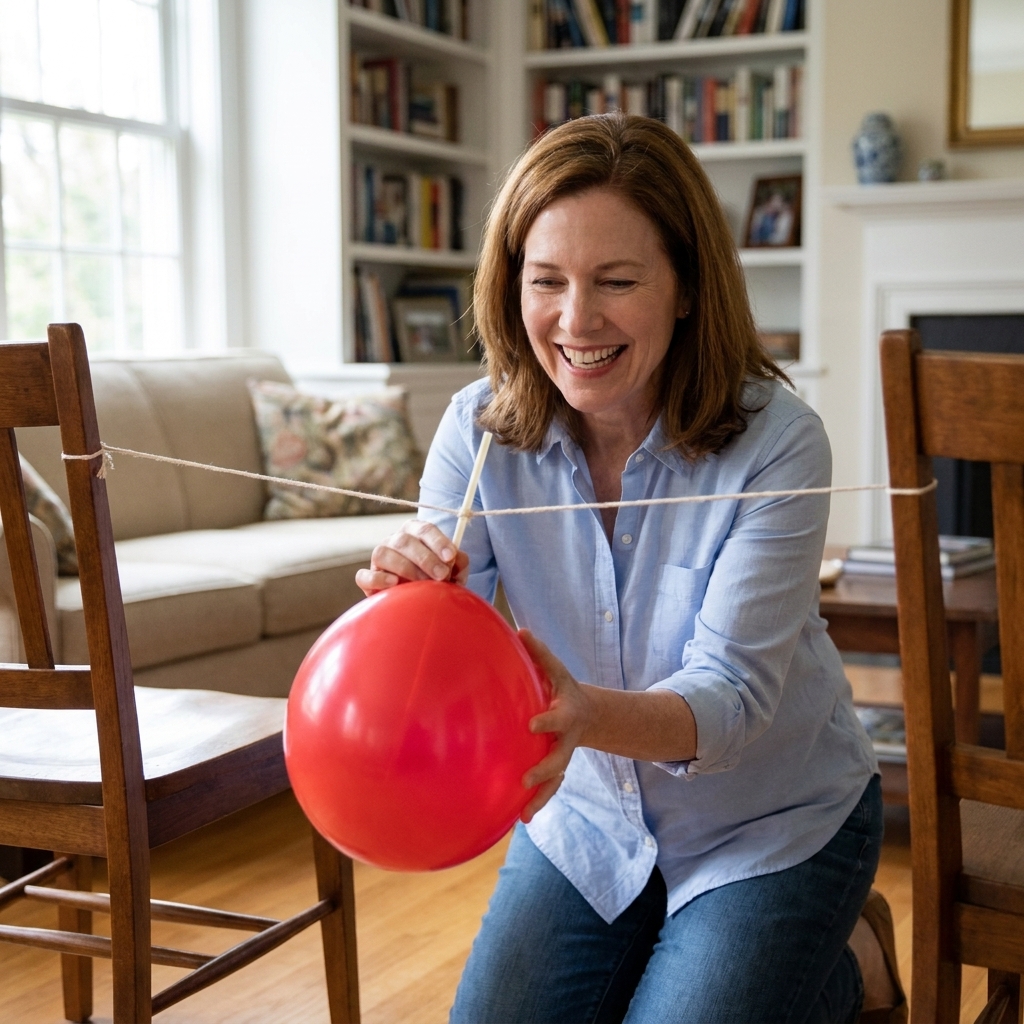
4) Balloon rocket on a string
STEM focus: Newton’s laws, thrust
Supplies: balloon, string, straw, tape, two chairs
How to do it
- Thread string through a straw and tie the string between two chairs.
- Tape an inflated balloon (do not tie it) to the straw.
- Let go and watch it zoom.
Make it harder: Test different balloon sizes or add a paper “payload” clipped to the straw.
5) Build a catapult with craft sticks
STEM focus: levers, energy transfer
Supplies: popsicle sticks, rubber bands, plastic spoon, pom poms or mini marshmallows
How to do it
- Stack 6 to 8 sticks and rubber band them together. This stack becomes the base.
- Rubber band 2 sticks together at one end to make a V shape.
- Slide the stacked bundle into the open end of the V so the bundle acts like a support under the top stick.
- Rubber band a spoon to the top stick as the launcher.
- Test launch distance and adjust.
Make it harder: Hit a target instead of going for distance.
Tip: If it barely launches, move the base bundle closer to the rubber band “hinge.” If it flips, widen the base.
6) Rubber band powered car
STEM focus: stored energy, friction
Supplies: cardboard, 4 bottle caps, 2 skewers or pencils, rubber band, tape
How to do it
- Cut a small cardboard rectangle for the car body.
- Poke holes for axles and slide skewers through.
- Attach bottle caps as wheels.
- Make a front “hook” with a paper clip, a taped loop of cardboard, or a small notch cut into the front of the car. Loop one end of the rubber band onto it.
- Loop the other end of the rubber band around the back axle.
- Wind the axle, set it down, and release.
Troubleshooting: If it veers, check that wheels are not rubbing the body and both axles are straight.
7) Index card skyscraper
STEM focus: compression, structure
Supplies: index cards, tape
How to do it
- Build the tallest tower using only index cards and tape.
- Test stability by lightly tapping the table.
Make it harder: Use no tape, only folding and slotting cards together.
8) Egg drop (kitchen version)
STEM focus: impact, cushioning, design
Supplies: egg, paper, tape, straws, cotton balls, small box or cup
How to do it
- Design a protective “capsule” for the egg.
- Drop from a low height first (1 to 2 feet), then increase.
- Record what worked.
Parent note: Hard-boiled eggs keep this less heartbreaking. Also, do this outside or over a washable surface (a towel, a tarp, or the bathtub is surprisingly useful).
9) Build a working pulley
STEM focus: simple machines
Supplies: thread spool (or ribbon spool), pencil or skewer (as an axle), string, hanger or broom handle, small cup, tape
How to do it
- Push a pencil or skewer through the center of the spool to make an axle.
- Rest the axle on a hanger, two stacked cups, or across a broom handle so the spool can spin freely.
- Run string over the spool.
- Tie a cup to one end and pull the other end to lift “cargo” (coins or small toys).
Make it harder: Try a two-pulley system and compare how much effort it takes.
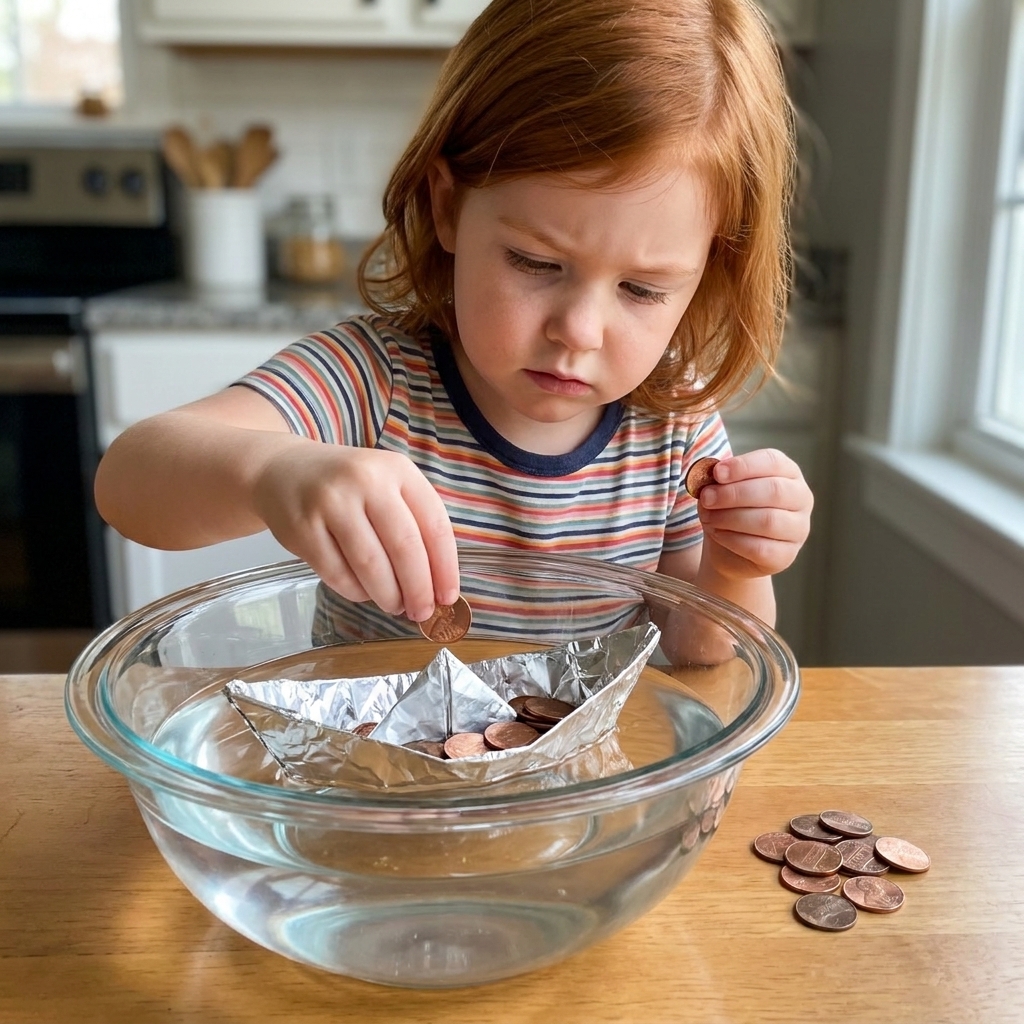
10) Aluminum foil boats: float and load
STEM focus: buoyancy, displacement
Supplies: aluminum foil, bowl of water, pennies
How to do it
- Mold foil into 3 different boat shapes.
- Float them and add pennies until they sink.
- Compare which shape holds the most.
Make it harder: Boats must fit inside a 6 inch square of foil.
11) Paper circuit greeting card
STEM focus: basic circuits
Supplies: coin cell battery, small LED, copper tape (best) or carefully folded aluminum foil strips, cardstock, tape
How to do it
- Draw a simple card design on cardstock.
- Lay copper tape paths for positive and negative lines.
- Place the LED legs on the tape paths (long leg to positive).
- Use the coin cell battery to complete the circuit with a fold “switch.”
Safety: Coin cell batteries are dangerous if swallowed. Keep them out of reach of younger siblings.
Don’t skip this: Make sure the positive and negative tape lines never touch. A short circuit can make a coin cell battery heat up. Use a small piece of clear tape as an “insulator” anywhere lines might cross, and have an adult supervise.
12) DIY periscope
STEM focus: light reflection
Supplies: cardboard box (cereal box works), 2 small mirrors, tape
How to do it
- Cut two square windows, one near the top front and one near the bottom back.
- Tape mirrors inside at matching 45 degree angles, facing each other so light bounces down the tube.
- Look through the bottom window to see over an obstacle.
Make it harder: Add a handle and make it sturdy enough for “spy missions.”
13) Marble maze from a pizza box
STEM focus: problem-solving, design iteration
Supplies: pizza box lid or shallow box, cardboard strips, glue or tape, marble
How to do it
- Create maze walls with cardboard strips.
- Test with a marble, adjust tight turns, and try again.
- Add a trap and a shortcut.
Make it harder: Time each run and try to beat your best.
14) Spaghetti and marshmallow engineering
STEM focus: structures, triangles
Supplies: dry spaghetti, mini marshmallows (or playdough)
How to do it
- Build a tower or bridge using spaghetti as beams and marshmallows as joints.
- Test strength by adding a small toy on top.
Teaching moment: Triangles are your best friend for stability.
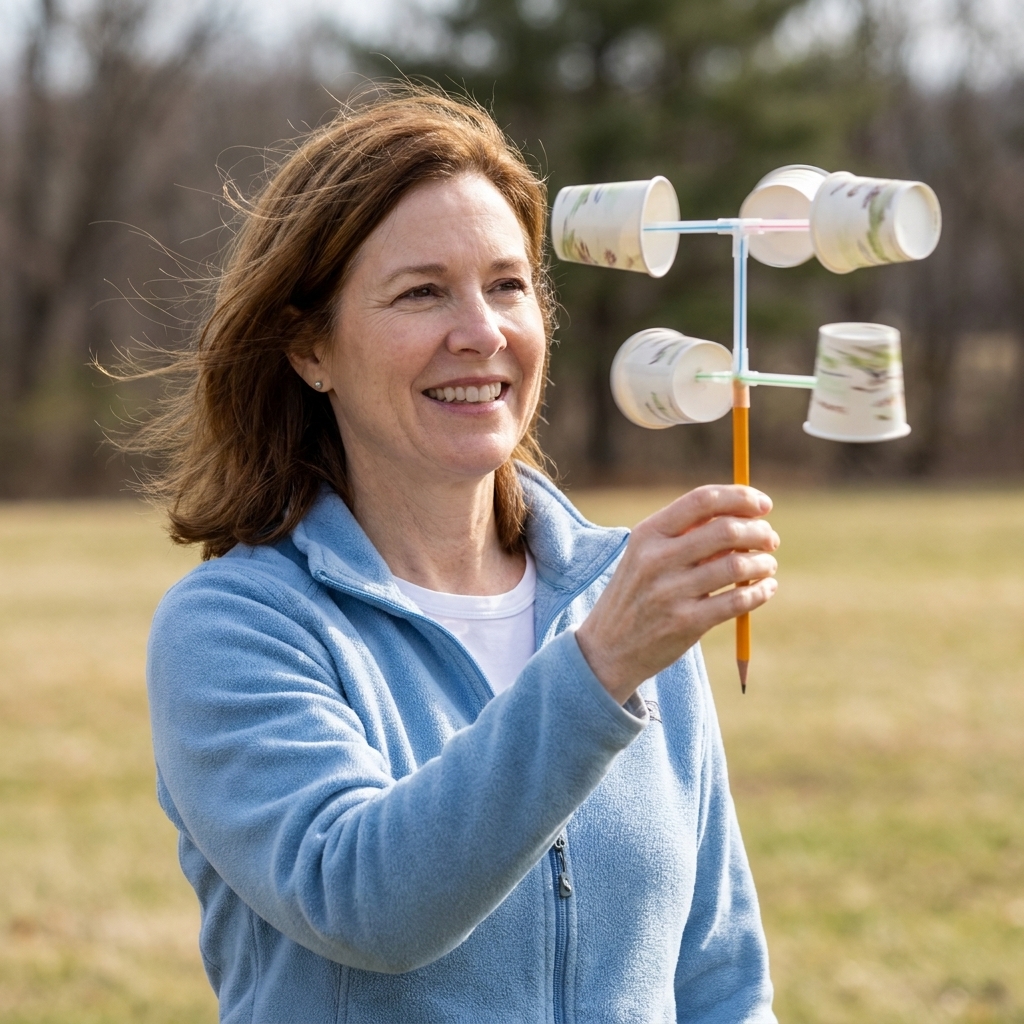
15) DIY anemometer (wind speed spinner)
STEM focus: weather science, measurement
Supplies: 4 small paper cups, 2 straws, push pin, pencil with eraser, tape
How to do it
- Make a plus sign by sliding two straws through each other.
- Tape a cup to each straw end, all facing the same direction.
- Push pin through the center into the pencil eraser.
- Take it outside and compare “fast spin” vs “slow spin” days.
Make it harder: Count spins in 30 seconds and keep a windy-day log.
16) LEGO zip line (or mini toy zip line)
STEM focus: gravity, friction, design
Supplies: string, tape, paper clip, small toy figure or LEGO mini figure, straw
How to do it
- Tie string between two points with a slight slope.
- Thread a straw onto the string as the trolley.
- Attach a paper clip hook and hang a small toy.
- Test different slopes and loads.
Make it harder: Can it travel 6 feet without stopping?
17) Water filter challenge
STEM focus: environmental science, materials
Supplies: plastic bottle (cut in half), coffee filter or paper towel, sand, gravel, cotton balls, dirty water (soil mixed in)
How to do it
- Invert the top of the bottle to make a funnel.
- Layer materials in different orders.
- Pour dirty water through and observe clarity.
Important: Filtered water is not safe to drink. This is just for learning.
18) Magnetic maze
STEM focus: magnetism, control systems
Supplies: cardboard, paper clip, magnet, tape, marker
How to do it
- Draw a maze on cardboard.
- Place a paper clip on top as the player.
- Move a magnet underneath to guide it through.
Make it harder: Add obstacles like paper walls the clip cannot cross.
19) Shadow tracker (simple sundial)
STEM focus: Earth and space science
Supplies: paper plate, pencil, marker, sunny spot
How to do it
- Poke a pencil through the center of a paper plate and secure it upright.
- Set it in a sunny spot.
- Mark the tip of the shadow every hour and label the times.
Make it harder: For a more “real” sundial, rotate the plate so the shortest shadow happens at local noon, then keep that orientation and add hour marks.
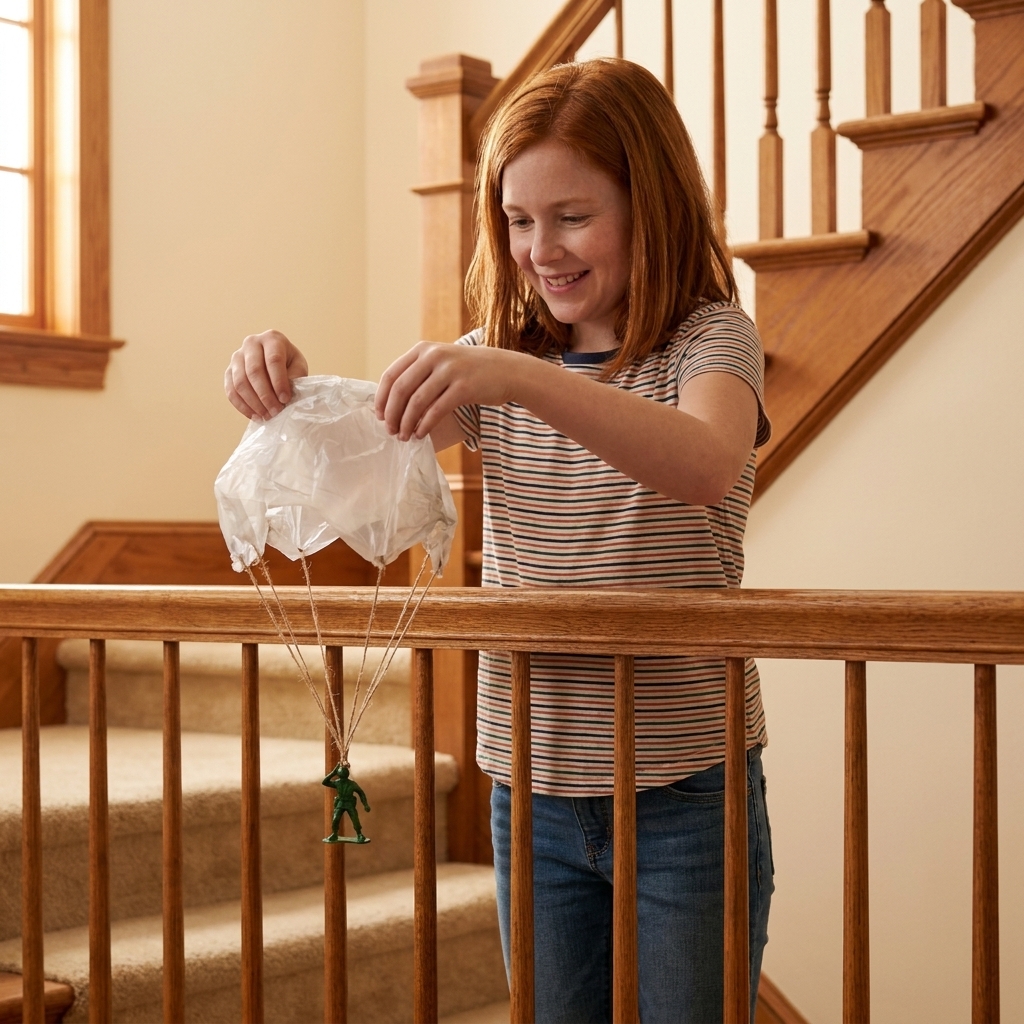
20) Parachute drop: slowest landing wins
STEM focus: air resistance
Supplies: plastic bag or coffee filter, string, tape, small toy
How to do it
- Cut a plastic bag into a square or use a coffee filter.
- Tape four strings to the corners.
- Tie strings to a small toy skydiver.
- Drop from the same height and time the fall.
Make it harder: Try different canopy sizes and materials and graph the results.
Little scientist extras
- Design journal: Have kids draw their build, label materials, and write one change they want to try next.
- One-variable rule: Change only one thing per test so results make sense.
- Family STEM night: Put siblings on teams. Winner chooses dessert. This is a highly scientific method in my house.
If you only remember one thing: set a timer, build fast, then test. The “fail” is usually just data in disguise.
FAQ
How long should these take for ages 7 to 9?
Most take 20 to 45 minutes to build, then another 10 to 20 minutes to test and tweak. If attention is fading, stop after the first test and come back later.
What if my child gets frustrated when it fails?
I call the first version a prototype and we celebrate it doing anything at all. Then we ask, “What is one tiny change we can try?” Keeping it small makes it feel doable.
Can I do these with a group classroom or party?
Yes. Choose challenges with simple rules and quick testing like foil boats, straw towers, paper airplanes, or parachutes. Pre-cut cardboard pieces if you want less waiting and fewer scissor traffic jams.