Ten backyard water sensory bins that can keep kids cool and learning all summer. Budget-friendly supplies, simple set-ups, safety notes, and age tweaks for t...
When it’s hot-hot outside and everyone’s getting a little crispy (emotionally and literally), water play is my go-to reset button. You don’t need a pool or fancy gear. You need a few household items, a towel pile, and the willingness to say, “Yep, we’re going to be wet.”
These outdoor water play activities are designed for toddlers through early elementary. They’re sensory-rich, easy to set up, and very forgiving if your child’s “plan” turns into a whole different kind of fun. Process over perfection, always.
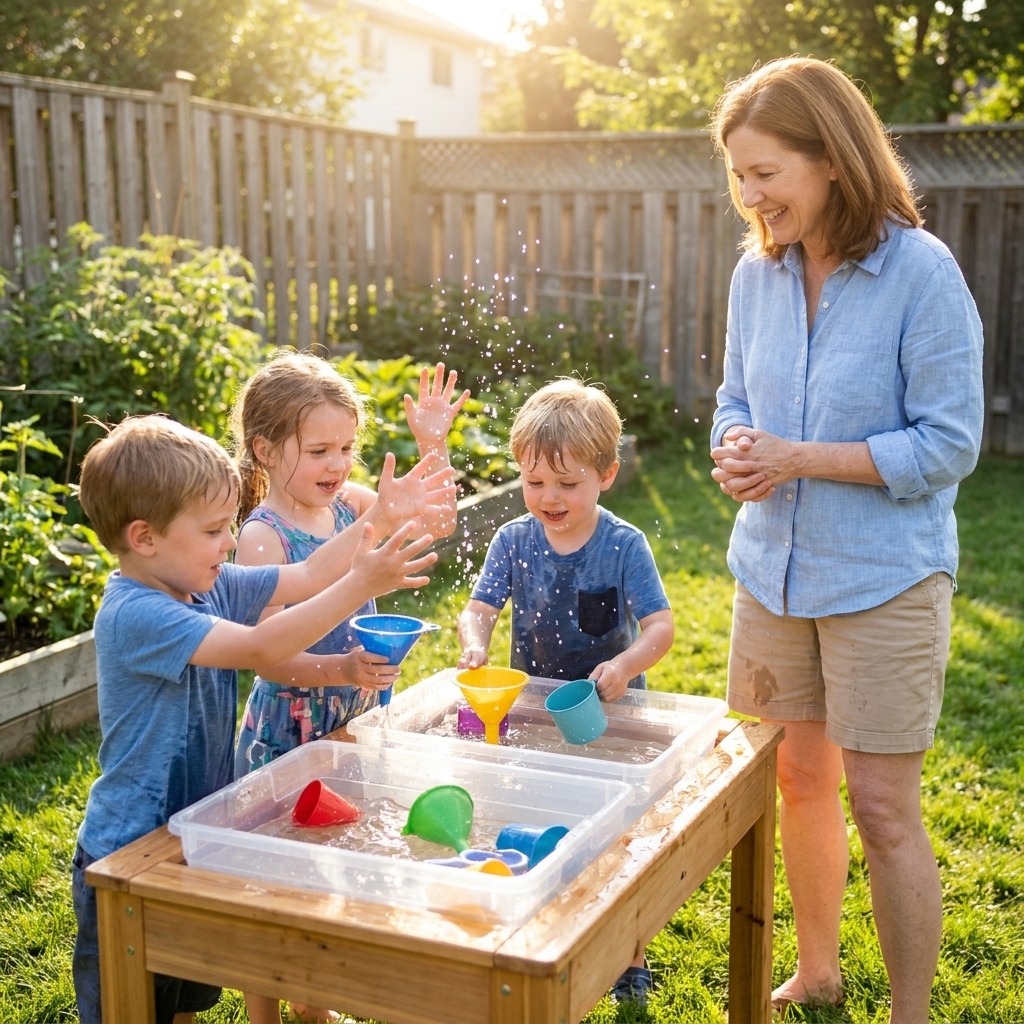
Before you start: my quick water-play rules
- Adult supervision always. Even shallow water can be risky.
- Choose a safe surface. Grass is great. If you’re on a patio, add non-slip mats or towels in high-traffic spots.
- Shade, sunscreen, and hydration. Set up near an umbrella, canopy, or tree if you can. Offer water breaks, and try to avoid the hottest part of the day.
- Warm water for little ones. In my experience, toddlers last longer (and complain less) when the water isn’t icy.
- Towels at the “exit.” Put a towel basket by the back door so you’re not chasing drips through the house.
12 summer sensory water play ideas
Each idea includes what you need, how to play, and a simple way to adjust for different ages.
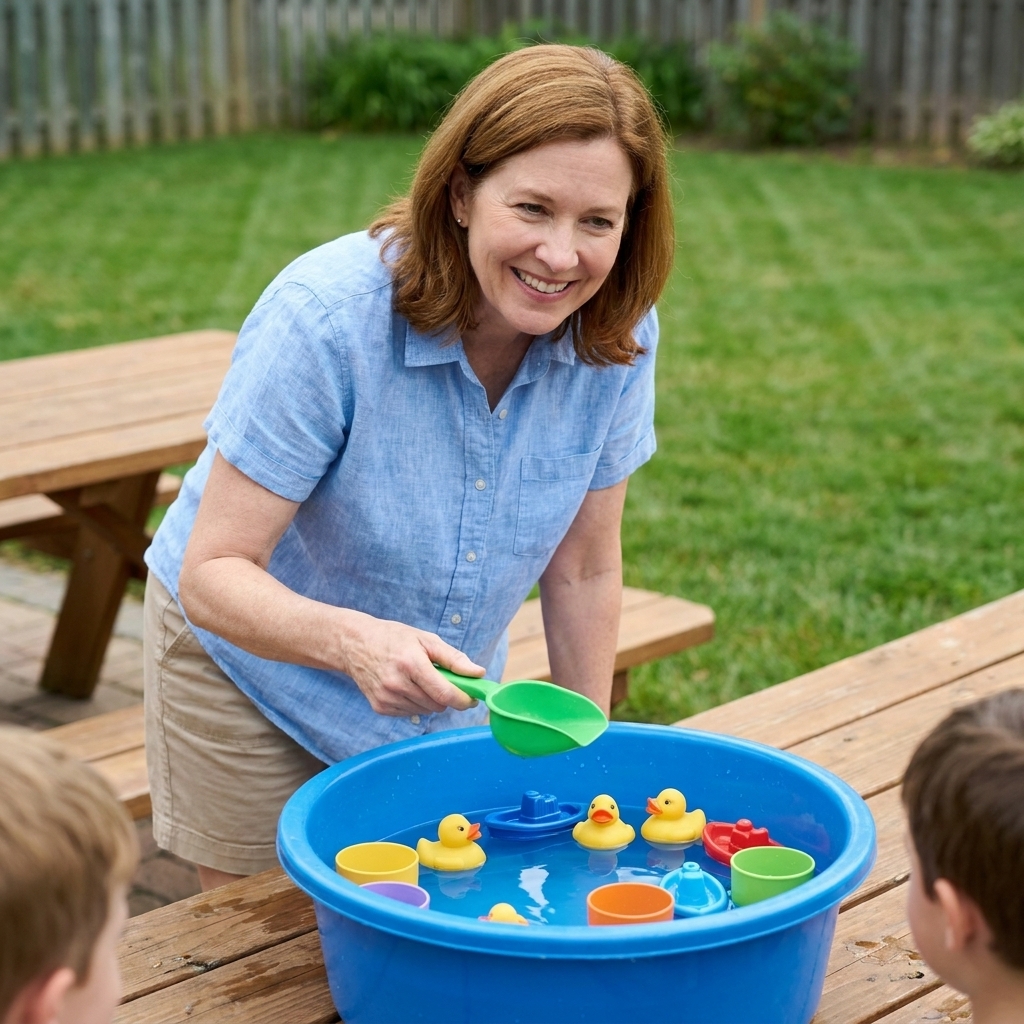
1) Ice block treasure hunt
This one’s a guaranteed crowd-pleaser because it feels like a tiny adventure and a tiny science lesson at the same time.
- You need: A large container (mixing bowl, loaf pan, or plastic tub), small plastic toys, measuring cups, warm water in a squeeze bottle or cup, optional salt.
- Set up: Freeze toys inside a big block of ice overnight.
- How to play: Pop the ice out into a shallow bin outside. Kids “rescue” the treasures by pouring warm water over the ice, squirting water, or rubbing with their hands.
- Sensory boost: Sprinkle salt and watch little tunnels form. (Salt helps melt ice faster by lowering the freezing point.)
- Make it easier: Freeze smaller blocks in muffin tins.
- Make it harder: Give each child a small cup of warm water and let them problem-solve slowly.
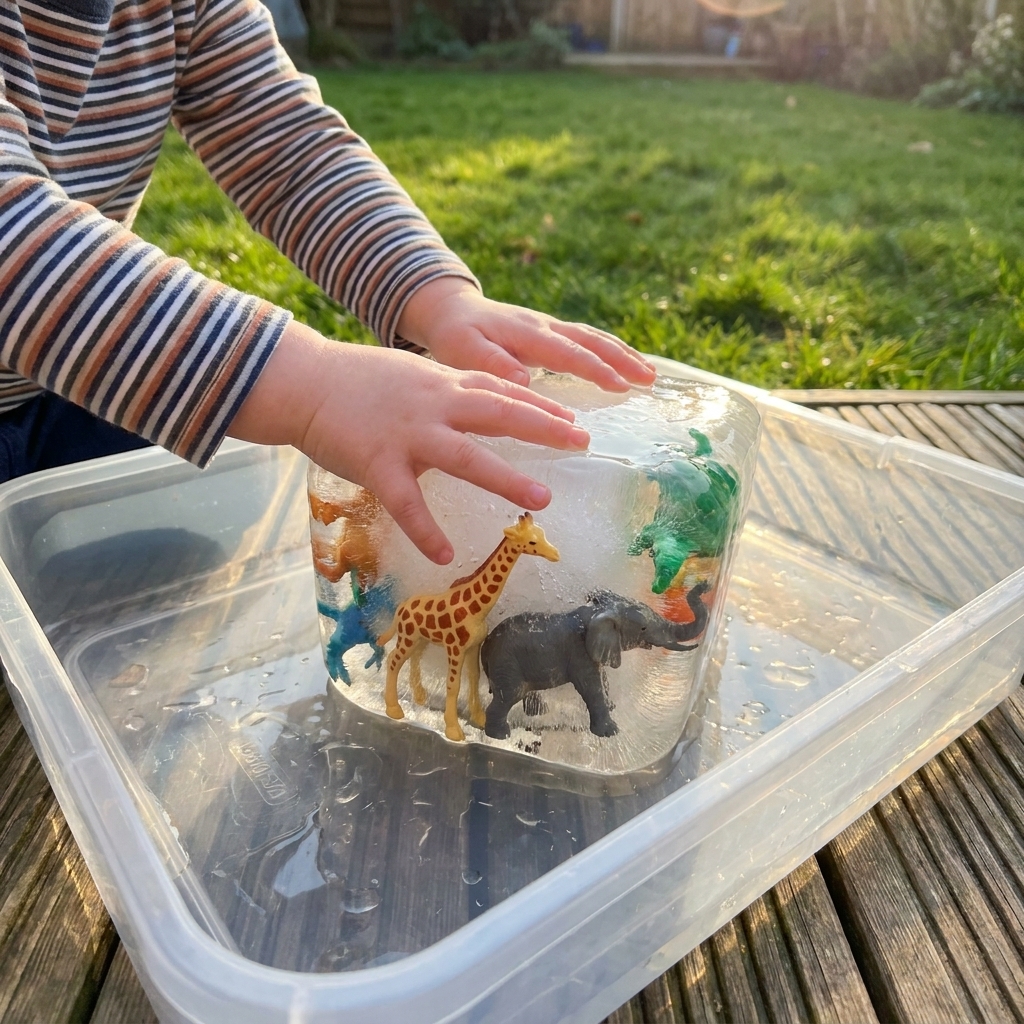
2) Sponge toss target game
My house is basically held together by hot glue and washi tape, but summer is held together by sponges.
- You need: Clean sponges, a bucket of water, sidewalk chalk or hula hoops.
- Set up: Draw targets with chalk or place hoops on the grass.
- How to play: Soak sponges, then squeeze out the extra water (so it doesn’t splat too hard), then toss to hit the target.
- Skills: Hand strength (squeezing), coordination, taking turns.
- Toddler version: Stand close and aim for a big laundry basket.
- Big kid version: Add point values to targets and play to 10.
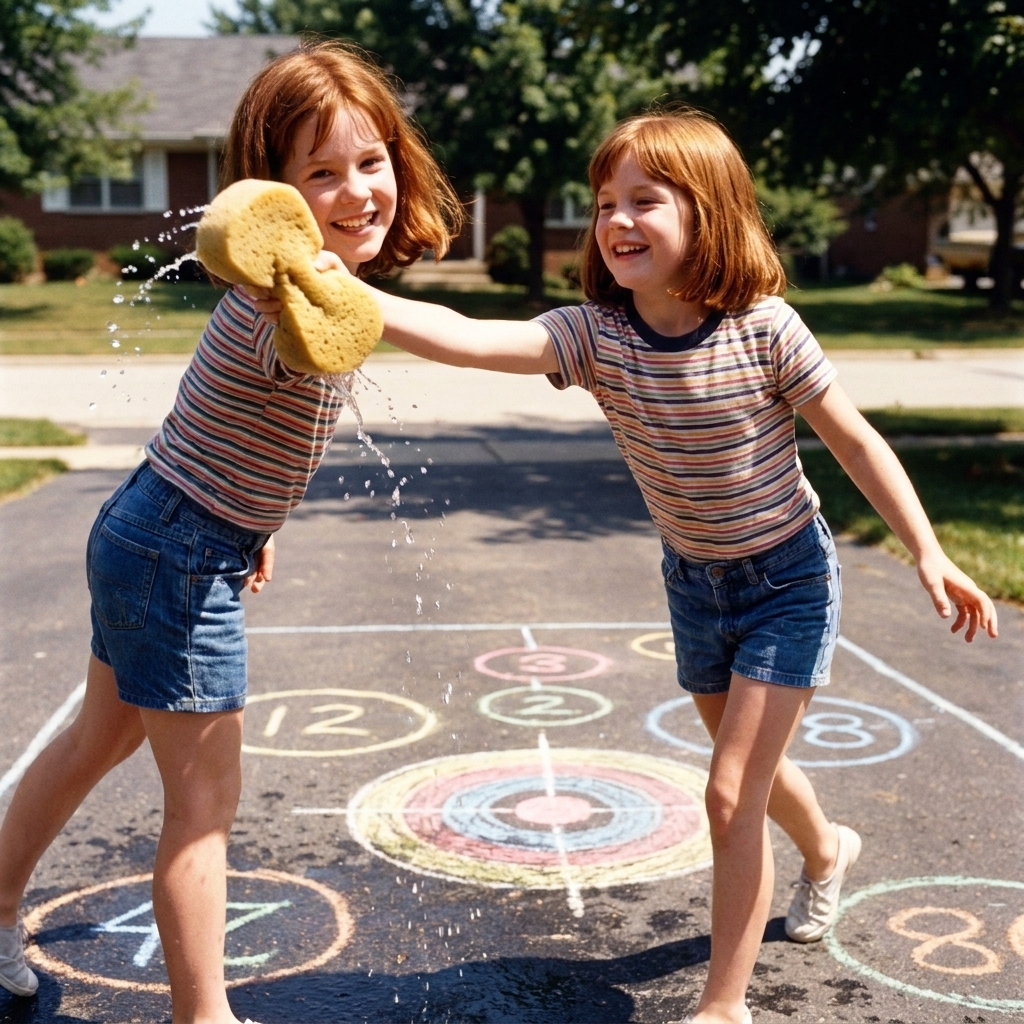
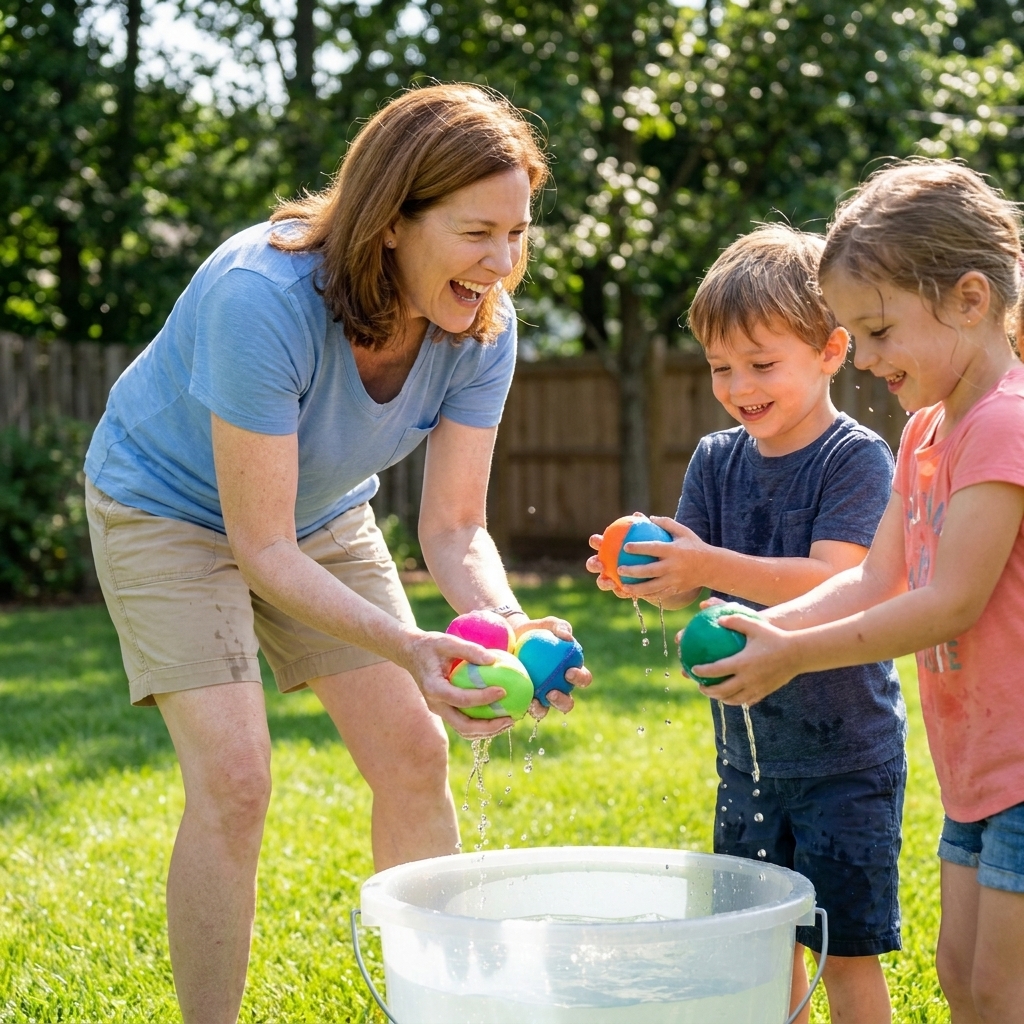
3) Water balloon-free “splash balls”
If you love the idea of water balloons but not the tiny balloon pieces, this is your new best friend.
- You need: Reusable water splash balls (silicone) or a few washcloths tied into tight knots, a bucket of water.
- How to play: Soak and toss during a gentle backyard splash game.
- Safety tip: No aiming at faces. I say “below the shoulders” and repeat it like a broken record.
- Cleanup win: Nothing to pick up except the balls or cloths.
4) Car wash for bikes and ride-on toys
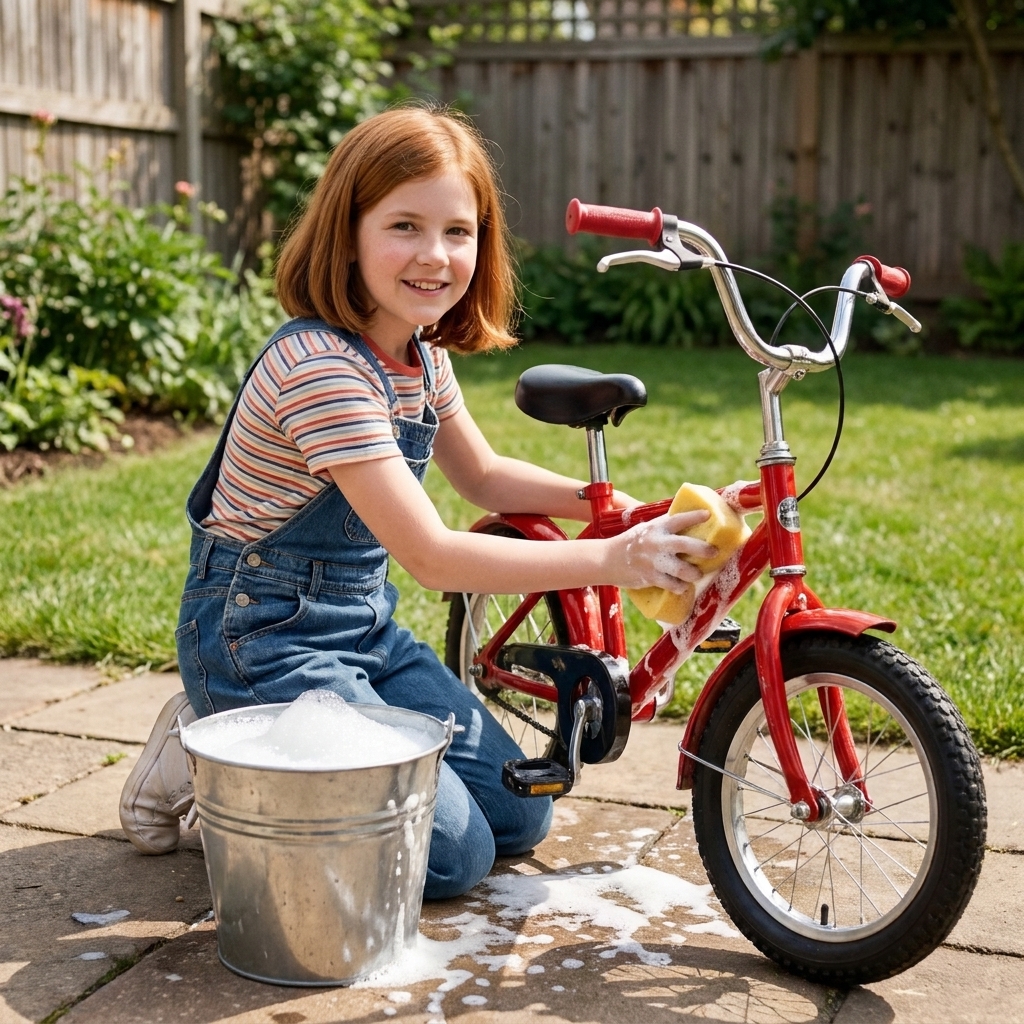
This is sneaky sensory play plus a practical chore, which is my favorite kind of parenting magic trick.
- You need: A bucket of soapy water, sponges, scrub brushes, an old towel, optional hose on a gentle setting.
- How to play: Kids “wash” bikes, scooters, cozy coupes, or even outdoor chairs.
- Talk about: Bubbles, textures (smooth seat, bumpy tires), rinse vs. scrub.
- Tip: Put items on the grass so the runoff soaks in.
5) Bubble foam sensory bins
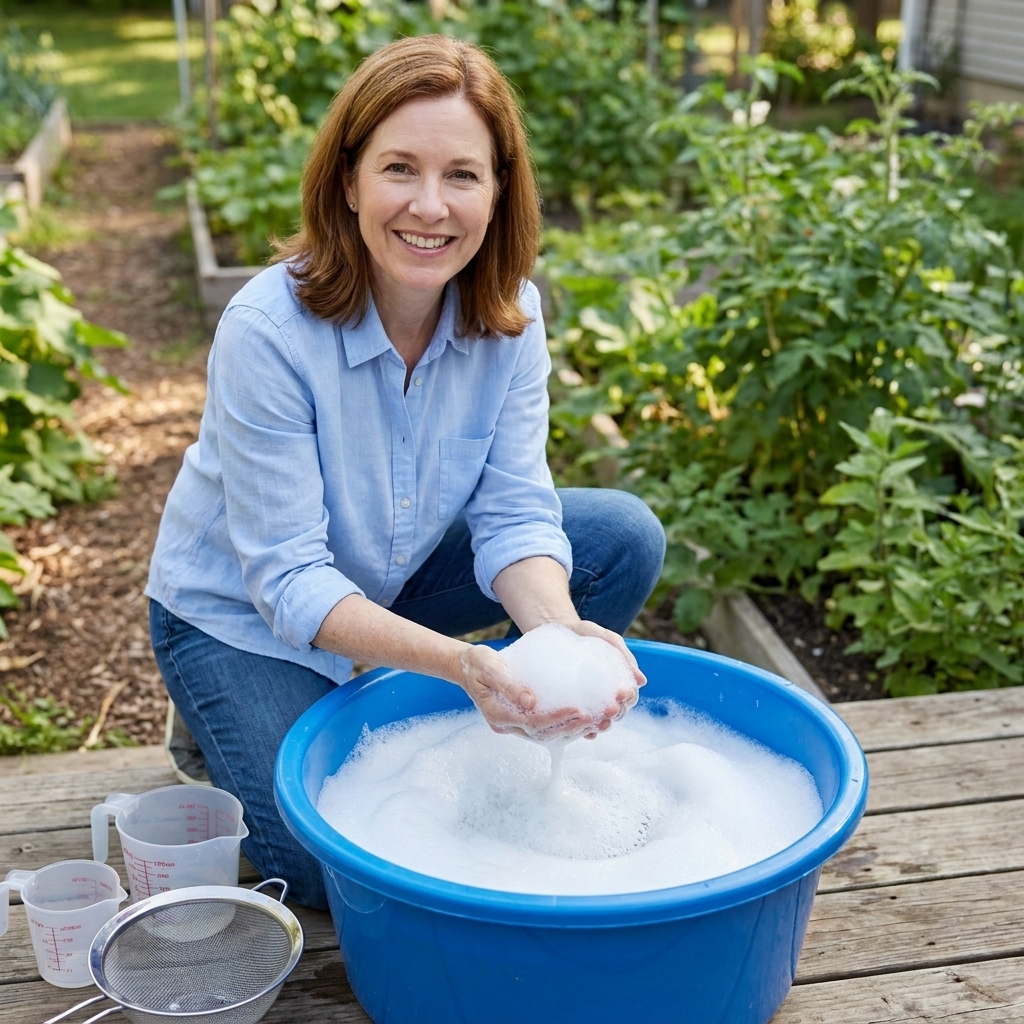
Foam is the ultimate “ooh!” texture. It’s light, squishy, and feels like summer in a tub.
- You need: Kid-safe bubble bath or dish soap, water, a hand mixer or whisk, a big bin, optional food coloring.
- Set up: Add a little soap to water and whip until fluffy. Scoop into a bin.
- How to play: Add cups, strainers, spoons, small waterproof toys.
- Quick caution: Soap can sting eyes and bug sensitive skin. Set a “no face” rule, and have clean water ready for rinsing.
- Toddler tip: Keep it simple with just foam and a few cups.
- Extra fun: Hide plastic animals in the foam for a “find and wash” game.
6) Water painting on the fence
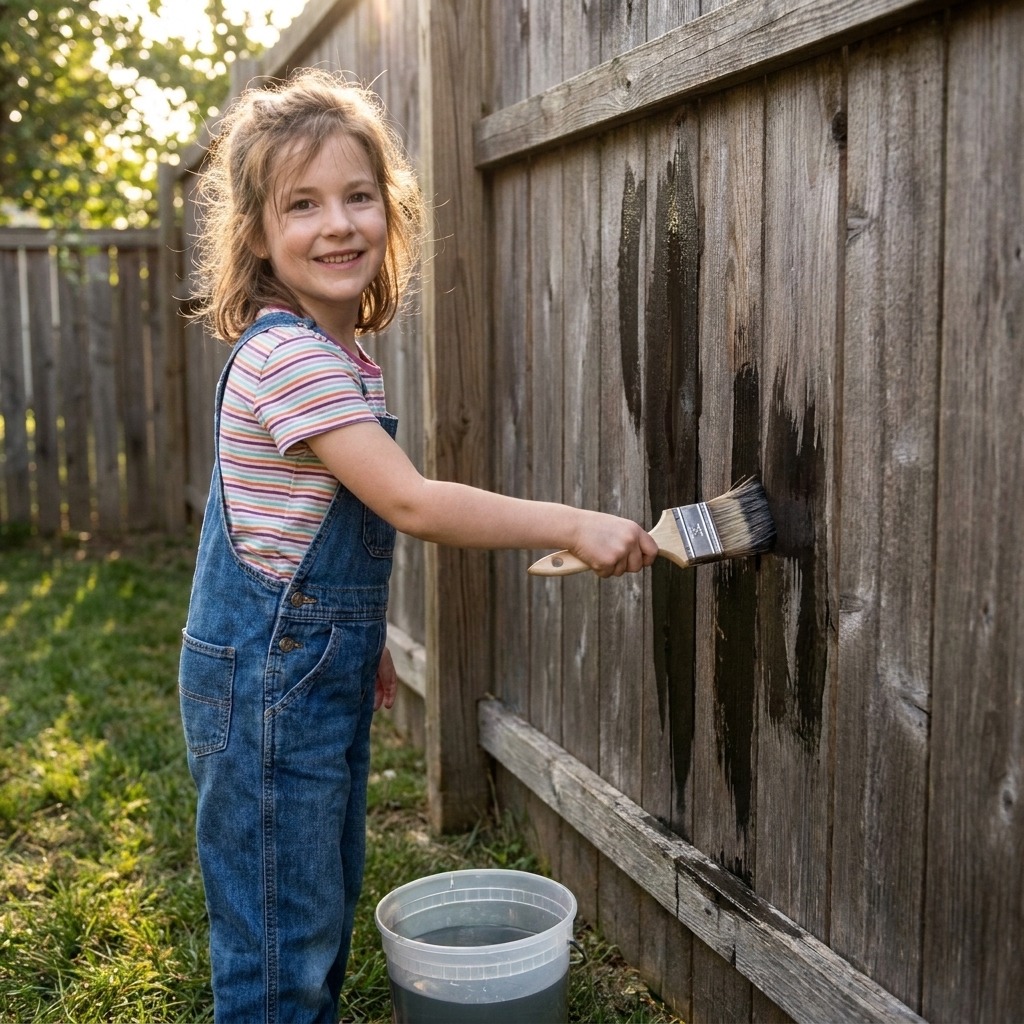
When you need low-mess water play, this is it. The water dries, and the “art” disappears like magic.
- You need: A cup of water, paintbrushes or foam brushes, a fence, deck, sidewalk, or brick wall.
- How to play: Dip and paint. Watch it darken, drip, and slowly dry.
- Learning angle: Practice letters, shapes, and patterns with older kids.
- Toddler version: Big brush, big strokes, no instructions.
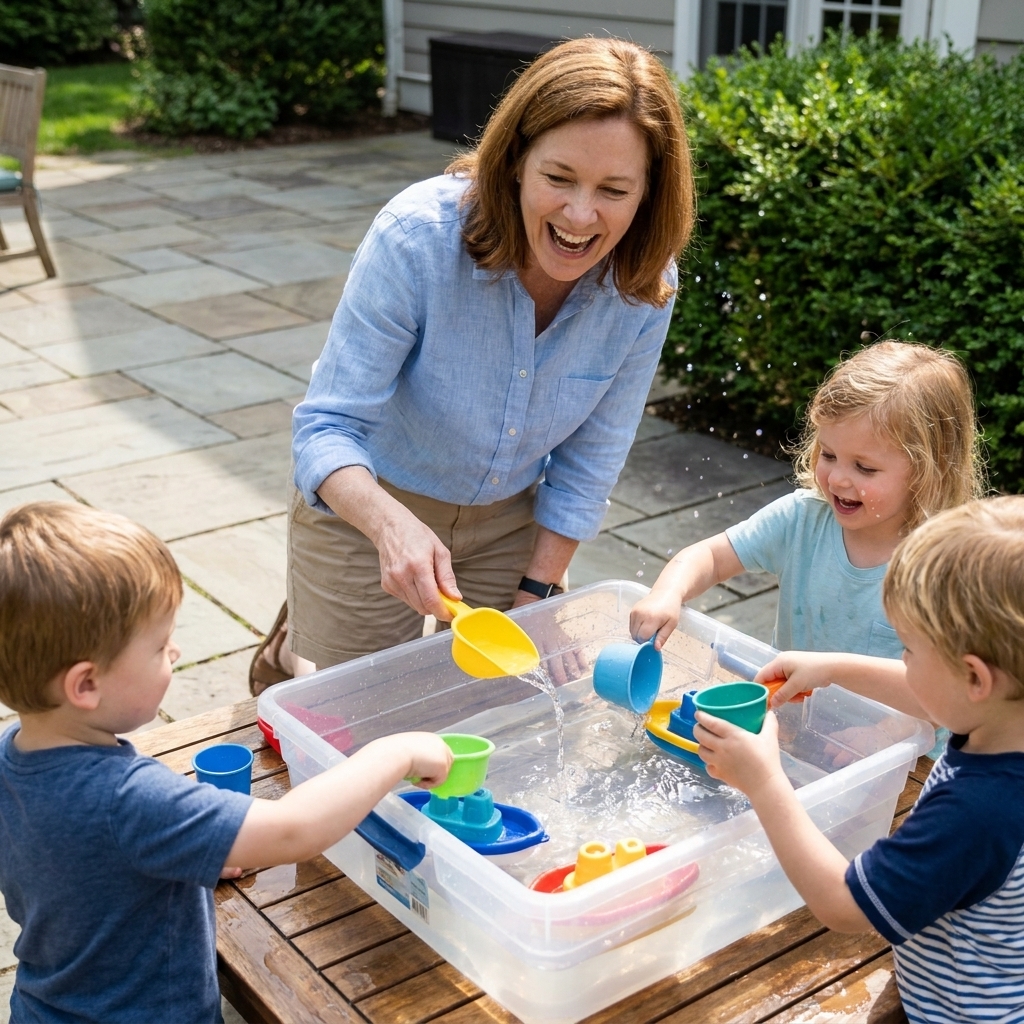
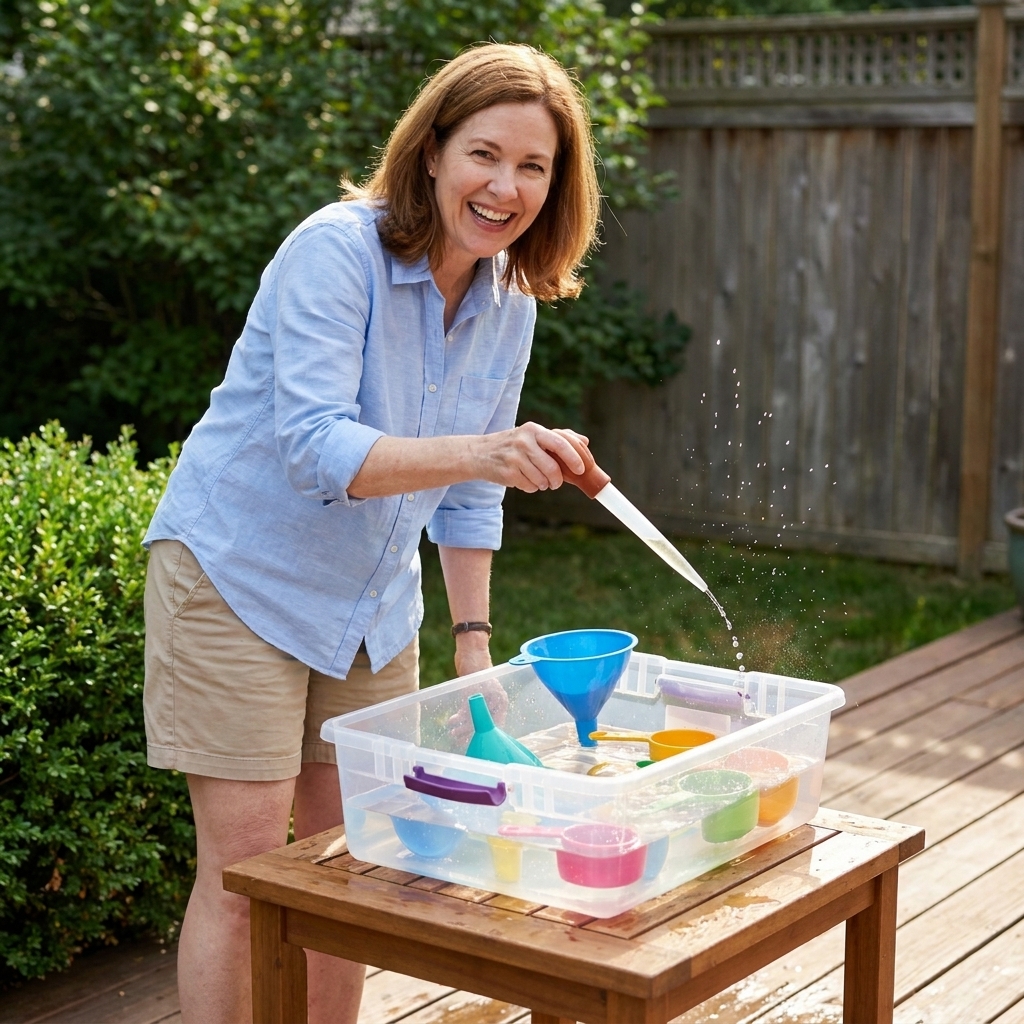
7) Pour station with cups, funnels, and pipes
This is sensory play that can hold attention for a surprisingly long time. Pouring is basically toddler meditation.
- You need: A large bin of water, cups, measuring spoons, funnels, ladles, turkey baster, and optional PVC pipes or gutter pieces.
- How to play: Let kids transfer water from one container to another.
- Skills: Cause and effect, early math language (full, empty, more, less), fine motor control.
- Quick safety note: If you add a turkey baster, remind kids it’s for water only and never for spraying faces or eyes.
- Easy upgrade: Add a second empty bin for “transfer missions.”
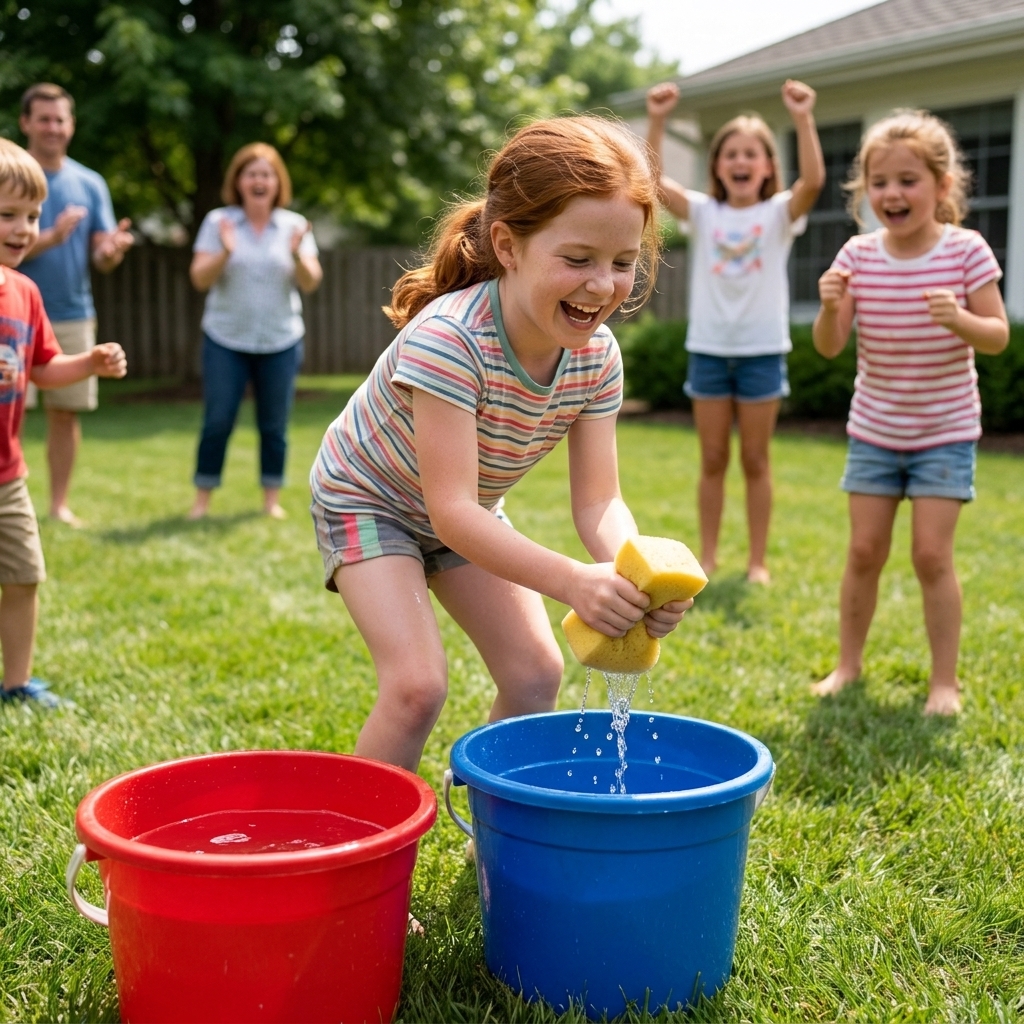
8) Sponge relay (squeeze-and-fill race)
It’s a game, it’s a workout, and it’s fantastic for hand strength.
- You need: Two buckets (one full, one empty), sponges, optional cones for a running path.
- How to play: Dip sponge in the full bucket, run to the empty bucket, squeeze it out. Repeat until the empty bucket reaches a line.
- Toddler version: Walk instead of run, shorter distance, bigger sponge.
- Big kid version: Team relay with a timer.
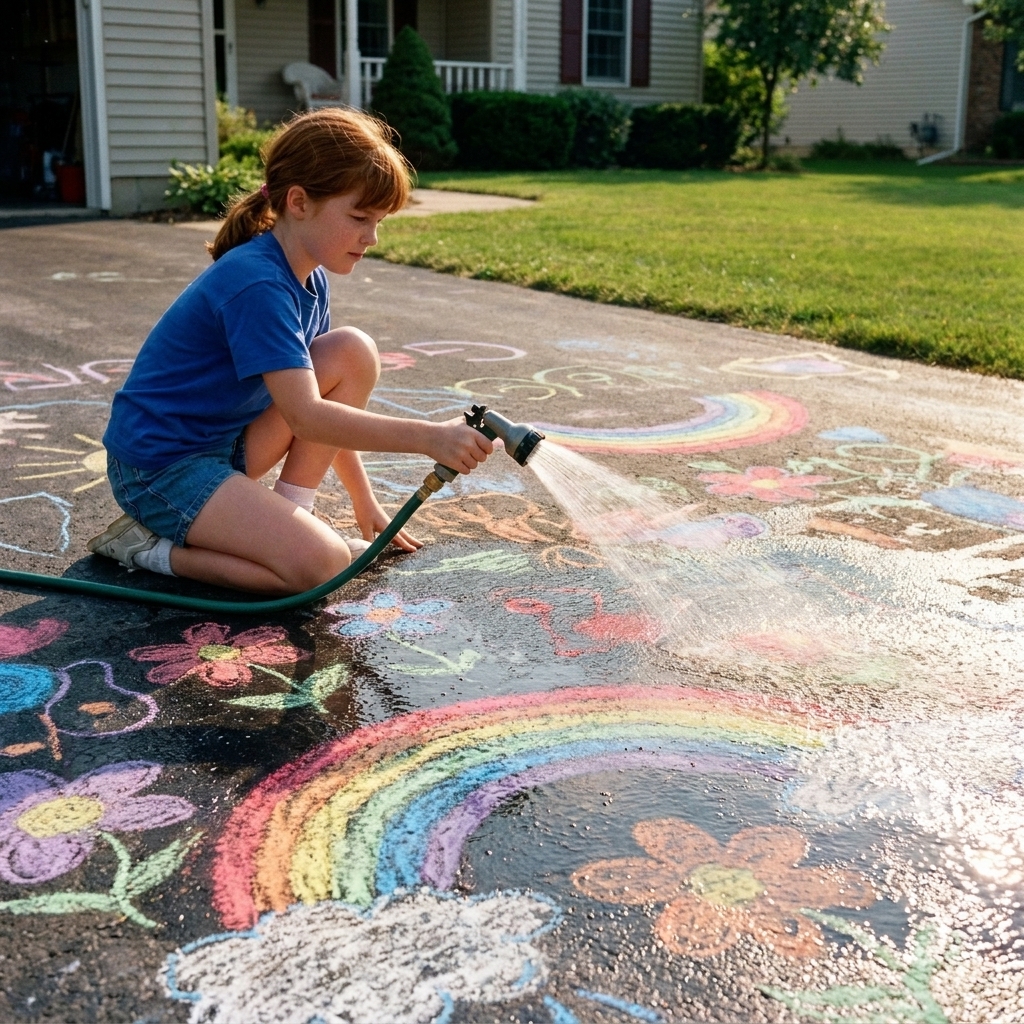
9) Water sidewalk chalk reveal
Chalk plus water is instant drama. Colors pop, puddles swirl, and kids feel like they “discovered” something.
- You need: Sidewalk chalk, spray bottle or small watering can, optional paintbrushes.
- How to play: Color a big area with chalk. Spray water and watch it change.
- Try this: Make a “road,” add toy cars, then add water to create a car wash or rainy-day drive.
- Cleanup: A quick hose rinse usually takes care of everything.
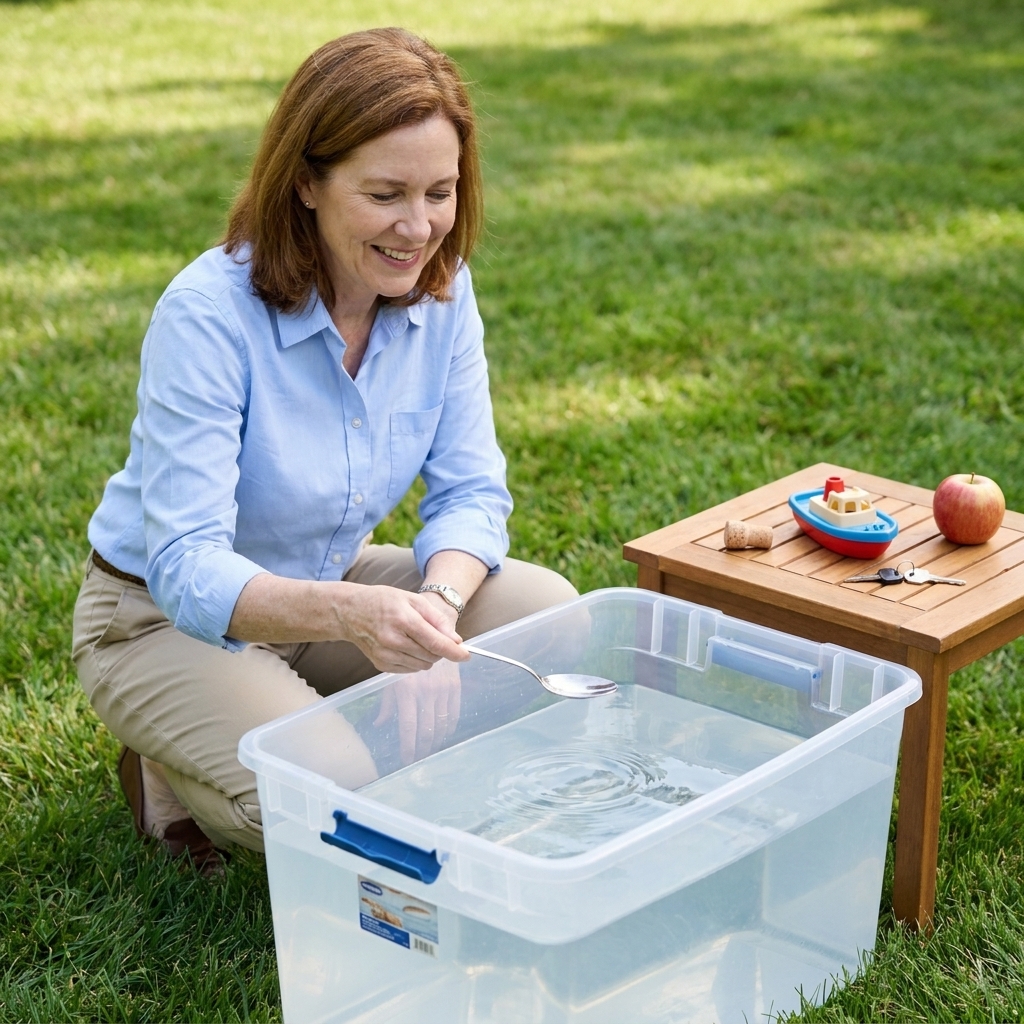
10) Backyard sink-or-float lab
This one feels like play, but it’s also early science with almost no prep.
- You need: A clear tub of water, a tray of objects (rock, leaf, plastic spoon, toy figure, cork, pinecone), paper and marker optional.
- How to play: Predict, then test. Kids can sort objects into “sink” and “float.”
- Questions to ask: What do you notice? Is it heavy or light? Does shape matter?
- Keep it kind: Predictions aren’t “right” or “wrong.” They’re guesses.
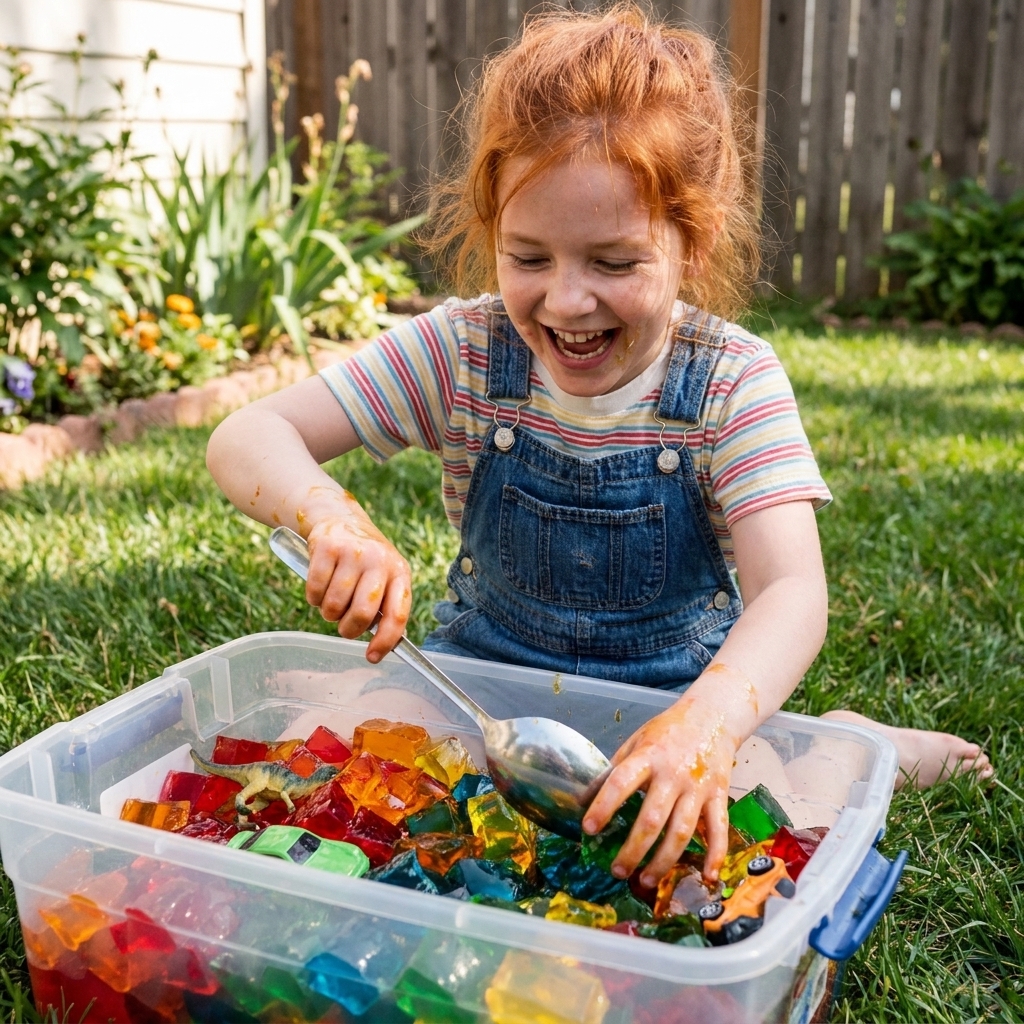
11) Water bead alternative: jelly dig
I know water beads look amazing, but they’re not a great fit for every home. Many pediatric safety experts advise against water beads around young children (and pets) because if they’re swallowed, they can expand and cause serious problems. This jelly dig gives a similar sensory squish with simpler cleanup.
- You need: Prepared unflavored gelatin in a shallow pan (set overnight), a bin to contain it, spoons, small toys to hide.
- How to play: Cut the gelatin into chunks, place in a bin, and let kids dig for hidden treasures.
- Tip: Do this outside on a washable mat or in a big tray.
- Age note: Still supervise closely. Even taste-safe sensory play can be a choking risk if kids shove big pieces in their mouths.
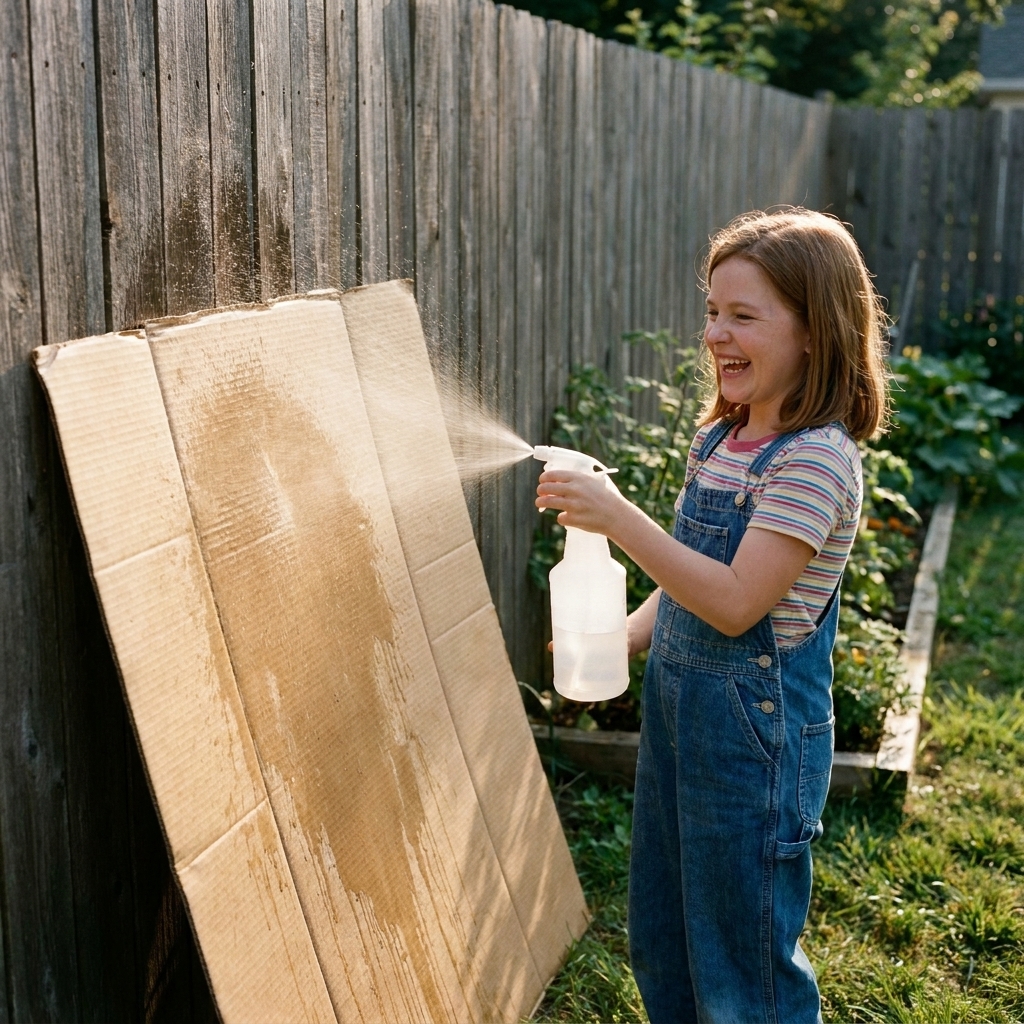
12) Cool-down spray bottle art
Spray bottles are pure summer joy. They’re also fantastic for building hand strength and coordination.
- You need: Clean spray bottles, water, a large piece of cardboard, washable paint optional.
- How to play: Hang cardboard on a fence or lay it on an easel. Spray water to make it darken and drip.
- Optional color: Add a tiny bit of washable paint to the bottle for light color misting. Test on a small area first, and skip it if staining is a concern.
- Low-mess tip: Plain water still feels special and cool.
Easy age tweaks
Toddlers (ages 1 to 3)
- Use bigger tools: large cups, big sponges, wide funnels.
- Keep water shallow and bins on the ground for stability.
- Offer one or two choices at a time so it doesn’t feel overwhelming.
Preschool and kindergarten (ages 4 to 6)
- Add simple challenges: “Can you fill this to the line?” or “Can you rescue all 5 animals?”
- Introduce vocabulary: melt, drip, pour, absorb, float, sink.
Early elementary (ages 7 to 9)
- Let them help set up and problem-solve: building a pouring path with pipes, creating rules for sponge games.
- Try timing and scoring for games, or have them design their own water station.
When it turns into chaos
I have three kids (3, 6, and 8), so I say this with love: water play can go from peaceful to splash-nado in about 45 seconds. A few tricks that help:
- Define the water zone. “Water stays in the bin or on the grass.” Repeat as needed.
- Give a yes. If they want to dump, offer a dumping spot. An empty bin just for pouring helps a lot.
- Rotate tools. If everyone’s arguing over the funnel, add a second funnel or swap the activity.
- End with a job. Kids can wring sponges into the garden or stack cups in a bucket. Cleanup becomes part of play.
Quick supply list
- Plastic bins or dish tubs
- Sponges and washcloths
- Measuring cups, ladles, funnels
- Spray bottles and squeeze bottles
- Sidewalk chalk
- Small waterproof toys
- Towels, a laundry basket, and a change of clothes
FAQ
How long should outdoor water play last?
Most kids do great with 20 to 60 minutes, depending on heat and attention span. Shorter is totally fine. If they’re still happily playing, I keep it going and just offer water breaks and shade.
How do I keep my child from drinking the sensory bin water?
Supervise closely and use clean water. For toddlers, I like to keep a labeled water bottle nearby and remind them, “Drinking water comes from your bottle.” If it becomes a habit, switch to activities like water painting or a spray bottle game where the temptation is lower.
What’s the least messy water activity?
Water painting on a fence and spray bottle water play are two of the lowest-mess options since there’s no big tub to dump.
What if I don’t have a yard?
A small porch, driveway, or shared outdoor space works. Use a shallow bin on a towel, try water painting, or do sponge toss into a basket. You can also take the pour station to a local park picnic table if allowed.
A gentle reminder
If your kid gets soaked, the grass gets muddy, and the whole thing looks nothing like the neat photo you imagined, you did it right. Summer sensory play is supposed to feel like freedom. Set it up, step back, and let the splashing do its magic.