A mom-tested, kindergarten-friendly guide to tactile STEM fun: slime, colorful baking soda fizz, oobleck, sensory bottles, sink or float, and more with safet...
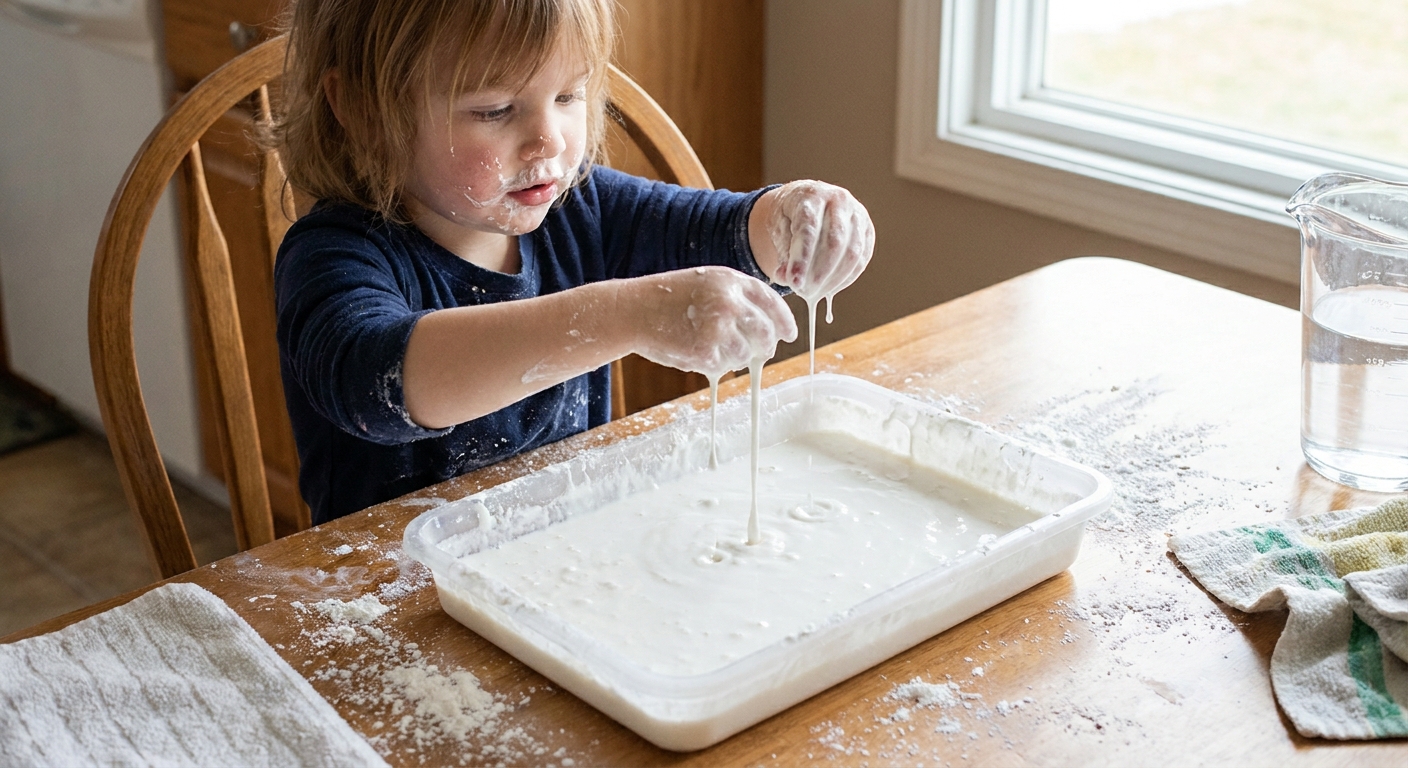
Oobleck is my favorite kind of sensory play because it is delightfully weird and very forgiving. It feels like a solid when you squeeze it, then it melts right back into a drippy puddle the second you stop. My kids call it “magic mud,” and I call it “the activity that buys me 20 quiet minutes while I drink my coffee lukewarm.”
You only need two ingredients, and you can mix it by hand right in a tray or bin. No mixer, no fancy tools, no Pinterest pressure.
What is oobleck?
Oobleck is a simple mixture of cornstarch and water that acts like a solid and a liquid depending on how you handle it. It is a classic kid science activity and a top-tier sensory bin filler.
It is not slime. It does not stretch. It does not bounce. It is more like a “punch it and it feels hard, hold it still and it drips” kind of situation.
Oobleck recipe (2-ingredient ratio)
The standard ratio is:
- 2 parts cornstarch
- 1 part water
That ratio gets you into the right neighborhood, but the real finish line is how it feels. Humidity, brand of cornstarch, and how tightly you pack your measuring cup can all change the texture, so expect to tweak by a tablespoon or two.
Scaling tip: Make as much or as little as you want, just keep the 2:1 ratio and add the water slowly.
Easy batch for a tray or bin
- 2 cups cornstarch
- 1 cup water (add slowly)
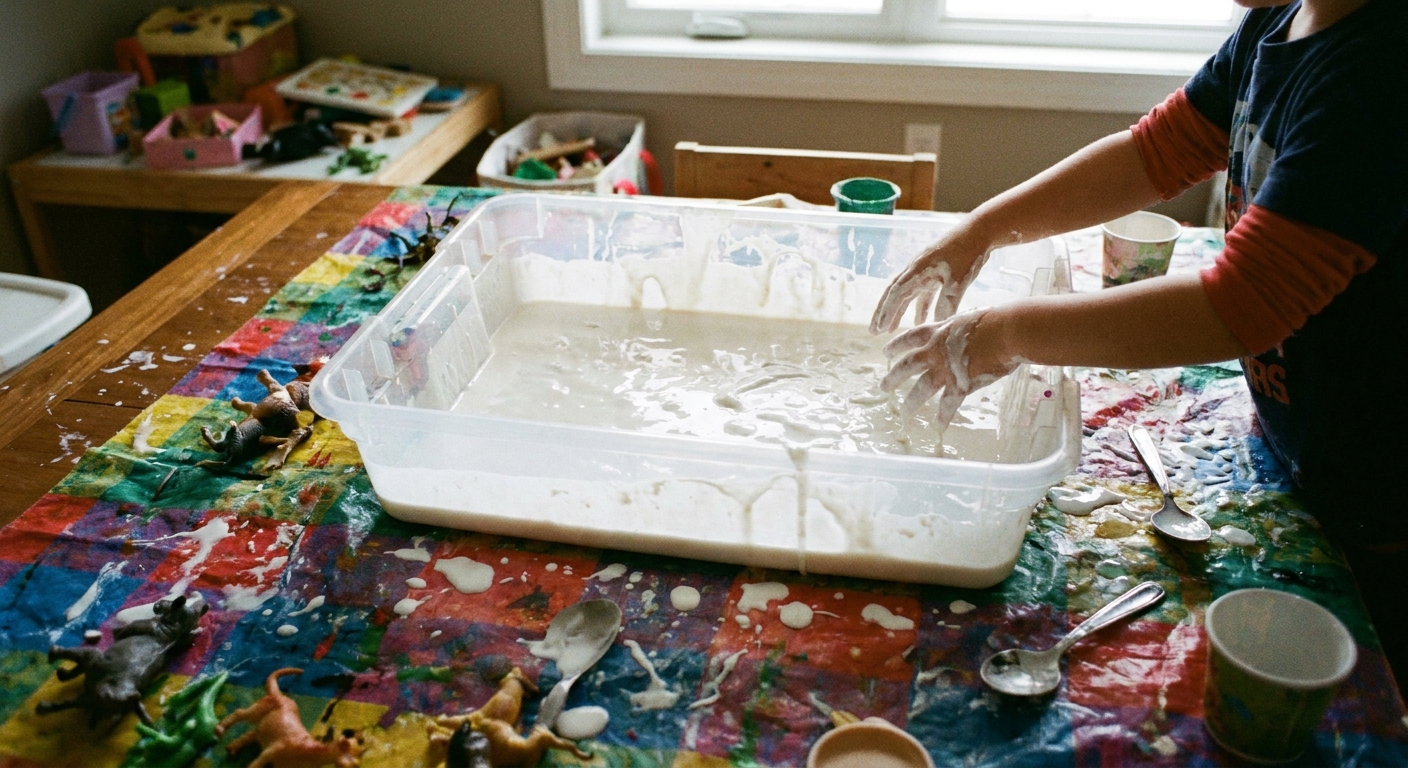
This amount is great for a shallow under-bed storage bin, a dishpan, or a rimmed baking sheet if you are working with just one child and want maximum “easy cleanup vibes.”
How to make oobleck with kids
This is the no-appliance, kid-doable method I use at home.
What you need
- Cornstarch
- Water
- A tray or bin with sides
- Measuring cups (optional, you can eyeball it)
- A spoon for the first stir (optional)
Step by step
Pour cornstarch into your bin. Spread it out a bit so kids can see the “snowy” powder.
Add water slowly. Start with about half the water and let kids stir with a spoon or their hands.
Switch to hands. Oobleck is much easier to mix by squeezing and folding. I tell my kids: “Squish, lift, drizzle, repeat.”
Keep adding tiny splashes of water. You want it to look like thick pancake batter when it is moving, but feel firm when you tap or squeeze it.
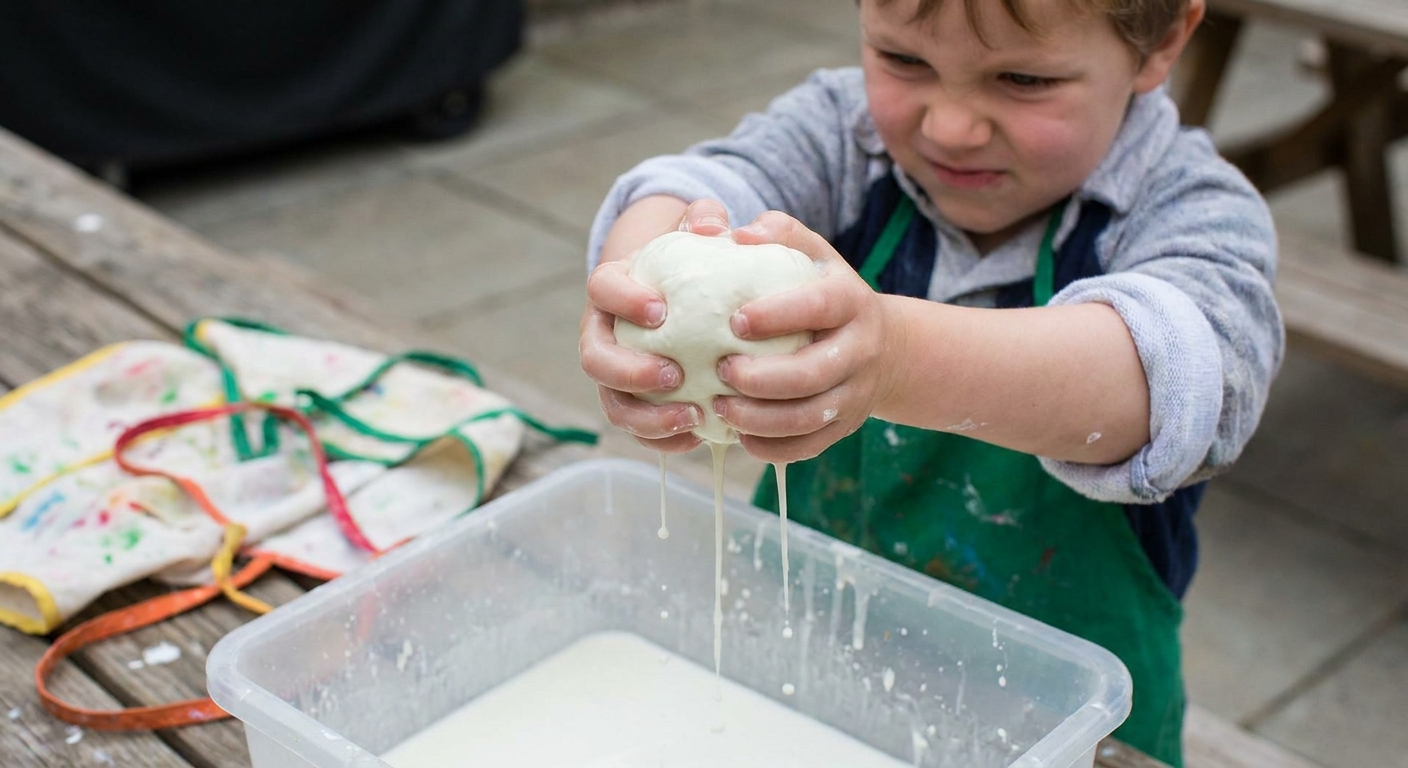
Test it together. Grab a handful and squeeze hard. It should feel solid. Then open your hand and watch it ooze like a liquid.
My teacher trick: If your child is hesitant about messy hands, offer a spoon at first, then invite them to just poke one finger. Oobleck is a great gateway messy-play activity.
Why it feels solid when squeezed
Oobleck is a non-Newtonian fluid. That is a fancy way of saying it does not follow the usual rules for liquids.
- When you move it fast (squeezing, tapping, punching), the cornstarch particles jam together and resist movement, so it feels solid.
- When you move it slowly or let it rest, the particles slide past each other and it flows like a liquid.
Kids do not need the vocabulary to enjoy it, but they love the “why.” My 6-year-old’s summary: “It gets shy when you’re gentle, and it gets tough when you’re bossy.” Honestly, fair.
Best ages (and supervision)
Ages 2 to 3
- Adult supervision required. Cornstarch is generally non-toxic in small incidental exposure, but the powder can be an inhalation risk, and toddlers are talented at taste-testing.
- Use a small batch in a highchair tray or shallow dishpan.
- Expect more smearing than squeezing. That is still great sensory input.
Ages 4 to 6
- Kids can help measure and pour with you nearby.
- They can mix mostly on their own, but you will likely do the final adjustments.
- This age loves simple challenges: “Can you tap it like a drum? Now hold still and watch it melt.”
Ages 7 to 9+
- Kids can usually measure, mix, and troubleshoot independently with basic boundaries.
- Add the science talk if they are curious: non-Newtonian fluid, particle jamming, cause and effect.
Sensitivity note: Cornstarch is usually corn-derived. If your child has a corn allergy or skin sensitivities, check with your pediatrician and consider skipping this activity. For kids who dislike the feel, gloves or tools (measuring cups, spoons) can help them join in without the full hands-in commitment.
Safety note: Oobleck can be slippery if it hits tile or hardwood. I like to lay down an old shower curtain, a plastic tablecloth, or a couple of towels under the bin if we are doing enthusiastic “splat tests.”
Quick fixes
If it is too runny
- Add more cornstarch a little at a time, about 1 to 2 tablespoons.
- Mix by squeezing and folding, not just stirring. It thickens as it blends.
- Let it sit for a minute, then test again with a squeeze.
If it is too stiff or crumbly
- Drizzle in water 1 teaspoon at a time.
- Keep kneading it in the bin until it loosens up.
- If it formed dry pockets, break them up with your fingers and keep folding.
The goal texture: It should hold shape when you squeeze, but slowly drip when you open your hand.
Play ideas (no extra supplies)
- Tap test: Tap the surface quickly with fingertips, then press slowly and watch your hand sink.
- Scoop and drizzle: Lift a handful high and let it ribbon back into the bin.
- Hide and seek: Bury a small plastic toy and have kids “rescue” it with their hands.
- Footprint tray (older kids): Put oobleck in a wide, shallow bin and gently press fingertips, knuckles, or toy tires to make impressions.
Where to play tip: If you have the option, oobleck is an easy win outside or on a wipeable floor. Indoors, stick to a bin on a protected surface and keep it away from grout lines, carpet, and unfinished wood.
If you add tools, stick with things you can rinse easily: plastic spoons, measuring cups, silicone spatulas, or an old toy truck.
Cleanup
The good news: oobleck will not set like slime. It does not cure, harden permanently, or turn into rubber. The “bad” news: it can clog drains if you dump a big batch down the sink, because it can thicken and settle.
My no-stress cleanup routine
- Scoop leftovers into the trash. Use a spoon or scraper to lift the bulk out of the bin.
- Let thin residue dry. Once it dries, it turns back into cornstarch dust that you can wipe or vacuum.
- Wipe hands and surfaces with a dry paper towel first. Dry first removes most of the paste. Then do a damp wipe.
- Rinse tools in a bucket or bowl and pour the cloudy water outside, or into the trash in small amounts after the sediment settles.
Drain note: If you must rinse a small amount in the sink, wipe or scoop out all solids first, then flush with plenty of water. Do not send thick oobleck down the drain.
Clothing tip: If oobleck gets on shirts or leggings, let it dry, brush off what you can, then wash normally.
FAQ
Can I color oobleck?
Yes. Stir a few drops of food coloring into the water before adding it. Just know colored oobleck can stain porous surfaces and light clothes, so I keep colored batches for older kids or outside play.
How long does it last?
It is best the day you make it. If you cover it tightly, you can sometimes get 1 to 2 days out of it, but it will likely separate as it sits. A quick stir usually brings it back. If it starts to smell funky or looks questionable, toss it.
Is it taste-safe?
It is made from kitchen ingredients, but I still treat it like a sensory material, not a snack. Avoid inhaling the dry cornstarch powder, discourage tasting, and if you have a mouthing toddler, stay right there and consider a different activity until they are past the taste-testing phase.
Why is mine not doing the magic solid-then-liquid thing?
Almost always it needs more cornstarch, or it is not mixed thoroughly. Add cornstarch a tablespoon at a time and mix by squeezing and folding until the texture starts to “fight back” when you tap it.