A realistic, mess-friendly guide to setting up an independent craft station for kids, including what to stock, simple safety rules, and how to organize it so...
When you have multiple kids, holiday crafting can feel like you are hosting three different art classes at the same time. One child wants to taste the glitter glue, one is carefully cutting tiny snowflakes, and one is asking if they can use a hot glue gun “because they are basically an adult now.”
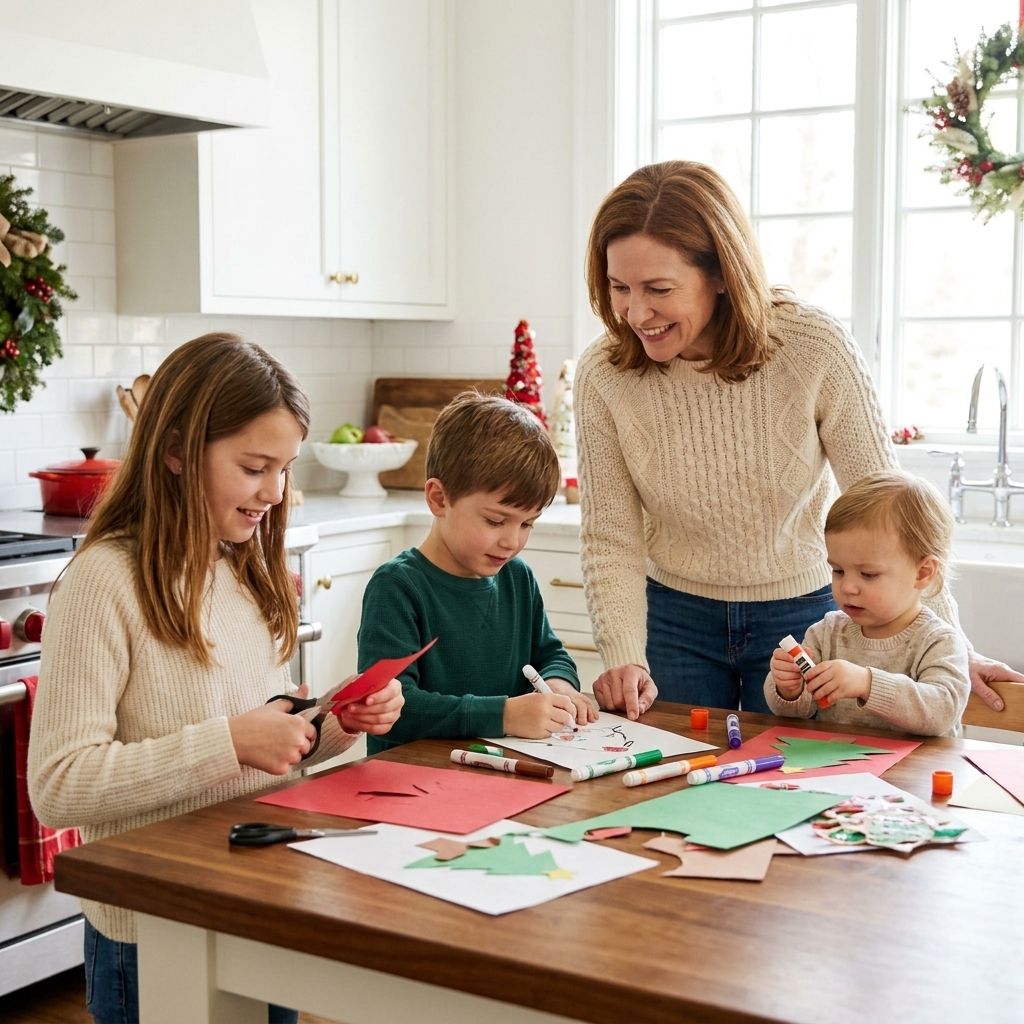
Good news: you really can set up one holiday craft table that works for toddlers to tweens. The trick is to plan one shared theme with tiered options, so everyone is making the same craft, just at their own level.
The secret: same craft, different levels
The biggest shift is this: instead of choosing a toddler craft or a big kid craft, choose a craft with a simple base and then offer upgrades.
- Base layer: what your toddler can do successfully in 5 to 15 minutes.
- Middle layer: what your early elementary kid can add with scissors, basic patterns, or a bit of planning.
- Upgrade layer: what your tween can do to make it look detailed, personalized, or engineered.
I think of it like a sundae bar. Everyone gets ice cream. Not everyone needs the same toppings.
Set up your table like a teacher
I taught kindergarten for years, and now I use the same lessons in my own living room. The environment does a lot of the parenting if you set it up right.
1) Create three zones: Safe, Shared, and Supervised
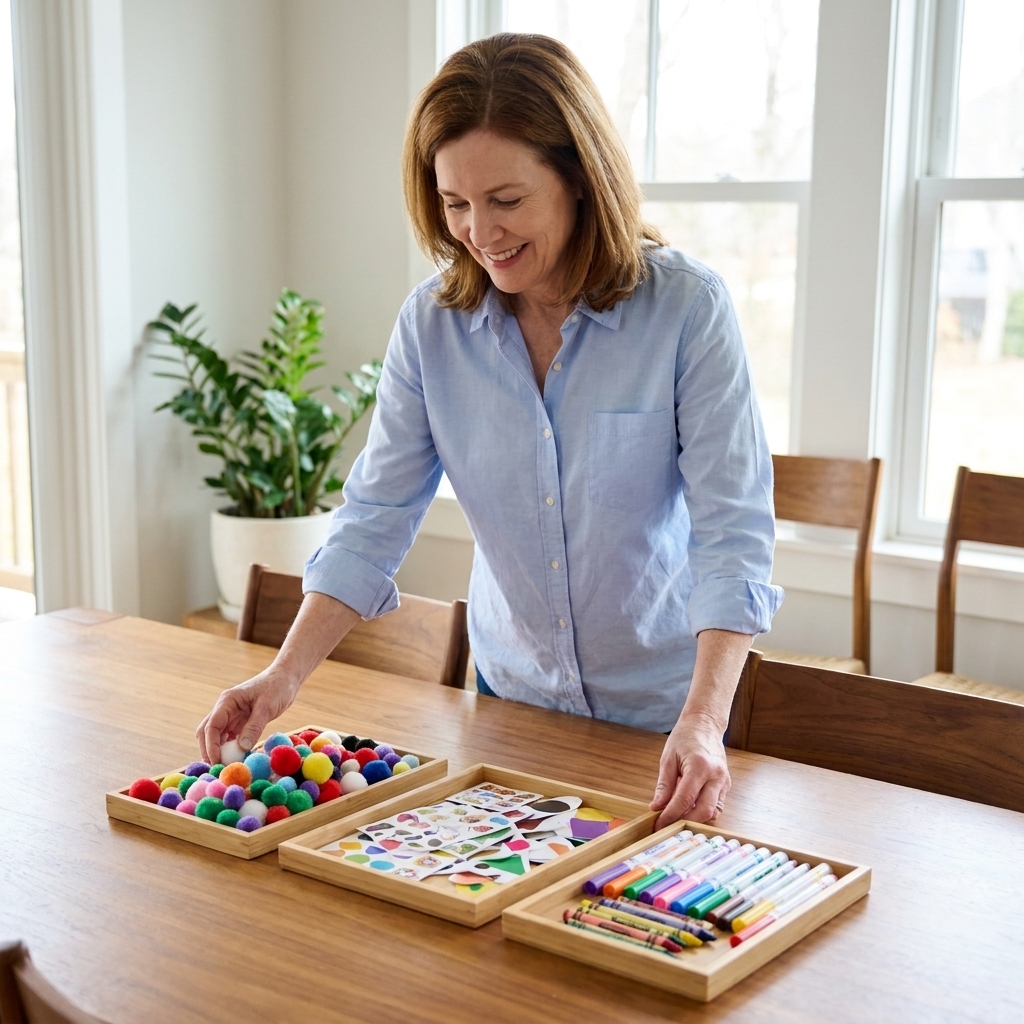
- Safe Zone (toddler-friendly): chunky crayons, dot markers, stickers, glue sticks, big paper shapes, pom poms, washable paint, washi tape. Nothing tiny. Nothing sharp.
- Shared Zone (everyone can reach): paper, pre-cut shapes, markers, stamps, craft sticks, yarn, ribbon, paper plates, toilet paper rolls, googly eyes that are large enough to be safe.
- Supervised Zone (big kid and tween tools): scissors, stapler, hole punch, low-temp glue gun, small beads, sequins, embroidery needles, craft knife. This zone lives closest to you.
2) Use trays or muffin tins to stop the supply swirl
If everything is in one big pile, the toddler will dump it. This is not a character flaw. It is toddler physics.
Try:
- One tray per kid (a paper plate works)
- A muffin tin for tiny toppings (sequins, mini gems, beads)
- A small bin for scraps (because someone always wants scraps)
3) Plan for the attention span gap
Toddlers finish fast. Tweens take their time. So build in a parking spot activity for the older kids while you help the younger ones finish.
- Tween parking spot ideas: lettering a name tag for the craft, designing a pattern, making a hanger, writing a holiday message on the back, taking photos of finished projects.
- Little kid parking spot ideas: sticker sheet, color a card, stamp paper, tear tissue paper.
Safety that keeps the fun going
I am all for “yes” whenever possible, but holiday crafting has a few classic hazards. Here are the boundaries that keep you sane.
Toddlers and tiny items
Quick rule of thumb: if an item could be a choking hazard, keep it out of toddler hands. In practical terms, that means skipping tiny beads, mini bells, and small googly eyes at the toddler seat. When in doubt, choose bigger pieces or save the small stuff for older kids only.
Scissors for mixed ages
- Toddler: snips only, or skip scissors and use pre-cut shapes.
- Early elementary: kid scissors and thicker paper so it does not flop around.
- Tween: real scissors are fine, plus templates and measuring.
Hot glue without tears
If you are using hot glue, make it low-temp and keep it in the supervised zone. Low-temp can still burn, so plan on close adult supervision.
My favorite multi-age hack is this:
- Little kids use glue sticks and foam squares.
- Older kids use tacky glue and can wait for it to dry.
- Tweens can use low-temp hot glue with a silicone finger protector, or they can be the official glue captain with you nearby.
5 holiday crafts for all ages
These are the crafts I reach for when I need one table, one vibe, and minimal sibling drama. Each one includes a quick prep note, because that is usually the make-or-break piece.
1) Handprint or fingerprint ornaments
Why it works: toddlers can press and you get instant cuteness. Tweens can make it look genuinely classy.
Prep: 10 to 15 minutes to set out clay/dough, a rolling surface, and a straw or skewer for hanging holes. If you are doing salt dough, use your preferred recipe and bake according to that recipe’s directions.
- Toddler version: press a handprint or thumbprints, poke a hole, parent writes name and year.
- Kids version: stamp cookie cutters, add simple paint, sprinkle chunky glitter (supervised).
- Tween upgrade: paint details, add metallic paint, create marbling, tie a ribbon hanger, seal with Mod Podge if you want a glossy finish (especially helpful for gifts).
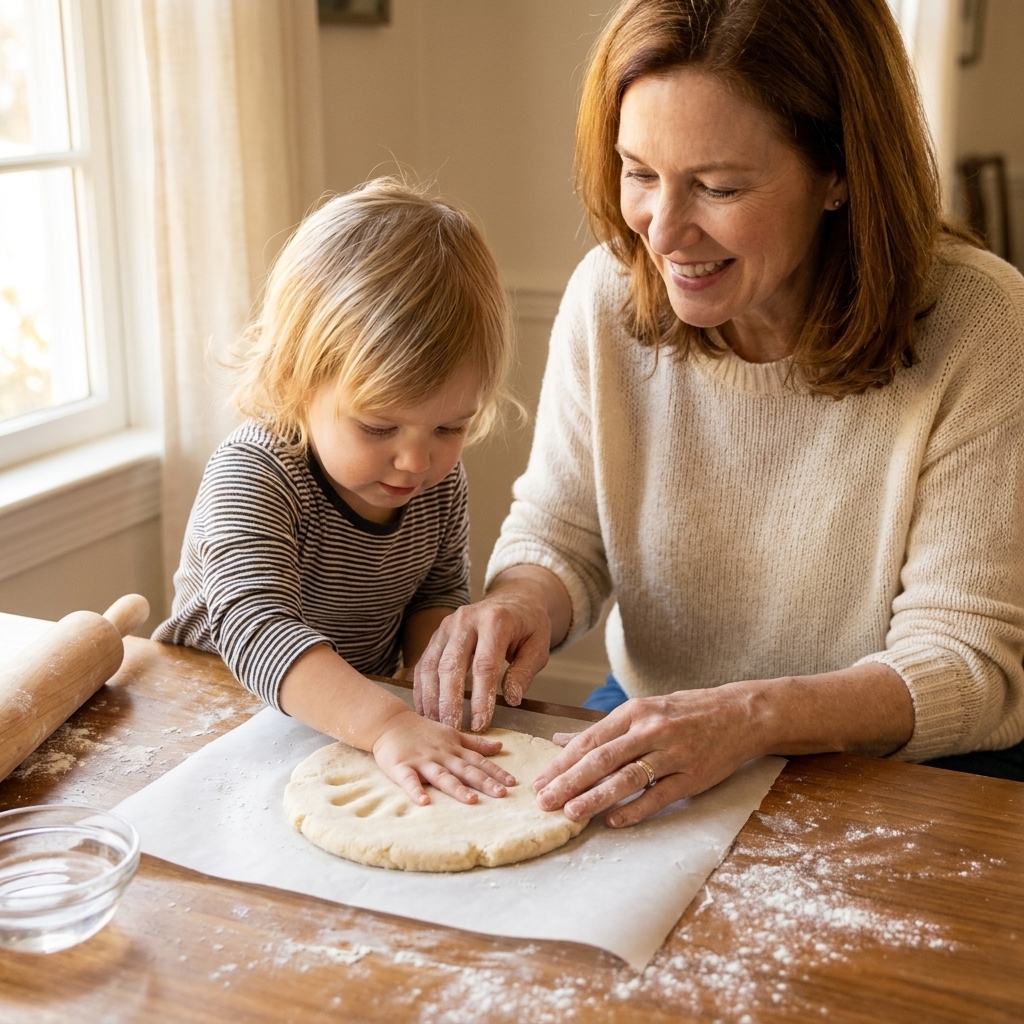
Mess-friendly tip: set a damp washcloth at each seat. Not in the sink. On the table. This helps a lot.
2) Paper chain garland
Why it works: same end product, different responsibilities.
Prep: 5 minutes if you pre-cut strips, 15 minutes if you let older kids cut their own.
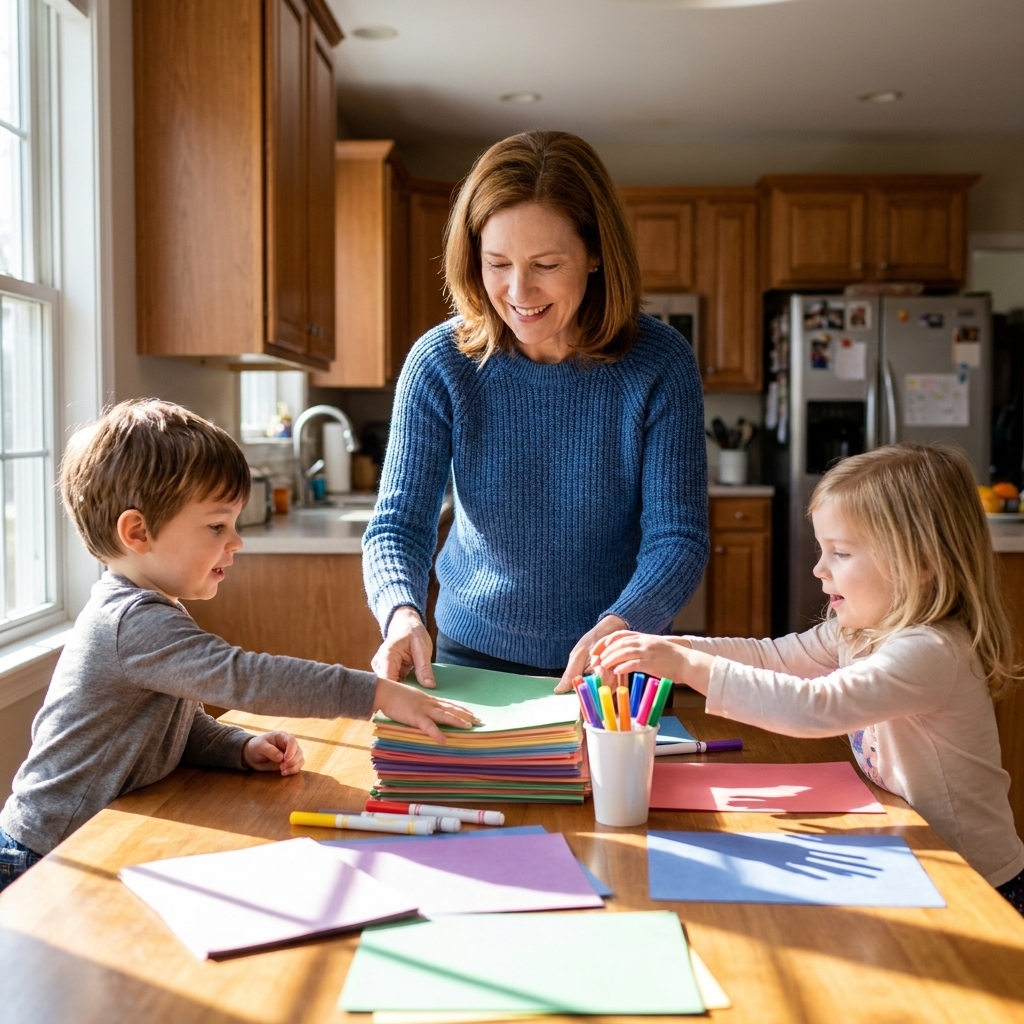
- Toddler version: tear paper strips, decorate strips with dot markers or stickers.
- Kids version: loop and glue, practice patterns (red-green-red-green).
- Tween upgrade: measure equal strips, create ombre color gradients, add alternating shapes (stars, trees), use a stapler for speed.
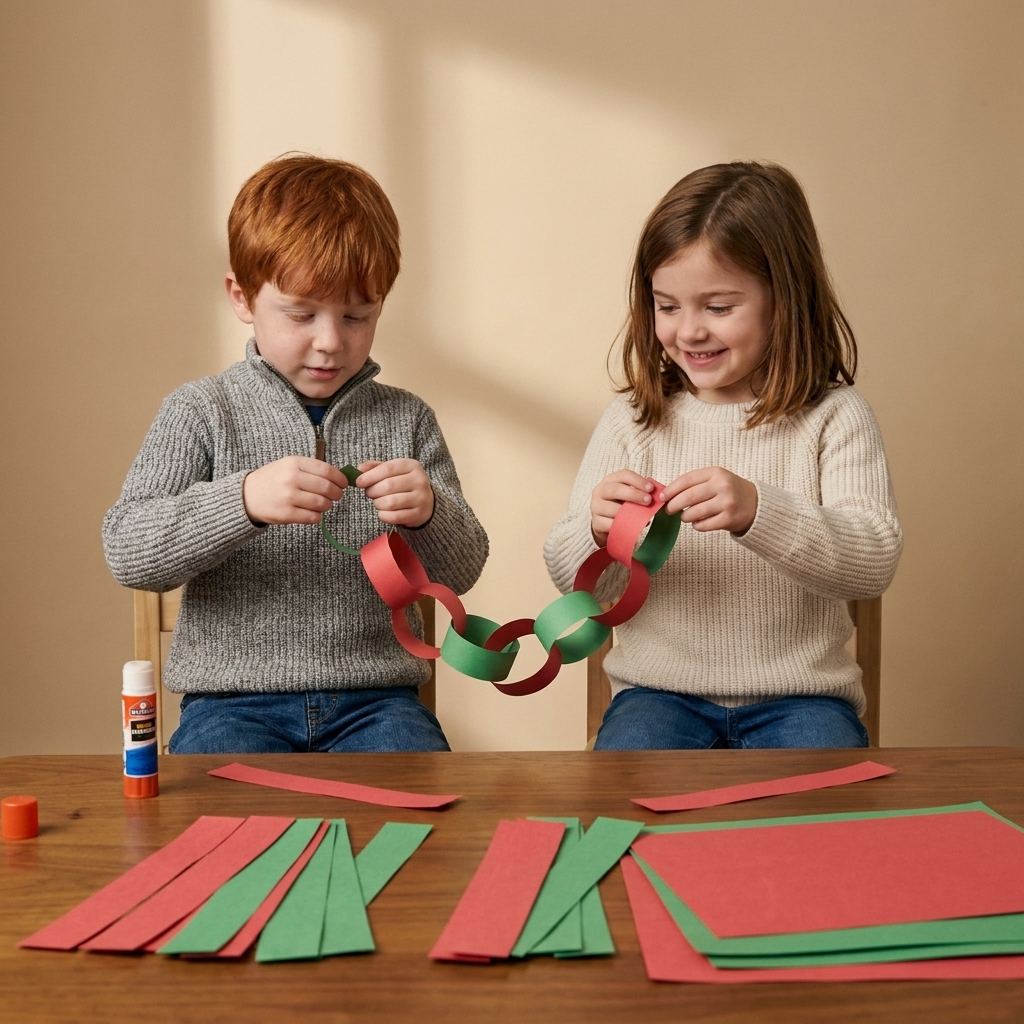
Teacher trick: pre-sort strips into small piles so nobody hoards the best color.
3) Mini wreaths
Why it works: you can keep the base identical and vary the decorating materials.
Prep: 10 minutes to cut cardboard rings or paper plate centers.
- Toddler version: stick on big foam shapes, large pom poms, or tissue paper balls.
- Kids version: cut snips around the ring for fringe, add ribbon, draw berries.
- Tween upgrade: wrap yarn or ribbon neatly, add a simple bow, glue layered paper poinsettias, build a modern asymmetrical design.
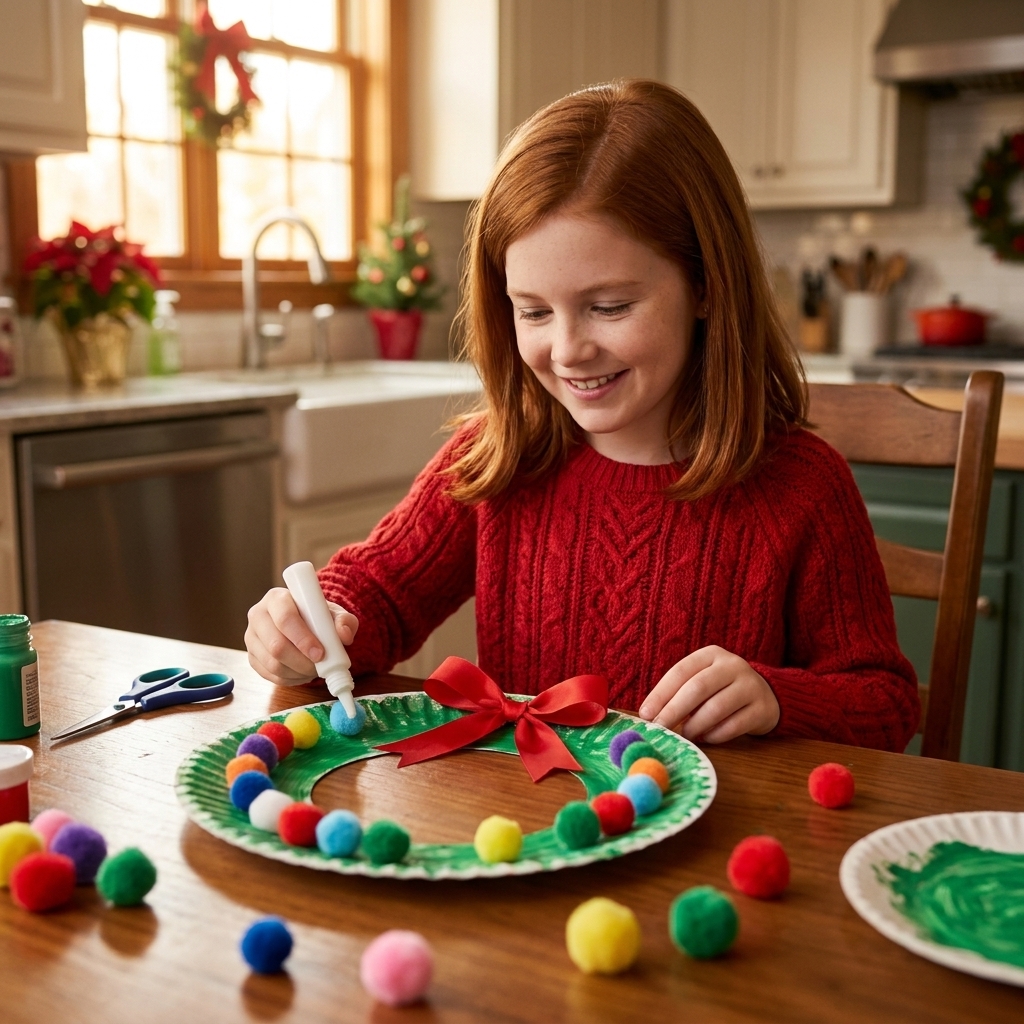
Low-cost tip: cut rings from cereal boxes. Your recycling bin is basically a craft store.
4) Holiday village
Why it works: it is one shared project, so the age differences turn into teamwork.
Prep: 10 minutes to find a base (cardboard, a tray, or a box lid) and gather small boxes.
- Base idea: create a little village scene on a large piece of cardboard or a tray.
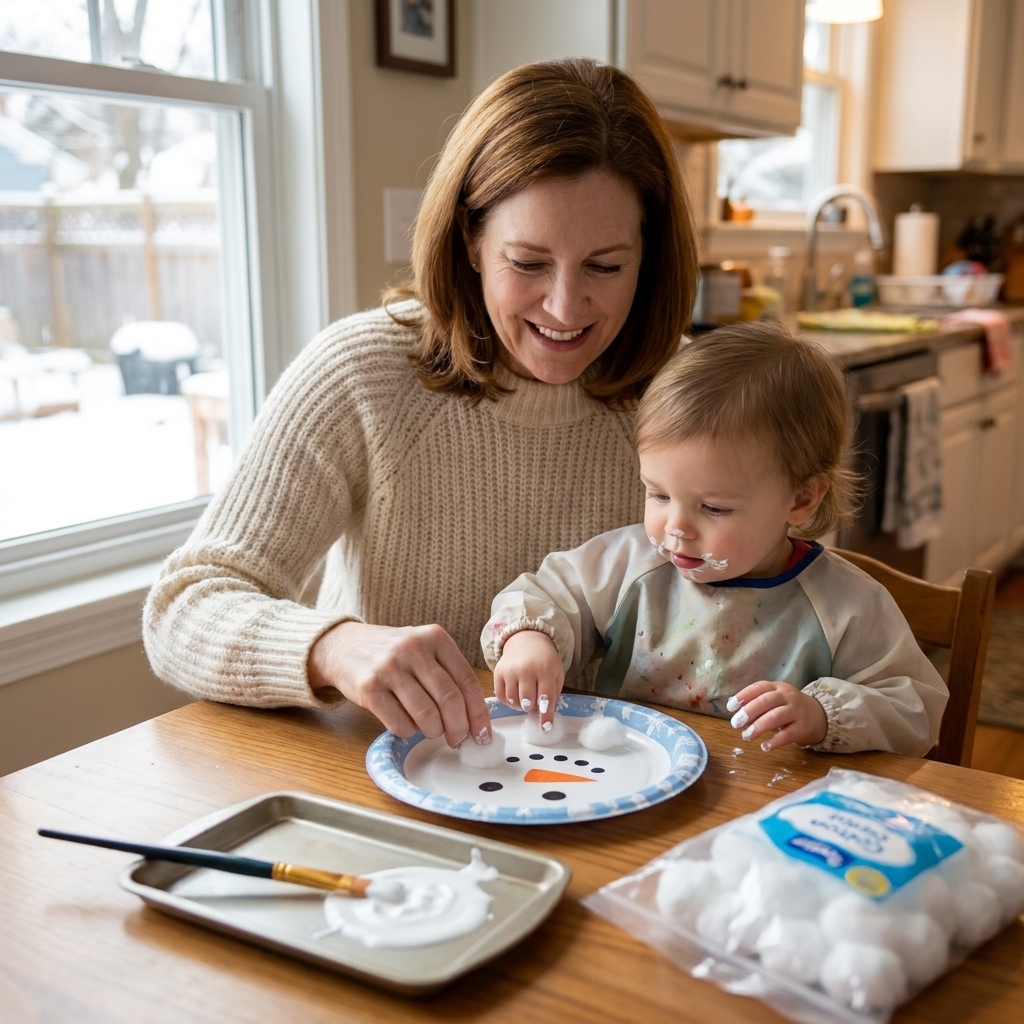
- Toddler job: paint the ground (snowy white, or green for winter grass), press cotton balls, place big trees.
- Kids job: make simple houses from small boxes, draw doors and windows, add paper roofs.
- Tween upgrade: engineer sturdier buildings, add details like shutters, fences, and tiny wreaths, design a layout, make a sign for the village name.
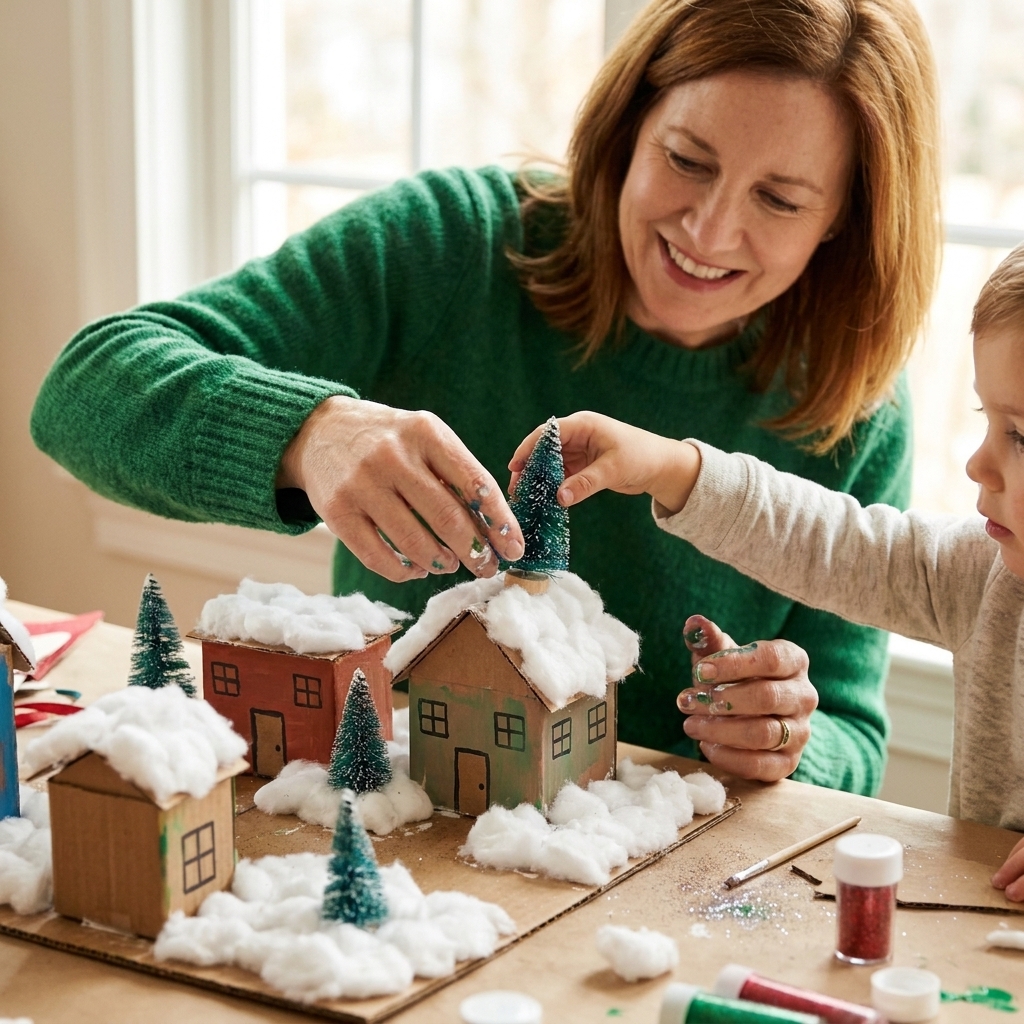
Conflict prevention tip: assign a personal plot. Each child gets their own space to build, plus one shared area like a town square.
5) Holiday cards
Why it works: quick, meaningful, and easy to scale.
Prep: 5 minutes to fold cardstock and set out one bin of decorating supplies.
- Toddler version: sticker collage card, dot markers, sponge stamping.
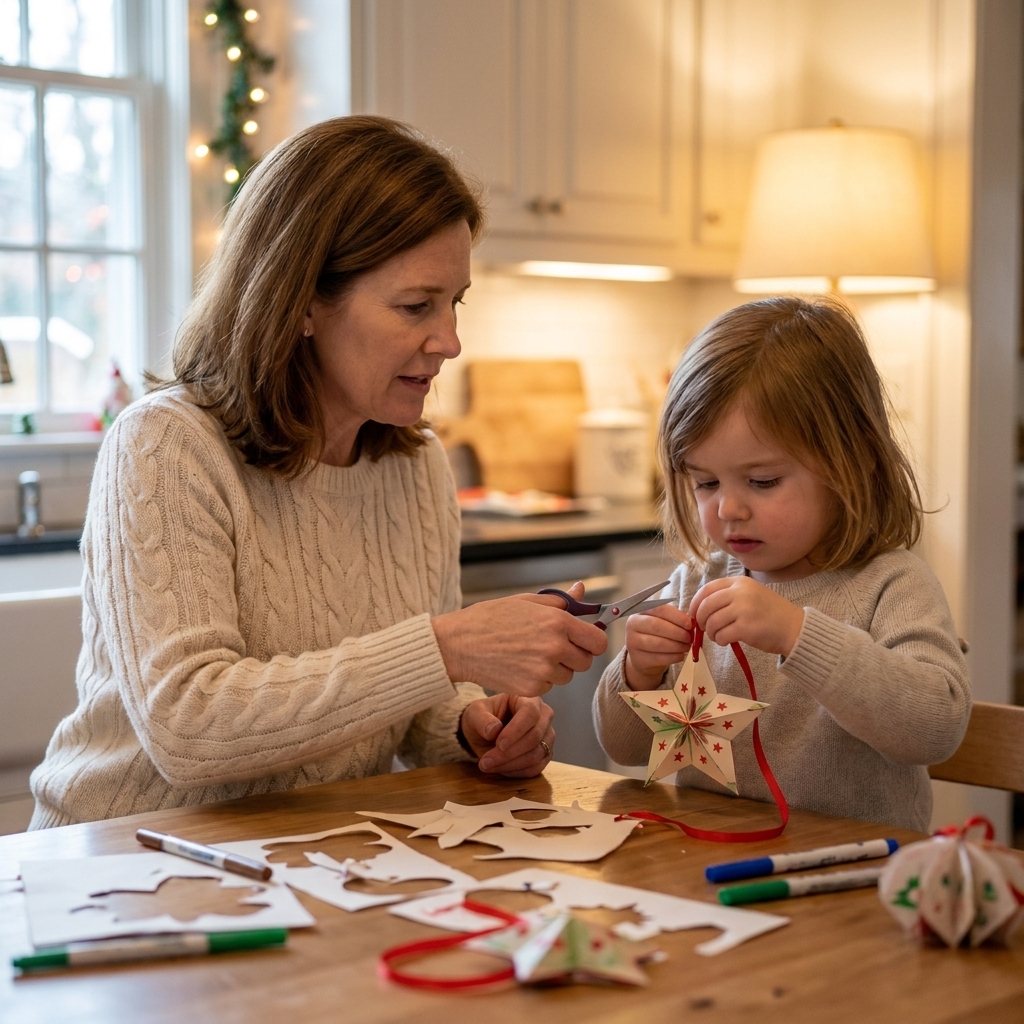
- Kids version: folded card with a simple cut-and-glue shape scene (snowman, tree, menorah, star).
- Tween upgrade: hand-lettering, watercolor background, simple pop-up mechanism, or a coordinated set of cards in a theme.
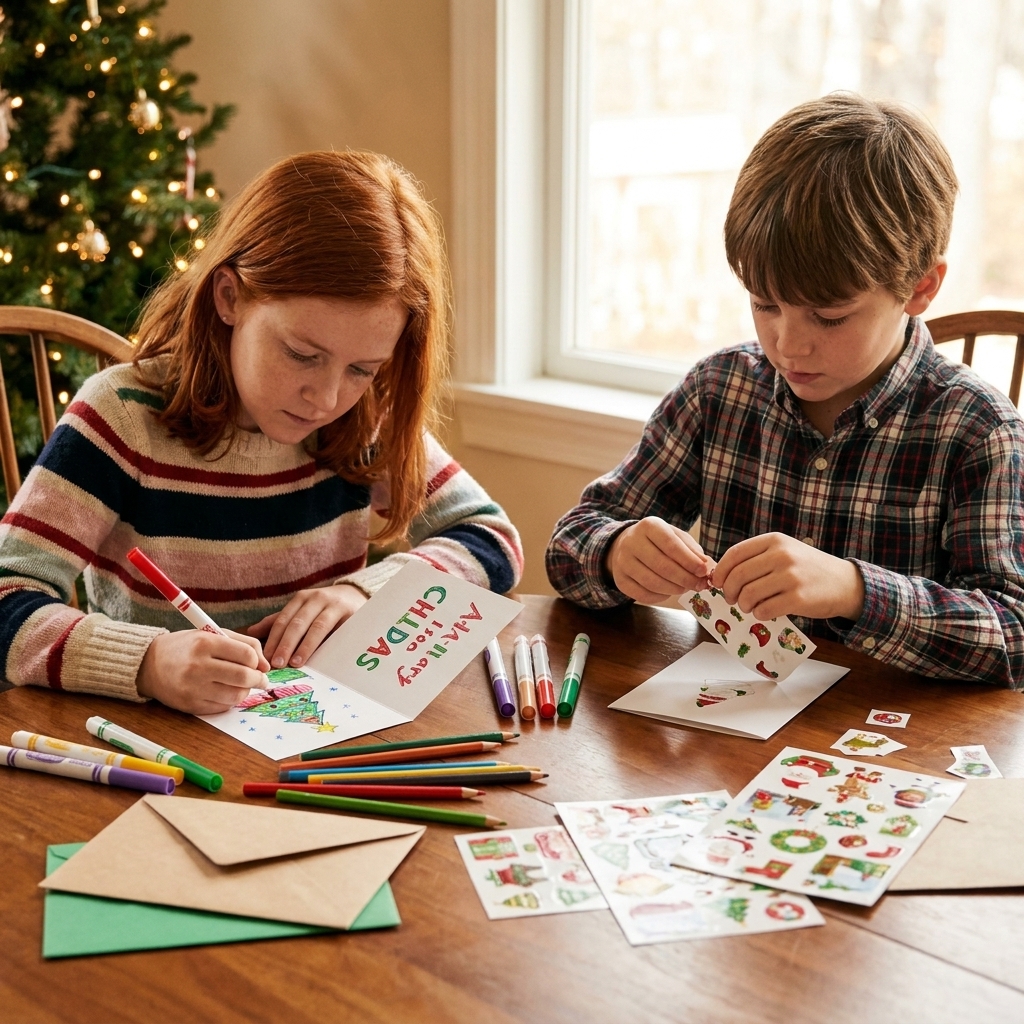
Real-life reminder: if the toddler scribbles on the inside, it is still a card. Honestly, it is a more accurate card.
Adaptation menu
If you already have a craft in mind, run it through this quick menu. Pick one option per age group and you are set.
Make it toddler-friendly
- Pre-cut all shapes
- Swap liquid glue for glue sticks or tape runners
- Use large pieces (big pom poms, big stickers)
- Offer two choices, not twelve
- Plan a stop point: “When your plate is covered, you are done.”
Make it right for ages 5 to 8
- Add a pattern challenge (ABAB, AAB)
- Let them cut some shapes themselves
- Give a simple model, then step back
- Build in a helper job (passing supplies, setting timers)
Make it engaging for tweens
- Add precision tools: ruler, templates, hole punch
- Offer design choices (color palette, theme, style)
- Invite upgrades: 3D elements, folding mechanisms, texture
- Give them a purpose: gifting, decorating a specific spot, making a set
Avoid sibling blowups
Crafting together can be sweet, but mixed ages can also trigger instant frustration. These are my calm-mom tricks that actually work in real houses.
Use “same but different” language
Try: “Everyone is making a wreath today. Your wreath can look however you want.” This reduces comparison.
Give the older kid a challenge
Tweens do not want to be the unpaid assistant. Instead, give them a design role.
- “Can you invent a new pattern for our garland?”
- “Can you make a matching tag for each ornament?”
- “Can you figure out a way to hang these neatly?”
Duplicate the high-demand tool
If you can, have two glue sticks, two black markers, and extra tape. One shared item is fine. One shared item that everyone needs at the same moment is chaos.
Set a timer for a group reset
Every 10 to 15 minutes, call a one-minute show and tell. Each kid holds up what they have so far. It creates a little celebration moment and prevents the “I am bored” spiral.
Quick supply list
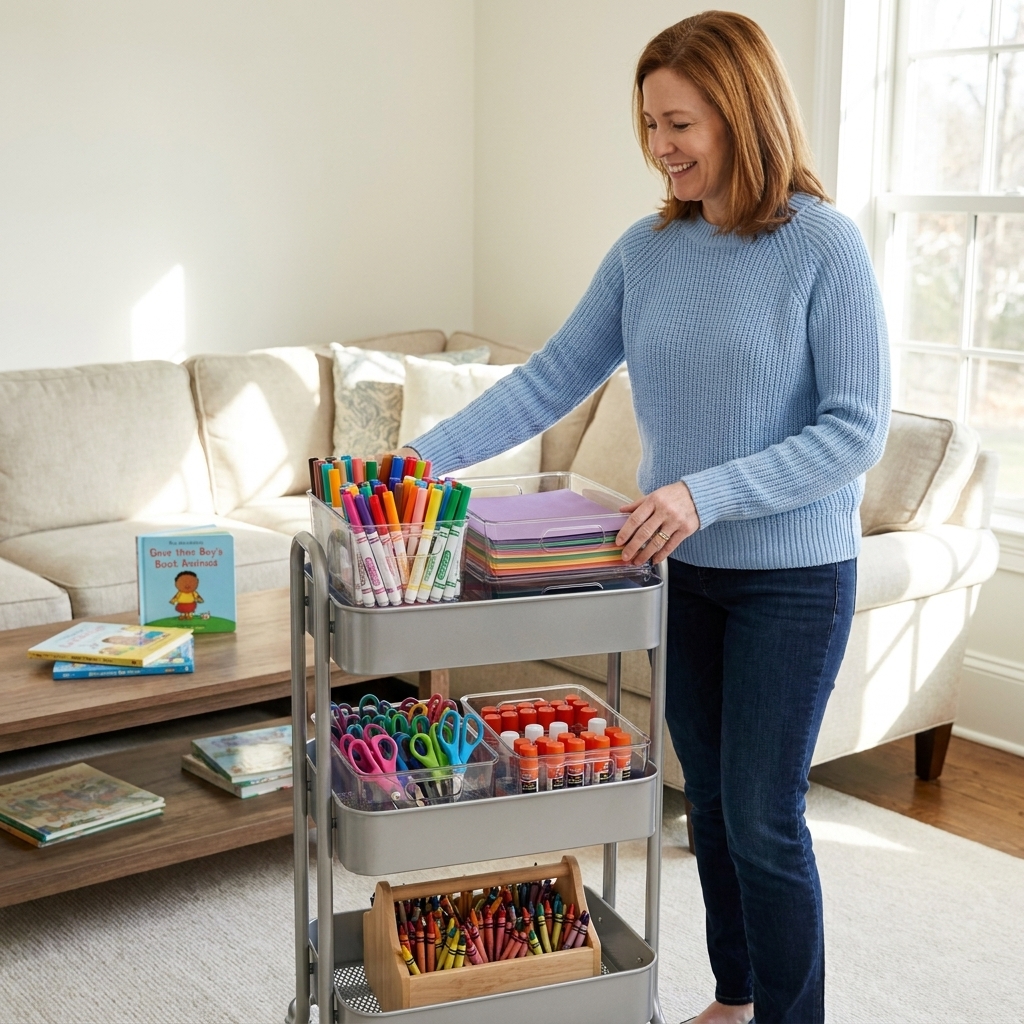
If you want a simple kit that covers most holiday crafts, this is my real-life short list.
- Construction paper and cardstock (white plus 2 to 3 holiday colors)
- Washable markers and chunky crayons
- Dot markers (magic for toddlers)
- Glue sticks and painter’s tape
- Kid scissors plus one adult scissors
- Paper plates and craft sticks
- Pom poms, pipe cleaners, and stickers
- Ribbon or yarn
- A tray or muffin tin for small items
- Table cover (old sheet, plastic tablecloth, or flattened cardboard boxes)
Sensitivity note: if you have kids with allergies or sensitive skin, check labels for non-toxic and washable, and be cautious with loose glitter, heavily scented supplies, and latex in some craft items.
FAQ
What if my toddler ruins the older kid’s project?
Give each child a defined workspace like a tray or placemat, and put the toddler closest to you. Also, make one community supply bin and one “this is mine” bin for each kid. That tiny boundary makes a big difference.
How long should a mixed-age holiday craft take?
Aim for 20 to 45 minutes total. Toddlers may only craft for 10 minutes, and that is fine. The win is that everyone had a chance to participate without you needing to set up three separate activities.
My tween says crafts are babyish. What do I do?
Give them ownership and a real outcome. Let them choose a color palette, make items for a gift exchange, design decor for their room, or create a set (like matching cards). Tweens are often into crafts that feel like design, not “cute.”
Can I do this without buying special supplies?
Absolutely. Cardboard packaging, scrap paper, old magazines, toilet paper rolls, and ribbon from gift bags can carry you through a whole season. I am a big believer that the best crafts are the ones you can start right now.
One last reminder
Holiday crafting with multi-age siblings is not supposed to look perfect. It is supposed to feel like togetherness. If your toddler made three stickers into a wreath, your first grader proudly cut a crooked star, and your tween created something genuinely stunning, that is not a mismatch. That is a family.